
 Suomi
 Svenska
 Polski
 Čeština
 Slovenčina
 Norsk
 Dansk
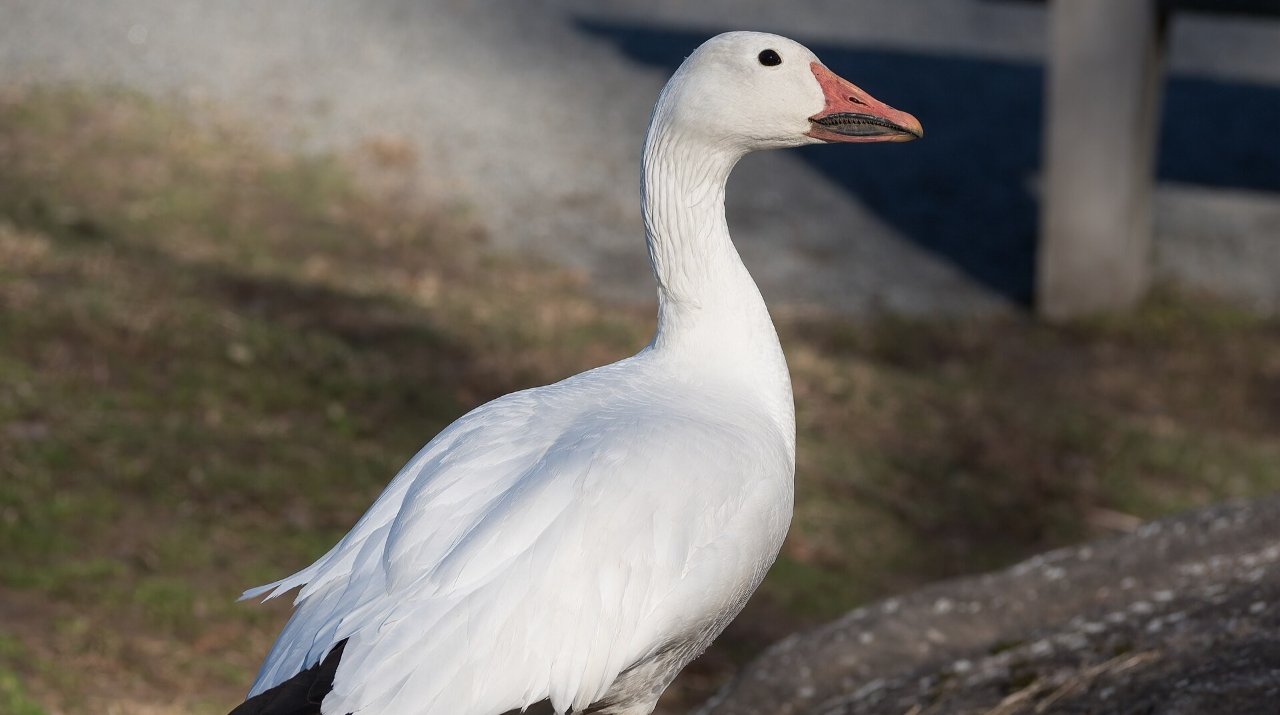
Snow Goose
Anser caerulescens
Identify the Snow Goose by sound or photo and log your sightings with Birdpass.


The Snow Goose is a North American goose best known for its two colour forms: the classic white “snow” and the darker “blue” morph. It breeds on Arctic tundra from Greenland and Canada to Alaska and north-eastern Siberia and migrates in vast, noisy flocks to winter in milder parts of North America south to Mexico. It is a rare vagrant to Europe, where escapes from collections also occur.
Did you know?
- The dark blue morph is controlled by a single dominant gene.
- Snow Goose flocks are so vocal that they can be heard more than a mile away.
Voice
About the species
Identification
The white morph is all white with black wing tips and a pink bill with a dark “grinning patch”; the blue morph is dark grey-brown with a white head and neck. Legs are pink. Told from Ross's Goose by larger size and a longer bill with the black grinning patch.
Family
Anatidae
Size
Very large (swan)
Colours
white, black, red
About the habitat
Breeds on Arctic tundra north of the treeline. In winter it uses coastal marshes, grasslands and extensive farmland.
Diet
Plant material: it grazes grasses and sedges, digs up roots and rhizomes in coastal marshes with its strong bill and feeds in farmland on spilled grain and green shoots.
Behaviour
Highly gregarious and very vocal, travelling in large, coordinated flocks along traditional flyways. Pairs form long-term bonds, females return to their natal areas, and it breeds in colonies; both parents guard the self-feeding young.
Sources
Photo: Rhododendrites, CC BY-SA 4.0 https://commons.wikimedia.org/wiki/File:Snow goose in Central Park (33138).jpg
Sound: Lütgens, Hans, CC BY-SA 3.0 https://commons.wikimedia.org/wiki/File:Chen_caerulescens_Lue0063_01.wav
Text: Wikipedia (English), CC BY-SA 4.0 https://en.wikipedia.org/wiki/Snow_goose
.jpg)