Suomi
 Svenska
 Polski
 Čeština
 Slovenčina
 Norsk
 Dansk
Little Stint
Calidris minuta
Identify the Little Stint by sound or photo and log your sightings with Birdpass.


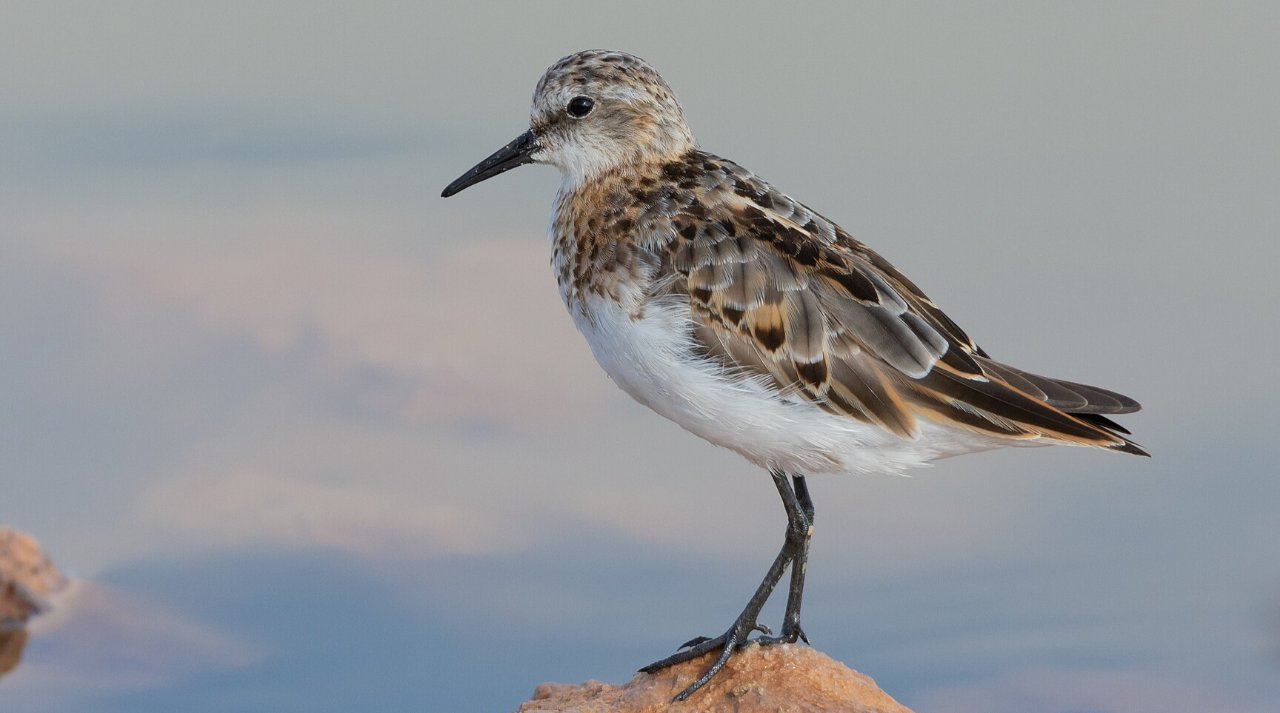
The Little Stint is a tiny, dark-legged sandpiper that breeds on wet tundra across northern Eurasia and migrates long distances to winter in Africa and southern Asia. It feeds with quick pecking movements on mud and in shallow water and often travels in flocks with other small waders. Breeding birds show a rufous wash and a crisp white V on the back.
Did you know?
- It is one of the smallest European waders, yet migrates between the Arctic and the tropics.
- Juveniles show pale “tramlines” on the back formed by two bright mantle stripes.
About the species
Identification
A tiny wader with a sharp, dark bill and dark legs and quick movements. A pale V-shaped pattern often shows on the dark back, and the sides of the tail are grey. Juveniles can resemble Temminck's Stint, but Little Stint looks darker and more contrasting and has black, not yellowish, legs.
Family
Scolopacidae
Size
Small (sparrow)
Colours
brown, white, orange, black
About the habitat
Breeds on low-lying, mossy tundra near pools. On migration and in winter coastal mudflats, estuaries, saltpans and muddy margins of inland waters.
Diet
Small invertebrates picked from wet mud and shallow water – insects and their larvae, especially midges, as well as tiny crustaceans and worms.
Behaviour
A brisk, agile feeder that runs and pecks at the surface rather than probing deeply. Highly migratory and gregarious outside the breeding season, often in mixed flocks with Dunlins. The call is a sharp “stit”. It is polygamous, and males and females may incubate separate clutches. Its breeding success follows lemming cycles, because in poor lemming years predators switch to waders.
Sources
Photo: El Golli Mohamed, CC BY-SA 4.0 https://commons.wikimedia.org/wiki/File:Bécasseau minute Thyna007.jpg
Text: Wikipedia (English) + FinBIF species descriptions + GBIF regional observations + Wikipedia (Norwegian), CC BY-SA 4.0; FinBIF: CC BY 4.0; GBIF occurrence data; Wikipedia: CC BY-SA 4.0 https://en.wikipedia.org/wiki/Little_stint