
 Suomi
 Svenska
 Polski
 Čeština
 Slovenčina
 Norsk
 Dansk
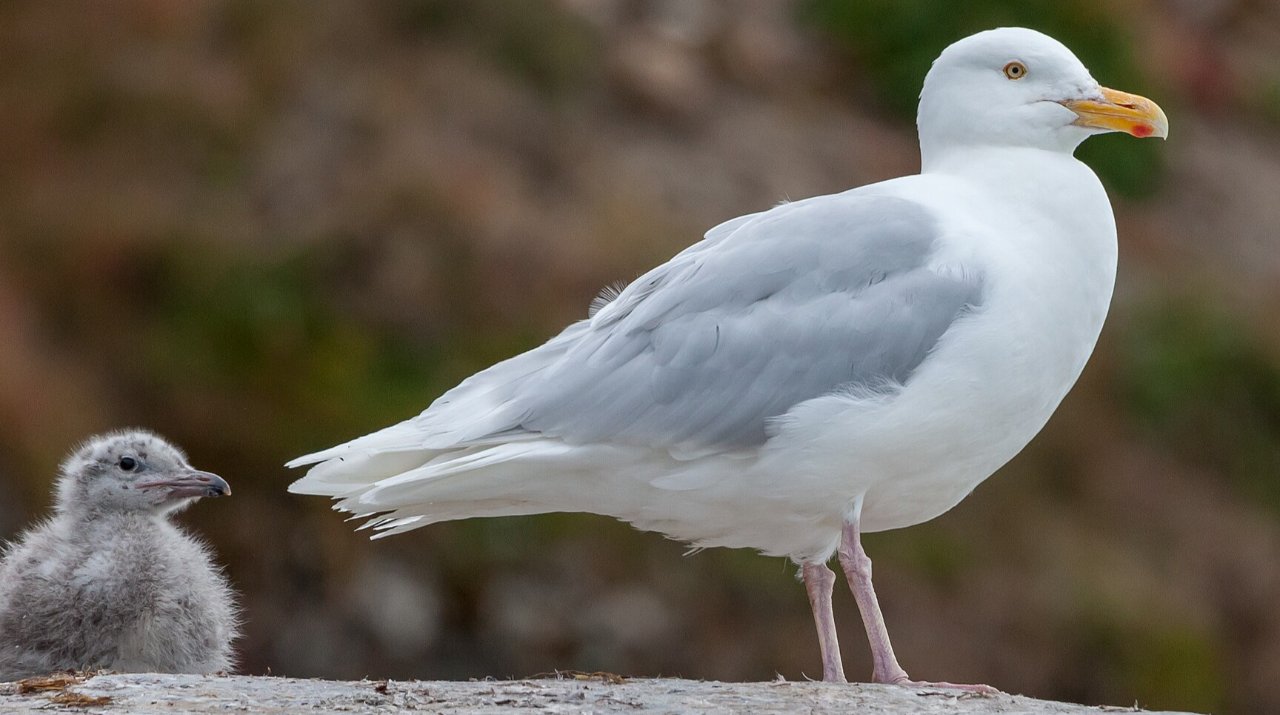
Glaucous Gull
Larus hyperboreus
Identify the Glaucous Gull by sound or photo and log your sightings with Birdpass.


The Glaucous Gull is a huge, pale gull of high Arctic and subarctic coasts, the world's second-largest gull. Adults are silvery grey above with clean white wingtips, while juveniles are evenly pale buff with a pink bill tipped black. It breeds on remote coasts, islands and cliffs and moves south in winter to northern seas and large inland waters.
Did you know?
- It is the world's second-largest gull.
- Its old English name is “burgomaster”.
About the species
Identification
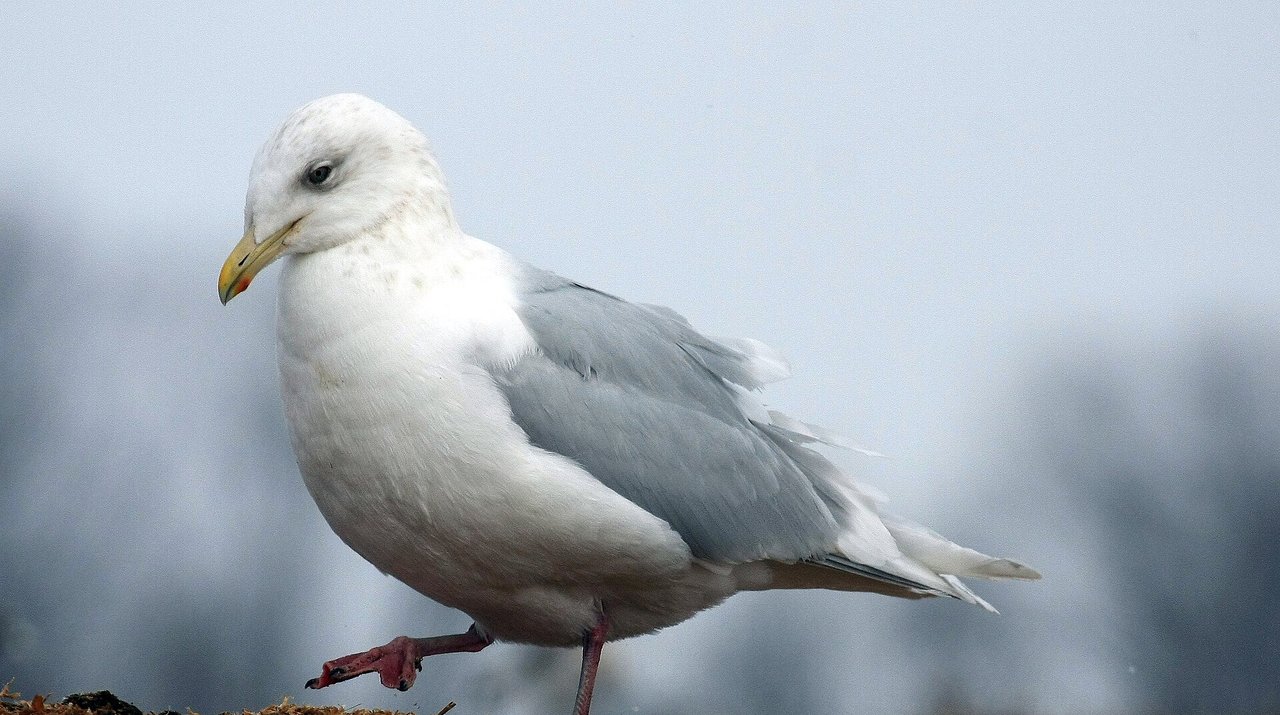
A large, heavily built gull, larger than Herring Gull. Adults look white with pale grey upperwings and no black in the wingtips; the bill is yellow with a red spot and the legs pink. Young birds are pale buff and mottled, with a pink bill sharply tipped black. Told from Iceland Gull by its larger size, heavier bill and more angular head.
Family
Laridae
Size
Very large (swan)
Colours
white, grey, yellow
About the habitat
Arctic and subarctic coasts, islands, sea cliffs and tundra; in winter northern coasts, harbours, landfills and large inland waters.
Diet
Omnivorous and predatory: fish, molluscs, crustaceans, sea urchins, insects, eggs, chicks and adult birds, small mammals, carrion, berries and refuse.
Behaviour
Breeds singly or in loose colonies, placing a lined nest on the ground or cliff ledges, sometimes even on snow; both parents incubate two to four eggs for about four weeks. A resourceful predator and scavenger that raids seabird colonies and patrols harbours and landfills in winter. Its call is a deep, laughing cry.
Sources
Photo: AWeith, CC BY-SA 4.0 https://commons.wikimedia.org/wiki/File:Glaucous gull (Larus hyperboreus) with offspring, Liefdefjord, Svalbard.jpg
Text: Wikipedia (English) + FinBIF species descriptions + Wikipedia (Finnish), CC BY-SA 4.0; FinBIF: CC BY 4.0; Wikipedia: CC BY-SA 4.0 https://en.wikipedia.org/wiki/Glaucous_gull
 with offspring, Liefdefjord, Svalbard.jpg)