Suomi
 Svenska
 Polski
 Čeština
 Slovenčina
 Norsk
 Dansk
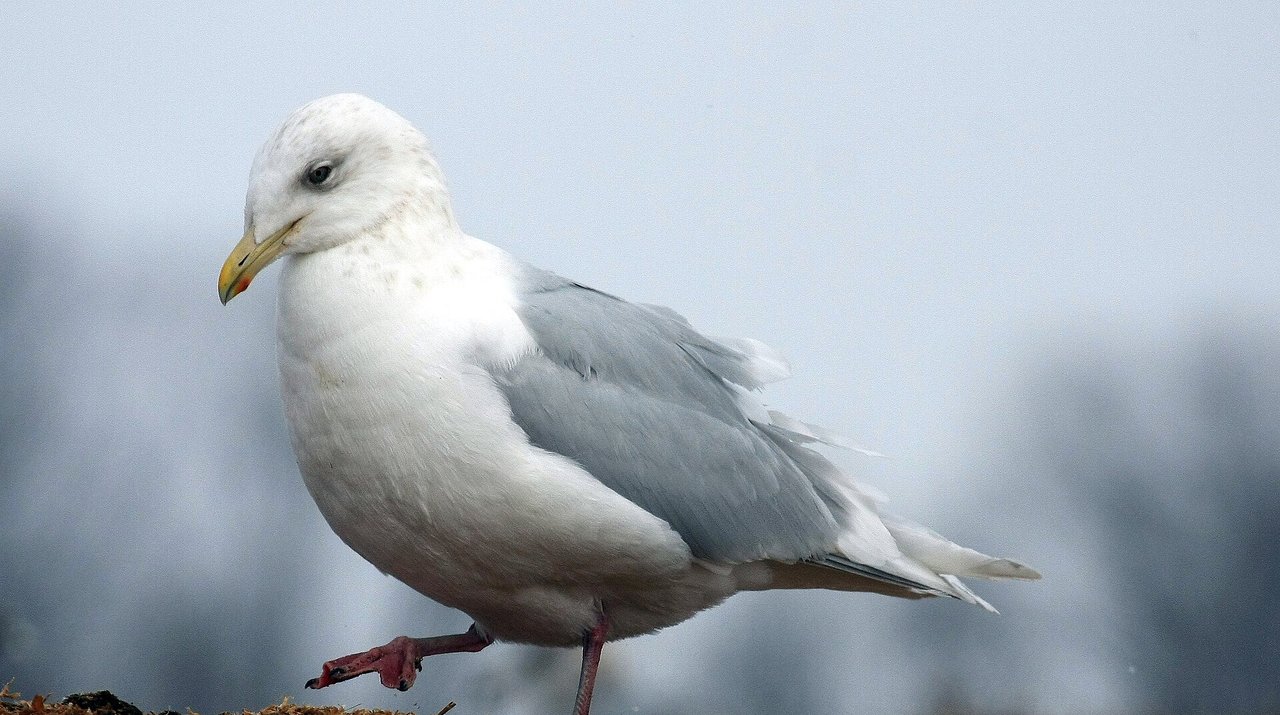
Iceland Gull
Larus glaucoides
Identify the Iceland Gull by sound or photo and log your sightings with Birdpass.


The Iceland Gull is a medium-sized, rather slender, very pale Arctic gull that breeds on coasts and cliffs in Arctic Canada and Greenland and winters across the North Atlantic. Smaller and finer-billed than the Glaucous Gull, it has pale grey upperparts and, in the nominate form, clean white wingtips. Despite its name it does not breed in Iceland.
Did you know?
- In the palest form the wingtip feathers lack melanin, leaving them translucent white.
- Its name comes from its winter visits to Iceland.
About the species
Identification
A medium-sized pale gull (length 52–60 cm, wingspan 140–150 cm). The adult has pale grey upperparts and lacks black in the wingtips, which separates it from many other large gulls; the legs are pink. Young birds are pale buff and mottled with pale flight feathers and a dark bill. Told from Glaucous Gull by its smaller size, rounder head, finer bill and longer wings; the sexes look alike.
Family
Laridae
Size
Large (crow)
Colours
white, grey, yellow
About the habitat
Breeds on rocky coasts and sea cliffs in Arctic Canada and Greenland; in winter North Atlantic coasts, harbours and estuaries, sometimes inland on large lakes.
Diet
Omnivorous: fish, molluscs, eggs, offal and scraps, picked from the surface in flight or taken while walking or swimming; it often scavenges at harbours, fish-processing sites and landfills.
Behaviour
Winters widely over the North Atlantic, often among other gulls at harbours and coasts. It breeds singly or in colonies on coastal cliffs, lining its nest with grass, moss or seaweed and laying two or three eggs. Its laughing call is higher-pitched than a Herring Gull's. It takes about four years to reach adult plumage.
Sources
Photo: Seabamirum on Flickr, CC BY 2.0 https://commons.wikimedia.org/wiki/File:Larus glaucoides IthacaNY.jpg
Text: Wikipedia (English) + GBIF regional observations + Wikipedia (English), CC BY-SA 4.0; GBIF occurrence data; Wikipedia: CC BY-SA 4.0 https://en.wikipedia.org/wiki/Iceland_gull