
 Suomi
 Svenska
 Polski
 Čeština
 Slovenčina
 Norsk
 Dansk
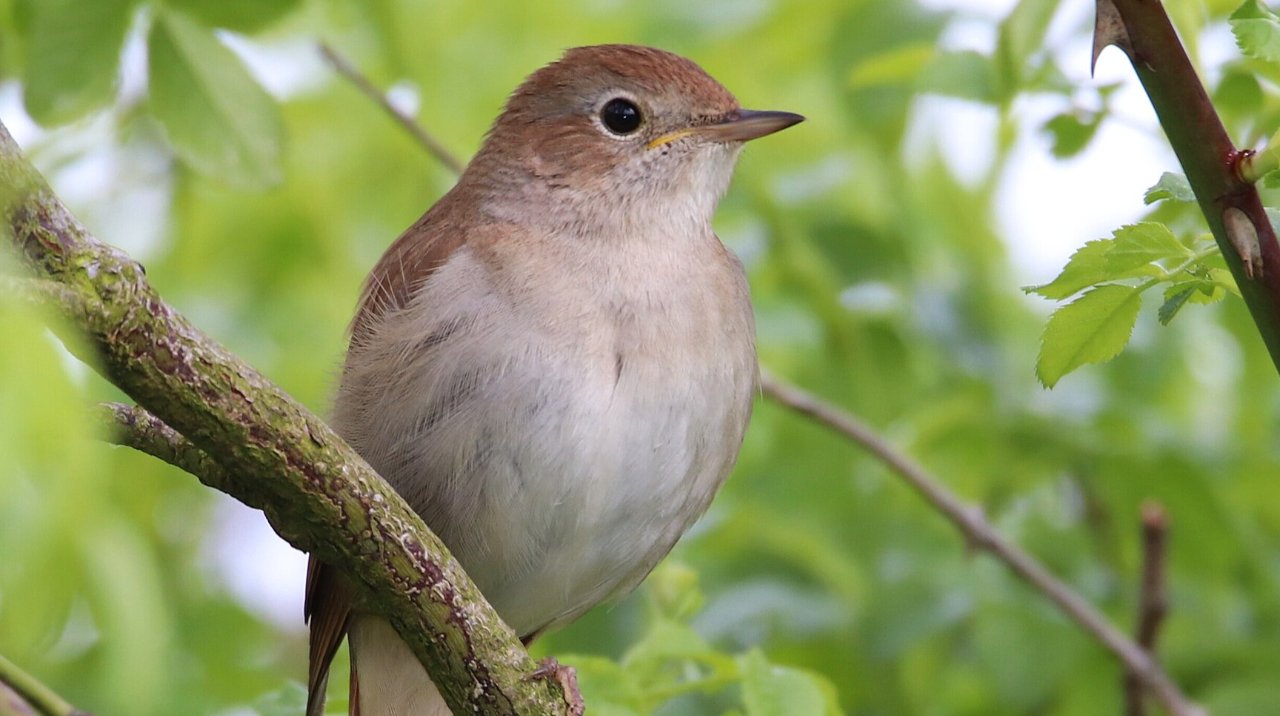
Common Nightingale
Luscinia megarhynchos
Identify the Common Nightingale by sound or photo and log your sightings with Birdpass.


The Common Nightingale is a shy, warm-brown songbird celebrated for one of the richest, most powerful songs in nature. It breeds in dense undergrowth across much of Europe, North Africa and western Asia and winters in sub-Saharan Africa. Its range lies mostly south and west of the closely related Thrush Nightingale, with which it can hybridise.
Did you know?
- Only unpaired males sing regularly at night, to attract a mate.
- Researchers have recorded about 1,160 different syllables in nightingale song.
Voice
About the species
Identification
Very like Thrush Nightingale: the back is warm brown, but the tail and rump are bright rufous. The breast lacks the grey mottling of the Thrush Nightingale. The eye is large and dark with a pale eye-ring. The two species can be hard to separate in the field; the key marks are the more rufous tail and plain breast. The song is melodious and varied.
Family
Turdidae
Size
Small (sparrow)
Colours
brown, grey, white, orange
About the habitat
Dense shrubs and thickets, overgrown hedgerows, woodland edges, clearings and riverside scrub with tangled low vegetation and some open ground beneath.
Diet
Mainly insects and other invertebrates such as beetles, ants, caterpillars, spiders and worms; berries and small fruits in late summer.
Behaviour
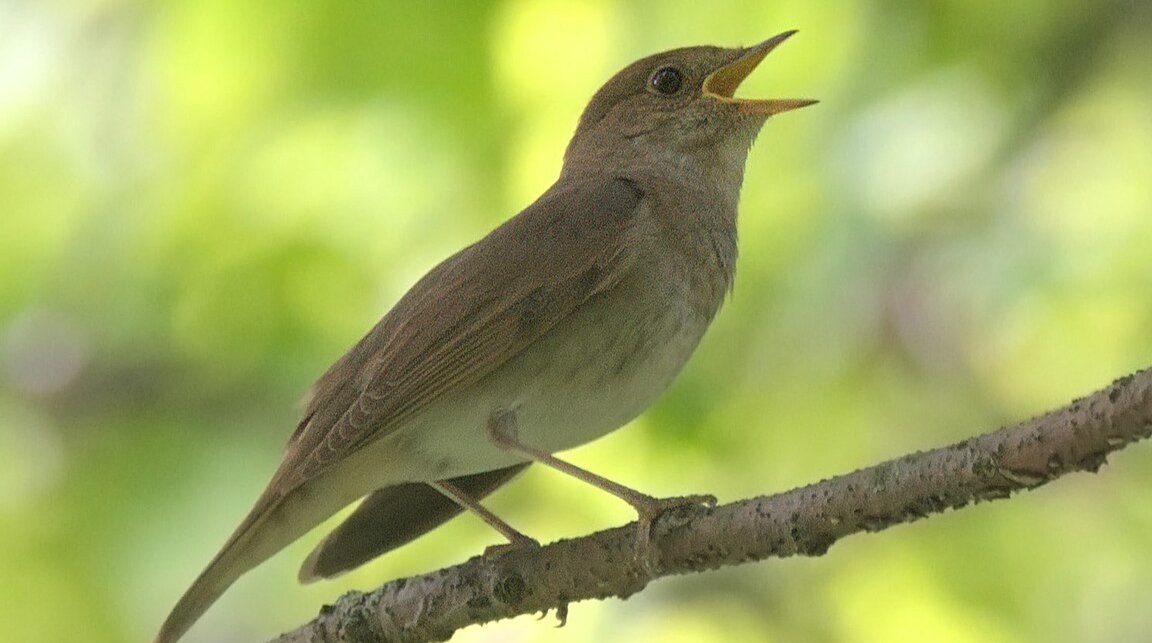
Secretive and ground-dwelling, it forages by hopping through leaf litter under cover, often cocking its tail. Males sing loud, intricate songs full of whistles, trills and crescendos from concealed perches by day and, when unpaired, through the night. It nests on or near the ground in thick cover. The alarm call is a frog-like croak.
Sources
Photo: Warrieboy, CC BY-SA 4.0 https://commons.wikimedia.org/wiki/File:Luscinia megarhynchos - Common nightingale - Nachtegaal (cropped).jpg
Sound: Sonothèque ADVL, XC918124, CC0 1.0 https://xeno-canto.org/918124
Sound: Sonothèque ADVL, XC707295, CC0 1.0 https://xeno-canto.org/707295
Sound: Joost van Bruggen, CC BY-SA 4.0 https://commons.wikimedia.org/wiki/File:Luscinia_megarhynchos_-_Common_Nightingale_XC431489.mp3
Text: Wikipedia (English) + FinBIF species descriptions, CC BY-SA 4.0; FinBIF: CC BY 4.0 https://en.wikipedia.org/wiki/Common_nightingale
.jpg)