
 Suomi
 Svenska
 Polski
 Čeština
 Slovenčina
 Norsk
 Dansk
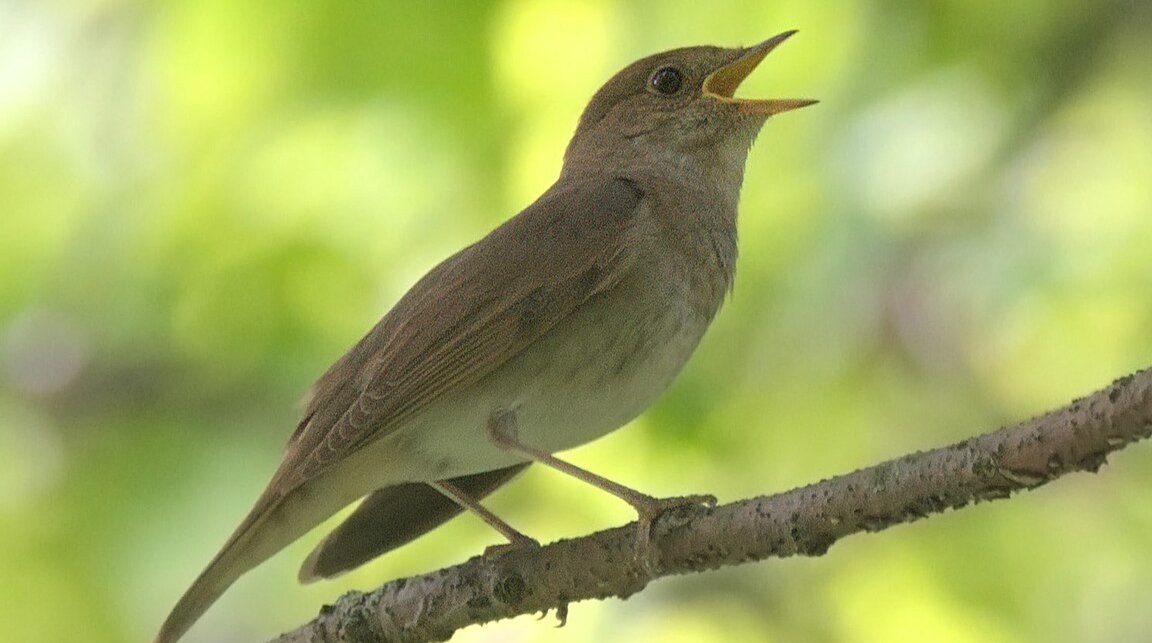
Thrush Nightingale
Luscinia luscinia
Identify the Thrush Nightingale by sound or photo and log your sightings with Birdpass.


The Thrush Nightingale is a secretive, brown songbird of dense thickets and damp woods that breeds in northern and eastern Europe and western Asia and winters in eastern Africa. Greyer and darker than the Common Nightingale, it has a deeper, more solemn song with loud, clicking notes, often heard at night. It nests on the ground in dense cover and feeds mainly on the ground.
Did you know?
- It often places its ground nest right in a patch of stinging nettles.
- Before crossing the Sahara it builds up large fat reserves, a process triggered by magnetic cues.
Voice
About the species
Identification
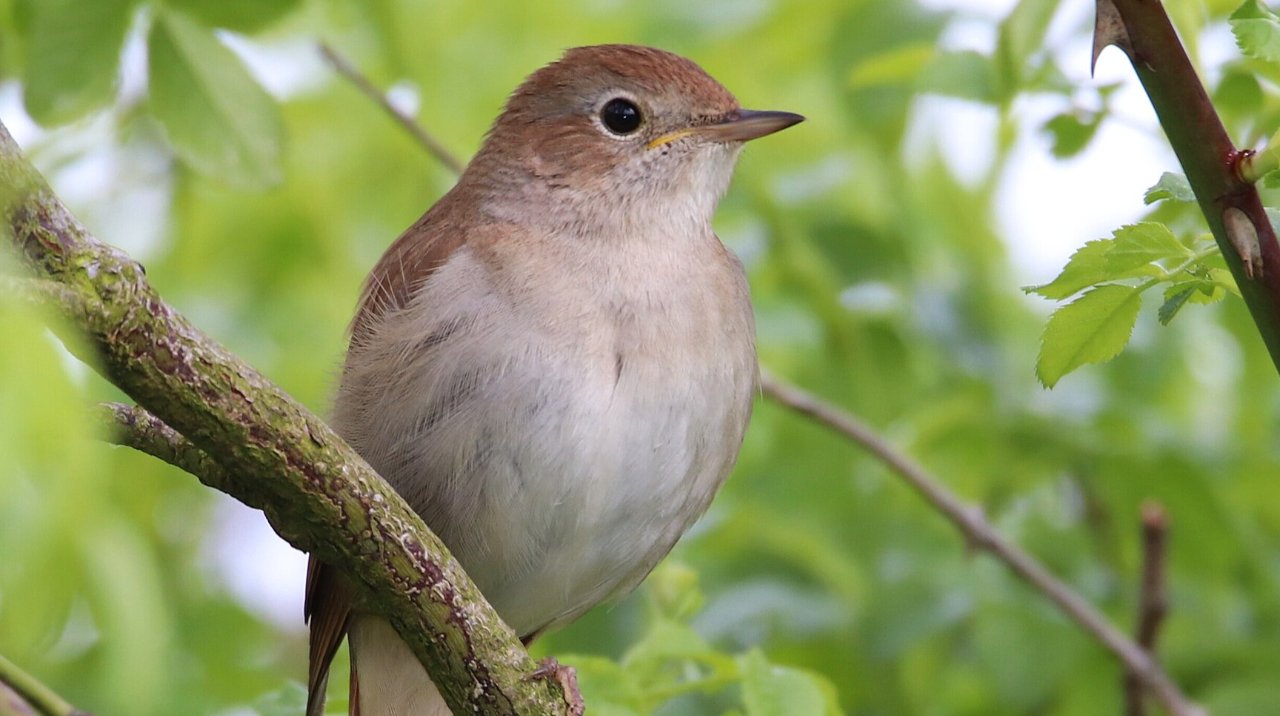
A medium-sized, evenly grey-brown songbird, grey to pale below with fine dark mottling on the breast; the tail is rufous-brown and the eye large and dark. The sexes look alike. Compared with Common Nightingale it is darker and more uniform above, the tail is less rufous and the breast mottled. Alarm calls include a loud “heeet” and a rattling croak, and the song is very loud and often heard at night.
Family
Turdidae
Size
Small (sparrow)
Colours
brown, grey, white
About the habitat
Dense, damp thickets – riverside and wetland scrub, alder and willow carr, tangled undergrowth of deciduous woods, overgrown clearings and parks with thick cover.
Diet
Mainly insects and other invertebrates such as beetles, ants, flies, caterpillars, spiders and earthworms; berries such as currants and elder in late summer and autumn.
Behaviour
A shy skulker that forages on the ground and in leaf litter under dense cover. Males sing a powerful, fluting song with deep “chok” notes from concealed perches, often at night. It nests on or near the ground, often among nettles; the female builds the nest and incubates, and both parents feed the young. Before migration it lays down fat for the desert crossing.
Sources
Photo: Dion Art, CC BY-SA 4.0 https://commons.wikimedia.org/wiki/File:Восточный соловей (Luscinia luscinia), Битцевский лес.jpg
Sound: Max Karlsson, XC655262, CC BY-SA 4.0 https://xeno-canto.org/655262
Text: Wikipedia (English) + FinBIF species descriptions, CC BY-SA 4.0; FinBIF: CC BY 4.0 https://en.wikipedia.org/wiki/Thrush_nightingale
, Битцевский лес.jpg)