Suomi
 Svenska
 Polski
 Čeština
 Slovenčina
 Norsk
 Dansk
Baikal Teal
Sibirionetta formosa
Identify the Baikal Teal by sound or photo and log your sightings with Birdpass.


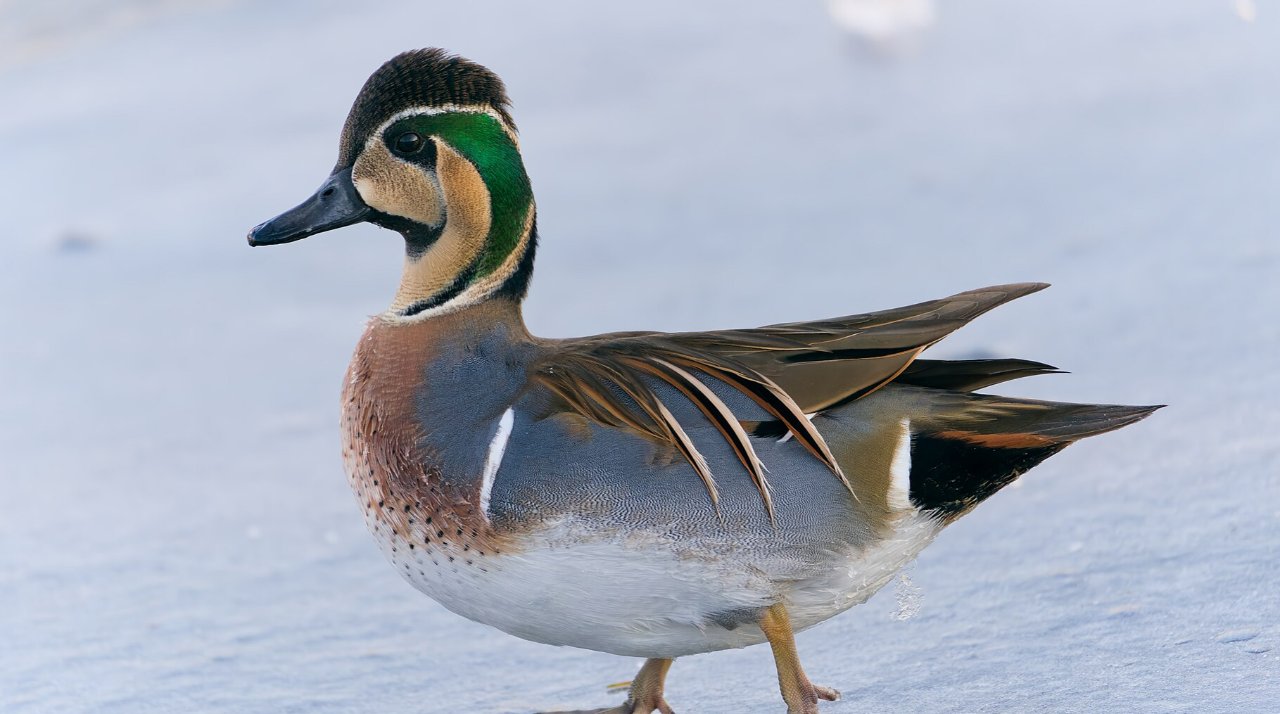
The Baikal Teal is a small, striking dabbling duck that breeds in eastern Siberia and winters in East Asia, especially South Korea, in huge flocks. Breeding males have an unmistakable yellow, green and black face pattern and white bars on the flanks, while females resemble Teal but have a round pale spot at the bill base. Once reduced by hunting, it has recovered strongly. It is a popular waterfowl collection bird, so European records may involve escapes.
Did you know?
- Its genus name Sibirionetta means “Siberian duck”.
- Its winter flocks can number hundreds of thousands.
About the species
Identification
Slightly larger and longer-tailed than Teal. The breeding male is easily recognised by its showy head pattern of yellow, green and black. Females and young differ from Teal and Garganey in their all-dark, short bill, a rufous area before the speculum, a broad white trailing edge and dark primaries. Adult females have a small, round pale loral spot bordered with dark and a dark eye stripe; many show a pale vertical wedge rising from the throat past the cheek.
Family
Anatidae
Size
Large (crow)
Colours
grey, brown, yellow, green, black
About the habitat
Breeds on pools at the tundra edge and in swampy taiga with willow and larch; winters on lowland lakes, reservoirs and rivers near rice fields and farmland.
Diet
Seeds, grain and other plant material, algae, and aquatic invertebrates such as snails and insects, taken by dabbling in shallow water or grazing in fields.
Behaviour
Highly gregarious outside the breeding season, forming dense flocks of hundreds of thousands that perform spectacular aerial manoeuvres. It often rests on water by day and feeds in fields at night. Males moult into a rufous eclipse plumage after breeding.
Sources
Photo: Sun Jiao (Interaccoonale), CC BY 4.0 https://commons.wikimedia.org/wiki/File:Sibirionetta formosa 01.jpg
Text: Wikipedia (English) + GBIF regional observations + Wikipedia (Danish) + GBIF regional observations + Wikipedia (Finnish), CC BY-SA 4.0; GBIF occurrence data; Wikipedia: CC BY-SA 4.0 https://en.wikipedia.org/wiki/Baikal_teal