
 Suomi
 Svenska
 Polski
 Čeština
 Slovenčina
 Norsk
 Dansk
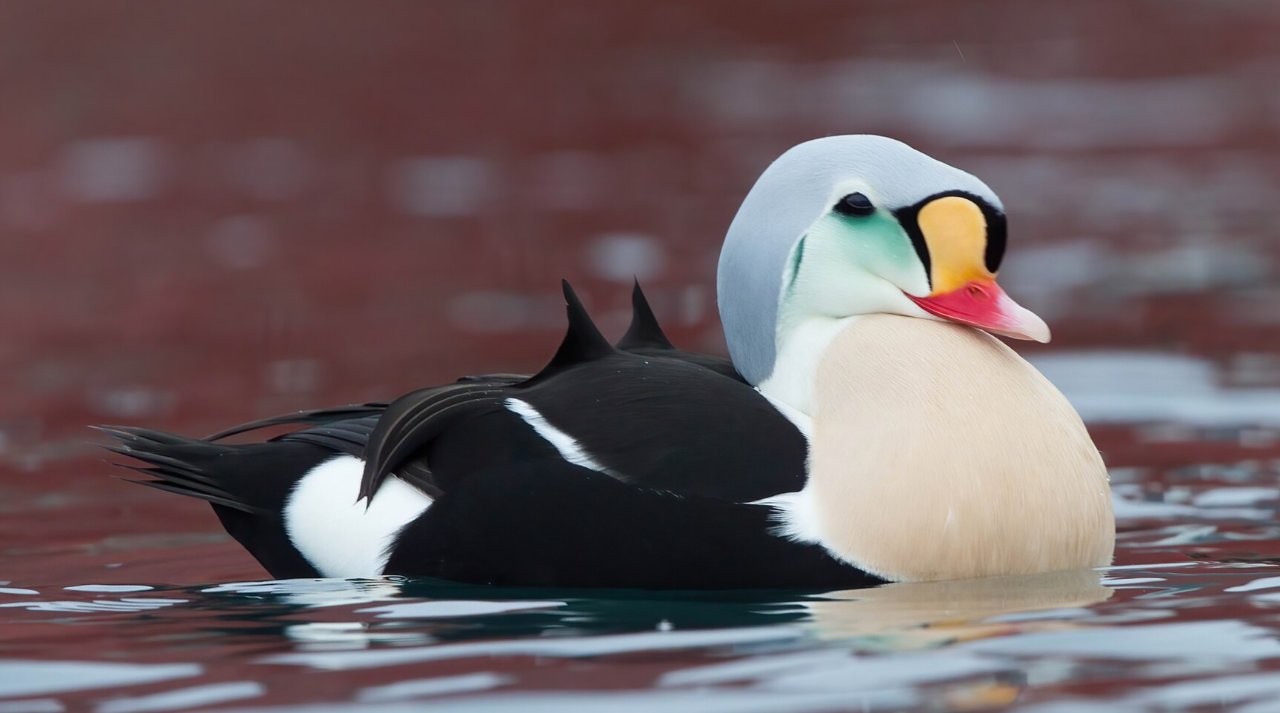
King Eider
Somateria spectabilis
Identify the King Eider by sound or photo and log your sightings with Birdpass.


The King Eider is a large, circumpolar sea duck of the high Arctic, smaller than the Common Eider. Males are unmistakable, with a powder-blue crown, greenish cheeks and a large orange knob at the base of the red bill; females are warm brown and well camouflaged. It spends most of the year on cold Arctic seas and moves to tundra ponds to nest in early summer. Winter flocks can number over 100,000 birds.
Did you know?
- It is called the “king” eider for the male's crown-like orange bill knob.
- Winter rafts can exceed 100,000 birds.
About the species
Identification
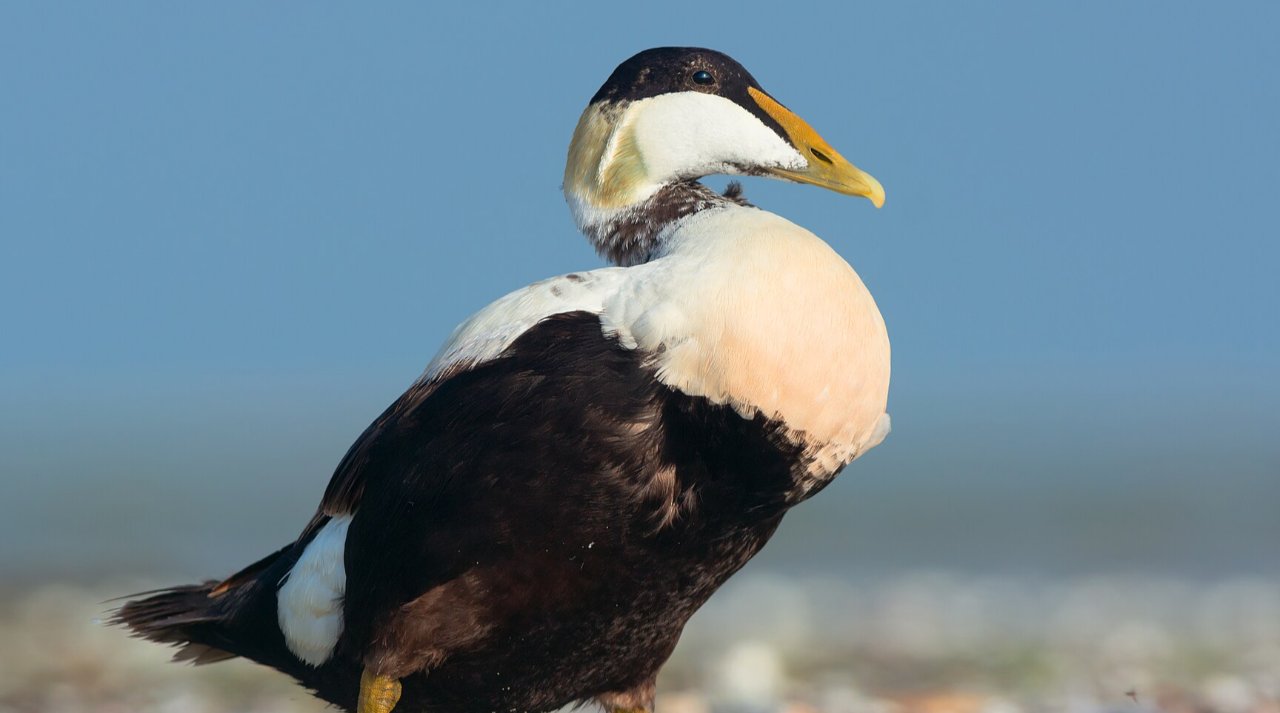
The male is black and white, with a grey-blue crown and nape, greenish cheeks and a large orange frontal knob; two small “sails” stick up on the back. The female is brown and resembles a female Common Eider, but her bill is shorter and her head rounder, with a steeper forehead. The male's knob and head colours separate it from the male Common Eider.
Family
Anatidae
Size
Very large (swan)
Colours
black, white, blue, orange
About the habitat
Arctic seas for most of the year, including the Bering Sea, Greenland and eastern Canada; breeds on low tundra near lakes and ponds.
Diet
Mainly bottom-living invertebrates taken by diving – molluscs, crustaceans, sea urchins, starfish and anemones; on breeding ponds aquatic insects and some plant material.
Behaviour
A powerful diver that can reach great depths, swimming with its wings. Outside the breeding season it lives in offshore flocks. Males court with head-throwing displays and soft, dove-like cooing. The female makes a down-lined scrape near water, incubates for about 22–24 days, and broods are often tended collectively.
Sources
Photo: Ron Knight from Seaford, East Sussex, United Kingdom, CC BY 2.0 https://commons.wikimedia.org/wiki/File:King Eider (Somateria spectabilis) (13667616745).jpg
Text: Wikipedia (English) + GBIF regional observations + Wikipedia (Danish) + FinBIF species descriptions + Wikipedia (Finnish), CC BY-SA 4.0; GBIF occurrence data; Wikipedia: CC BY-SA 4.0; FinBIF: CC BY 4.0; Wikipedia: CC BY-SA 4.0 https://en.wikipedia.org/wiki/King_eider
 (13667616745).jpg)