
 Suomi
 Svenska
 Polski
 Čeština
 Slovenčina
 Norsk
 Dansk
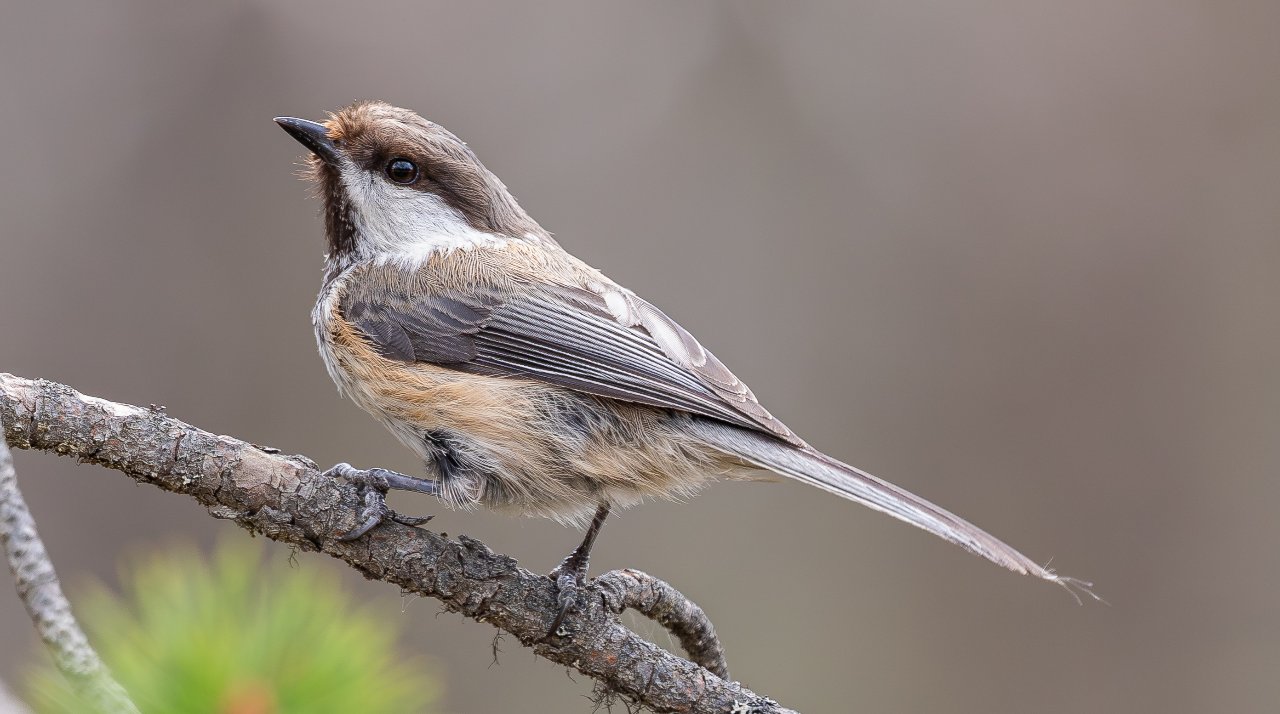
Siberian Tit
Poecile cinctus
Identify the Siberian Tit by sound or photo and log your sightings with Birdpass.


The Siberian Tit is a hardy tit of the northern taiga, found from northern Fennoscandia across Russia and Siberia to Alaska and north-western Canada. A conifer specialist, it is resident, enduring long, harsh winters without migrating. It has a grey-brown cap, white cheeks, a warm brown back and rusty flanks. It has declined in parts of its western range, and the North American population may have disappeared.
Did you know?
- The North American subspecies may already be extinct.
- It stores food in bark crevices to retrieve in the long winter.
About the species
Identification
It resembles Willow Tit, but the plumage is fluffier and the head looks larger. The back is warm brown and the flanks rusty; the crown is dull grey-brown, and the cheeks and belly white. The dark bib is very large, broad at the bottom and often diffusely bordered.
Family
Paridae
Size
Tiny (goldcrest)
Colours
brown, grey, white, black
About the habitat
Old boreal conifer and mixed forests of spruce, pine and birch, especially lichen-rich stands with dead wood and old stumps for nesting.
Diet
Insects, spiders and other small invertebrates gleaned from conifer branches and bark in summer; seeds, especially of conifers, and stored food in winter. It visits feeders for fat and seeds.
Behaviour
Resident and sedentary, it forages methodically on trunks and branches, often low down. It stores food in bark crevices for winter and moves in pairs or small family groups, often more quietly than other tits. It often excavates or enlarges its nest hole in soft, rotten wood.
Sources
Photo: Lucwrte, CC BY-SA 4.0 https://commons.wikimedia.org/wiki/File:Siberian Tit (Poecile cinctus) in Sodankylä, Finland.jpg
Text: Wikipedia (English) + FinBIF species descriptions, CC BY-SA 4.0; FinBIF: CC BY 4.0 https://en.wikipedia.org/wiki/Grey-headed_chickadee
 in Sodankylä, Finland.jpg)