Suomi
 Svenska
 Polski
 Čeština
 Slovenčina
 Norsk
 Dansk
Rustic Bunting
Emberiza rustica
Identify the Rustic Bunting by sound or photo and log your sightings with Birdpass.


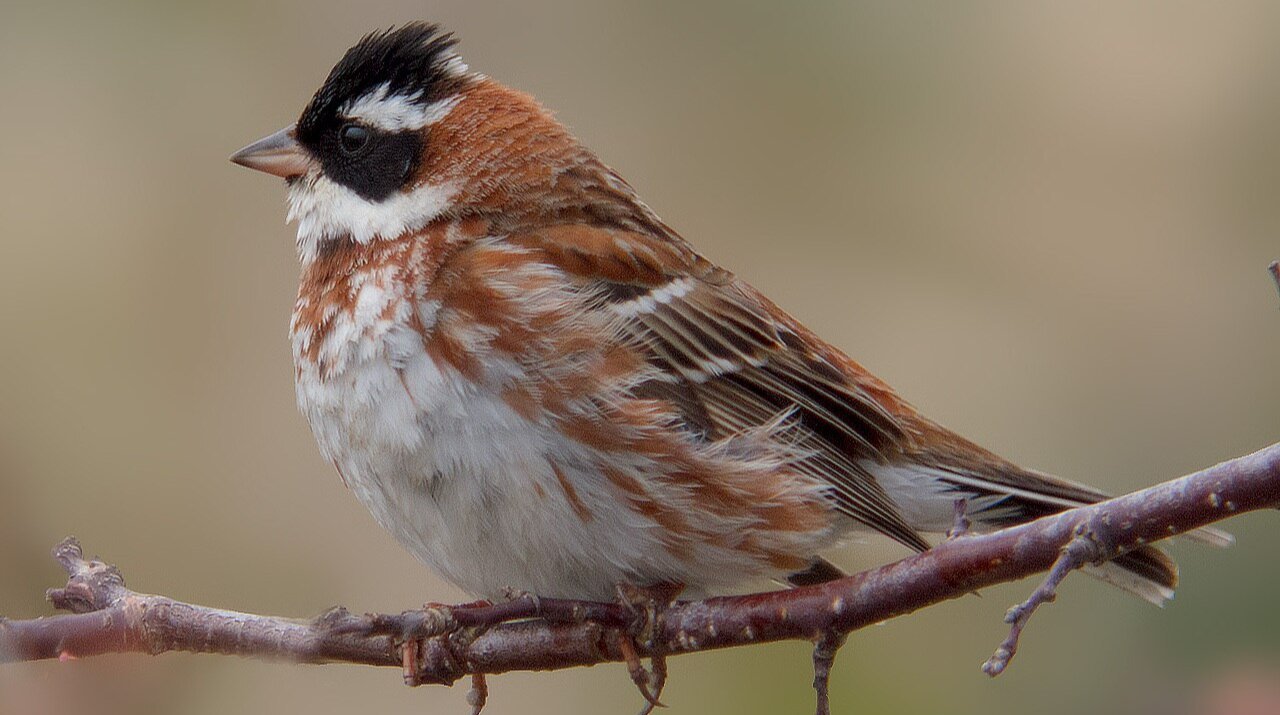
The Rustic Bunting is a small taiga bunting that breeds in wet coniferous and mixed forests from northern Europe across Siberia. It winters in eastern Asia – Japan, Korea and eastern China – and only rarely wanders to western Europe. In summer the male has a black-and-white head, white throat and rufous breast band; females are browner and streaked with rufous-tinged flanks. It has declined steeply across much of its range and is listed as Vulnerable.
Did you know?
- Its scientific name comes from Old German for “bunting” and Latin rustica, “rustic”.
- It often raises a small crest when alarmed.
Voice
About the species
Identification
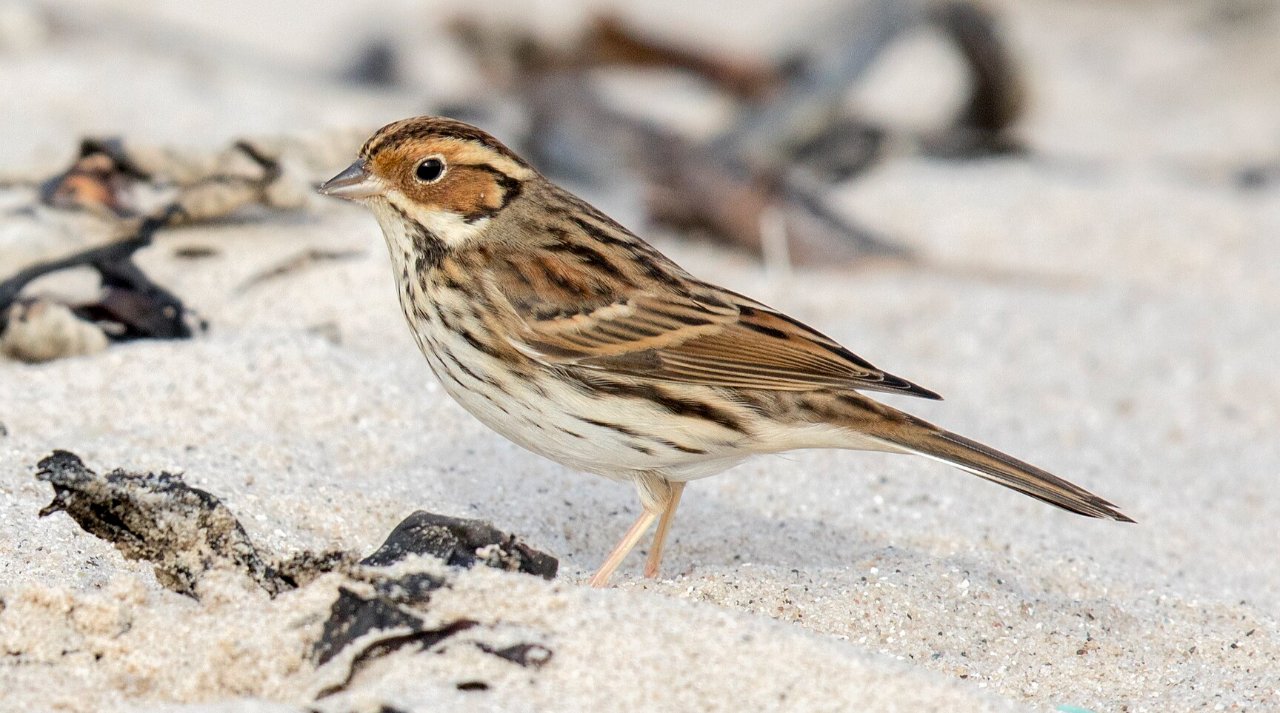
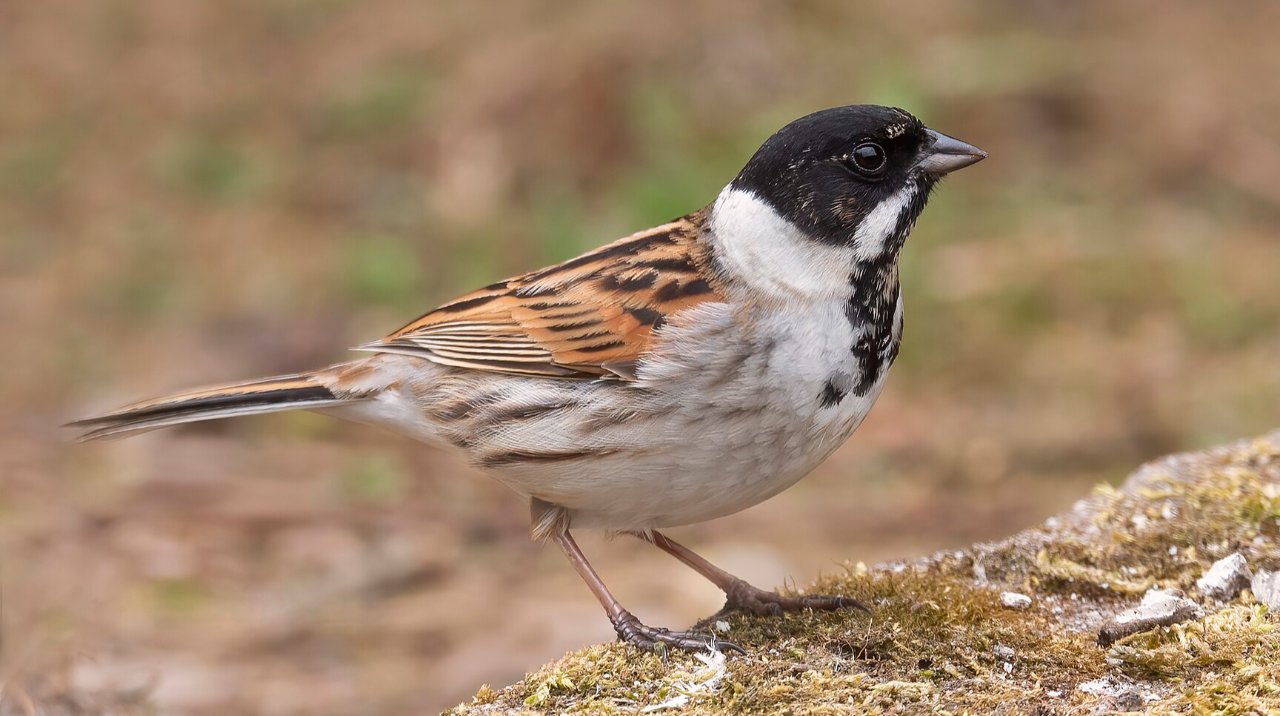
A typical bunting in size and shape. The male has a strongly black-and-white head, a rufous back and rufous streaking on the flanks; there are two white wing bars and white outer tail feathers. Females and young are duller and resemble Reed Bunting, but the rufous flank streaks and crisper head pattern help to separate them. Compared with Little Bunting it is larger and whiter below and lacks the rufous cheeks.
Family
Emberizidae
Size
Small (sparrow)
Colours
brown, white, black, orange
About the habitat
Damp boreal forest – spruce and mixed taiga with dense undergrowth, birch, alder and willow thickets and bog edges. On migration and in winter scrubby edges, weedy fields, reed fringes and wooded parks.
Diet
Insects and other invertebrates in the breeding season, such as beetles, caterpillars and spiders; at other times mainly seeds of grasses, sedges and weeds, as well as buds and small berries.
Behaviour
Rather skulking, foraging by hopping and gleaning on the ground and in low cover. Males sing a mellow, lilting song from low trees or shrubs; the call is a sharp “zit”. It nests low in a bush or on the ground, often in a mossy hummock, laying four to six eggs. On migration and in winter it forms small, shy flocks.
Sources
Photo: Gin tonic, CC BY-SA 3.0 https://commons.wikimedia.org/wiki/File:Kashiradaka-01.jpg
Sound: Hannu Varkki, CC BY-SA 4.0 https://commons.wikimedia.org/wiki/File:Emberiza_rustica_-_Rustic_Bunting_XC462025.mp3
Text: Wikipedia (English) + FinBIF species descriptions, CC BY-SA 4.0; FinBIF: CC BY 4.0 https://en.wikipedia.org/wiki/Rustic_bunting