
 Suomi
 Svenska
 Polski
 Čeština
 Slovenčina
 Norsk
 Dansk
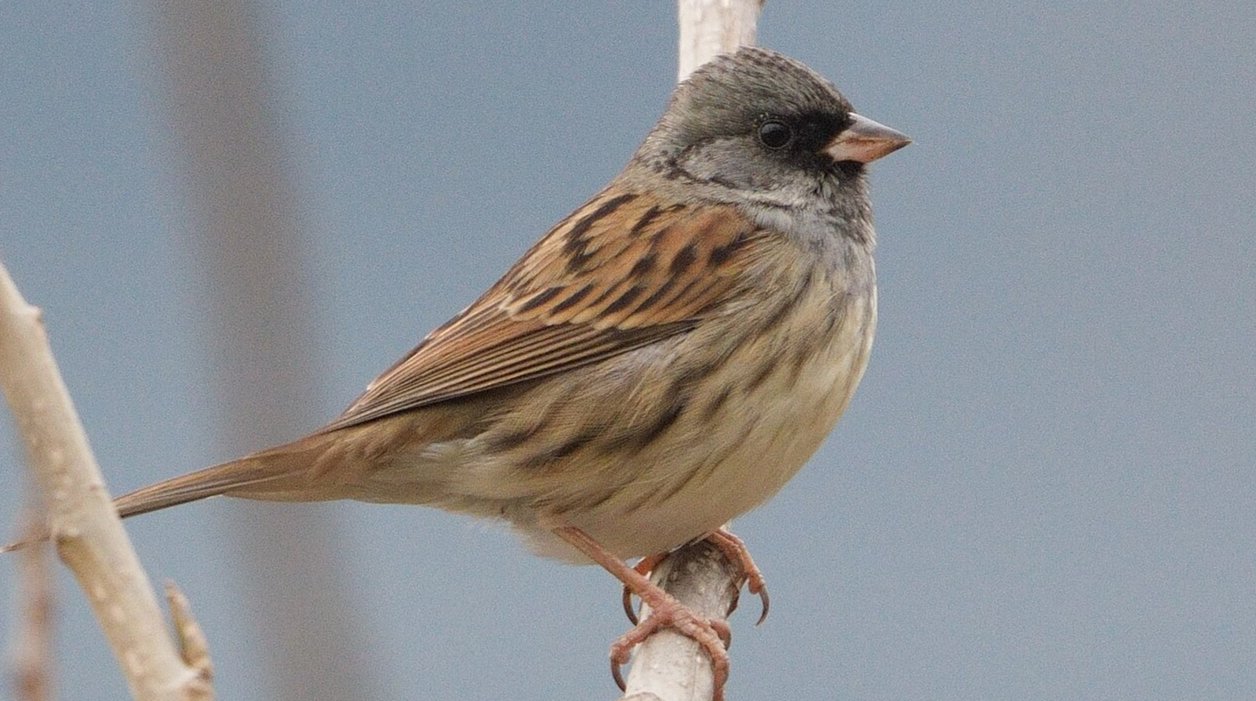
Black-faced Bunting
Emberiza spodocephala
Identify the Black-faced Bunting by sound or photo and log your sightings with Birdpass.


The Black-faced Bunting is a small migratory bunting that breeds from southern Siberia to northern China and Japan and winters in north-east India, southern China and northern Southeast Asia. It breeds in dense undergrowth along waterways in the taiga and winters in bushy farmland and scrub near water. Males have a dark grey head with black and yellowish-green around the bill, while females and young are more subdued and streaked.
Did you know?
- Its scientific name spodocephala means “ash-headed”, a nod to the male's grey head.
- An Asian breeder, it nonetheless turns up as a very rare vagrant in western Europe.
Voice
About the species
Identification
About 16 cm, the size of a Reed Bunting. The breeding male has a dark grey head with yellowish-green and black between the bill and eye. The back is brown with black streaks, the rump brown and the tail dark brown. The underparts are pale yellow with faint dark streaks, and the bill is stout and pinkish. Females and young are strongly streaked below and lack the male's dark grey head.
Family
Emberizidae
Size
Small (sparrow)
Colours
brown, grey, yellow, black
About the habitat
Breeds in dense undergrowth along streams and rivers in the taiga; winters near water in open, bushy and agricultural habitats.
Diet
Mainly seeds, with insects especially when feeding chicks.
Behaviour
A ground-foraging bird that keeps to dense cover. Its call is a short, metallic “tzii”, and it nests on the ground or low in bushes and trees.
Sources
Photo: 大家好64, CC BY 4.0 https://commons.wikimedia.org/wiki/File:Black-faced bunting (Emberiza spodocephala), Hangzhou, China.jpg
Sound: Jochem Verweij, XC936000, CC BY-SA 4.0 https://xeno-canto.org/936000
Text: Wikipedia (English), CC BY-SA 4.0 https://en.wikipedia.org/wiki/Black-faced_bunting
, Hangzhou, China.jpg)