
 Suomi
 Svenska
 Polski
 Čeština
 Slovenčina
 Norsk
 Dansk
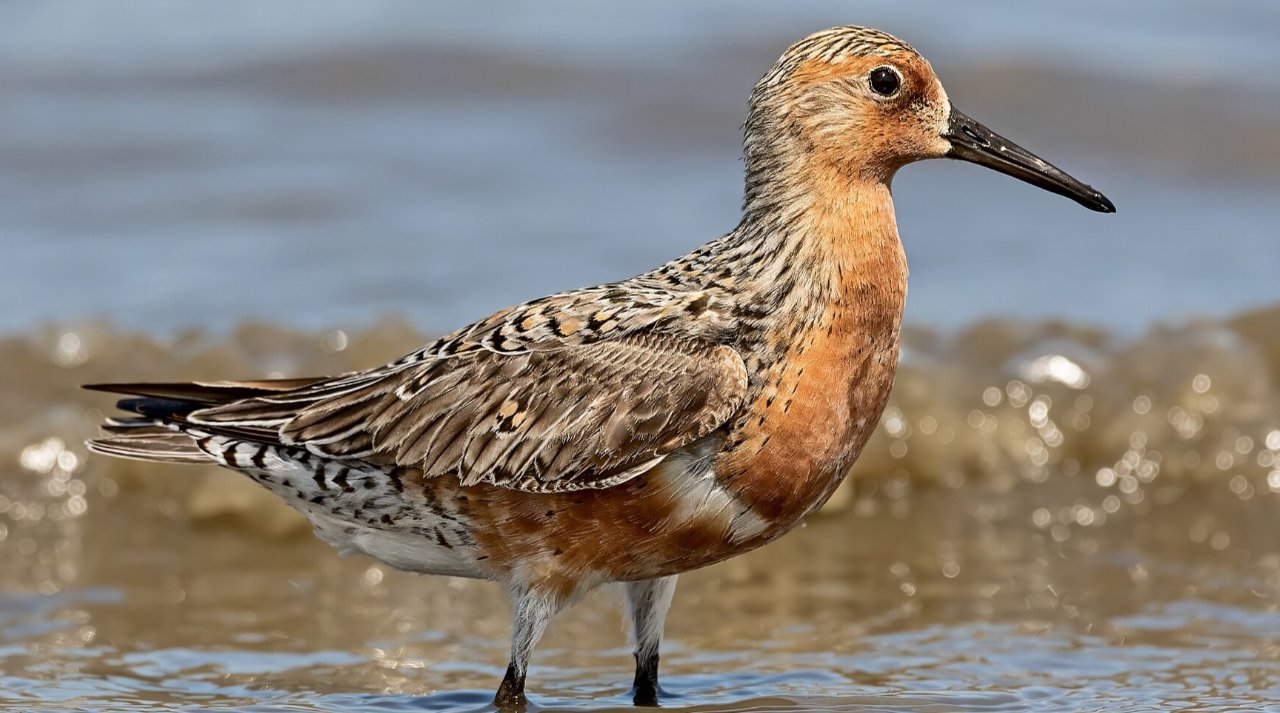
Red Knot
Calidris canutus
Identify the Red Knot by sound or photo and log your sightings with Birdpass.


The Red Knot is a chunky, medium-sized sandpiper that breeds on the High Arctic tundra of North America, Greenland and Siberia and winters on coasts around the world. Its six subspecies make some of the longest migrations of any bird, gathering in huge flocks at traditional stopover sites. It changes from brick-red underparts in the breeding season to plain grey in winter.
Did you know?
- Some Red Knots migrate more than 14,000 km each way between the Arctic and Tierra del Fuego.
- They can rapidly enlarge their gizzard to crush hard-shelled prey in as little as six days.
Voice
About the species
Identification
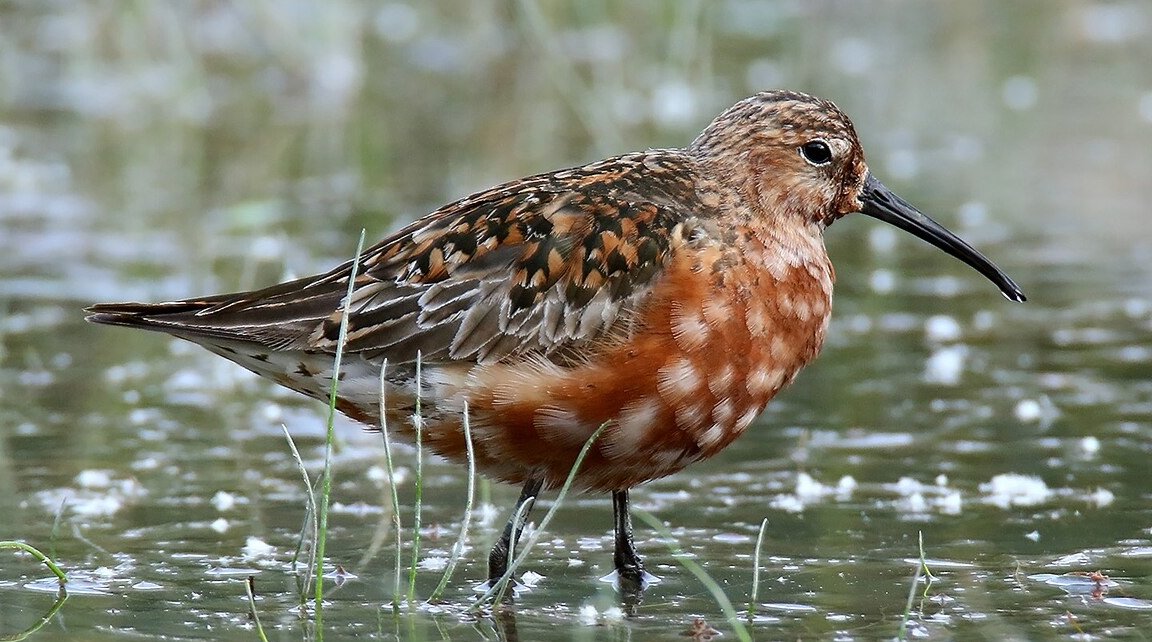
A stocky sandpiper, larger than Dunlin, with short dark legs and a fairly stout, shortish dark bill. In breeding plumage the face, throat and breast are cinnamon to brick-red against mottled grey upperparts; in winter plumage it is plain grey with almost white underparts. Juveniles have a buffy wash on the breast and flanks. The flight call is a soft “wet-wet”.
Family
Scolopacidae
Size
Medium (thrush)
Colours
grey, white, orange, brown
About the habitat
Breeds on moist, sparsely vegetated High Arctic tundra; outside the breeding season extensive intertidal mudflats and sandflats, estuaries and sheltered coasts.
Diet
On the Arctic breeding grounds mainly insects and other arthropods; outside the breeding season mostly hard-shelled molluscs such as small bivalves, swallowed whole and crushed in its gizzard, as well as crustaceans, worms and horseshoe-crab eggs at key stopovers.
Behaviour
Feeds by steady walking and probing in soft sand or mud, often in dense flocks that make synchronised flights and roost together at high tide. Migrates in stages using traditional stopover sites. On the breeding grounds males display with circling song flights; both sexes incubate, but the female leaves after hatching and the male tends the young.
Sources
Photo: Chuck Homler d/b/a Focus On Wildlife, CC BY-SA 4.0 https://commons.wikimedia.org/wiki/File:Rufa red knot (Calidris canutus rufa) in Delaware Bay, New Jersey.jpg
Sound: Sonothèque ADVL, XC1088498, CC0 1.0 https://xeno-canto.org/1088498
Text: Wikipedia (English) + FinBIF species descriptions + GBIF regional observations + Wikipedia (English), CC BY-SA 4.0; FinBIF: CC BY 4.0; GBIF occurrence data; Wikipedia: CC BY-SA 4.0 https://en.wikipedia.org/wiki/Red_knot
 in Delaware Bay, New Jersey.jpg)