Suomi
 Svenska
 Polski
 Čeština
 Slovenčina
 Norsk
 Dansk
Laughing Gull
Leucophaeus atricilla
Identify the Laughing Gull by sound or photo and log your sightings with Birdpass.


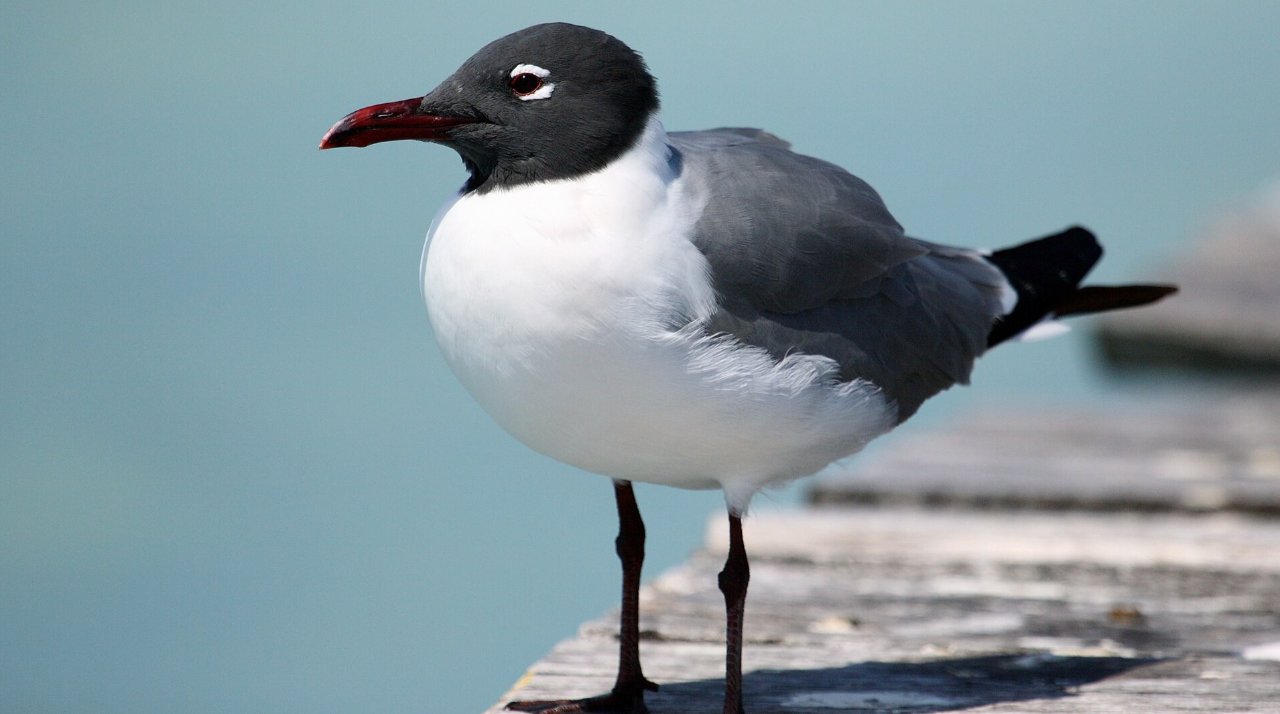
The Laughing Gull is a medium-sized coastal gull of the Americas, instantly recognised by its raucous, laughing call. Breeding adults have a black hood, dark grey upperparts and a long, dark red bill; the hood is mostly lost in winter. It nests in large colonies on Atlantic and Caribbean coasts into northern South America and is a rare vagrant to Europe.
Did you know?
- Its name comes from its high, cackling “ha-ha-ha” call.
- It was long placed in the genus Larus but is now in the New World genus Leucophaeus.
Voice
About the species
Identification
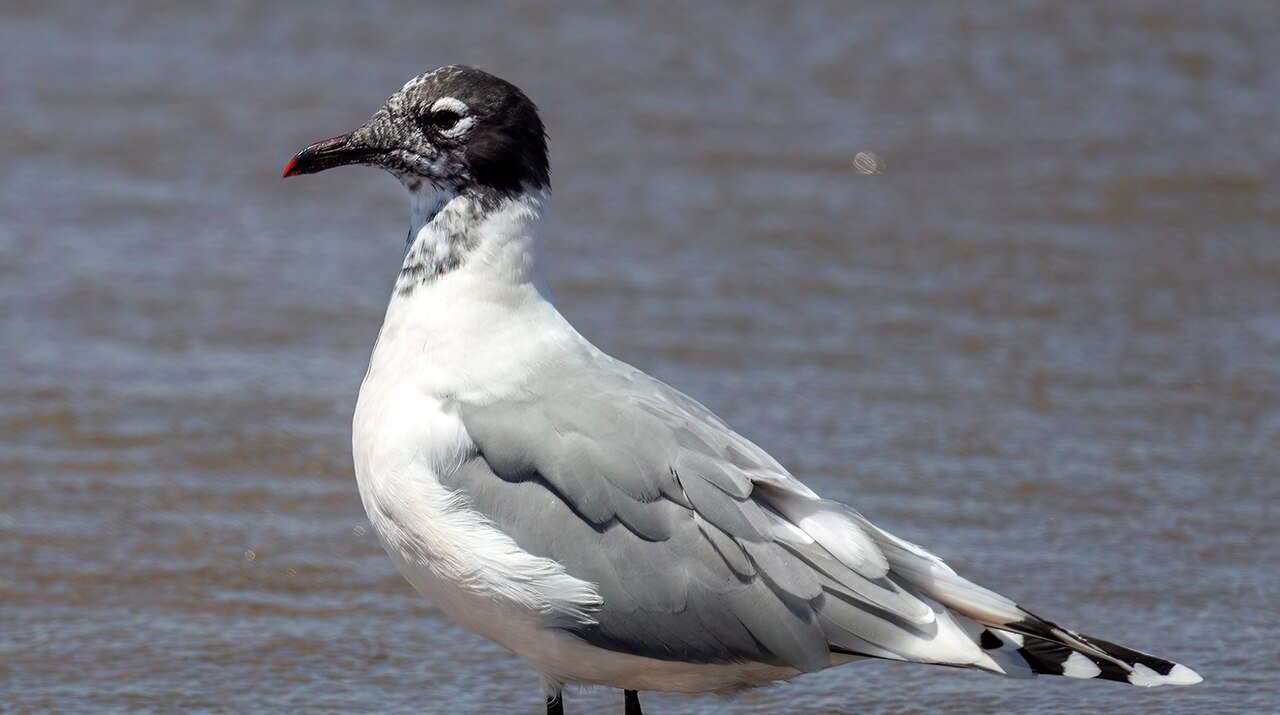
A medium-sized gull (length 36–41 cm, wingspan 98–110 cm). In breeding plumage the head is black, the bill long and dark red, the legs dark and the wingtips wholly black. It is larger and longer-billed than Franklin's Gull. Young birds are dark and can resemble a young Lesser Black-backed Gull, which is much larger. The call sounds like laughter.
Family
Laridae
Size
Large (crow)
Colours
grey, white, black, red
About the habitat
Coasts, beaches, salt marshes, harbours and low coastal islands of the Atlantic and Caribbean.
Diet
Opportunistic: small fish, marine invertebrates, insects, carrion and human scraps along beaches and docks.
Behaviour
Highly colonial, it nests on low coastal islands; both parents build the nest, incubate the usual three eggs and feed the chicks, which fly at about 40 days. Northern breeders migrate south for the winter. It is noisy and assertive, feeding in flocks around beaches, harbours and fishing boats.
Sources
Photo: Cephas, CC BY-SA 4.0 https://commons.wikimedia.org/wiki/File:Leucophaeus atricilla Caye Caulker 04.JPG
Sound: U.S. Fish and Wildlife Service, Public domain https://commons.wikimedia.org/wiki/File:Cape_May_Shorebirds_closer.ogg
Text: Wikipedia (English), CC BY-SA 4.0 https://en.wikipedia.org/wiki/Laughing_gull