Suomi
 Svenska
 Polski
 Čeština
 Slovenčina
 Norsk
 Dansk
Kentish Plover
Anarhynchus alexandrinus
Identify the Kentish Plover by sound or photo and log your sightings with Birdpass.


The Kentish Plover is a small, pale, sandy plover of open beaches, salt flats and lake shores across Europe, Africa and Asia. It breeds on sparsely vegetated shores of saline lakes, lagoons and coasts, and is migratory in the cooler parts of its range, often wintering in Africa, while island populations may be resident. It feeds by running and pecking small invertebrates from wet sand and mud.
Did you know?
- Its English name comes from Kent, England, where it once bred.
- Recent genetic work moved it into the genus Anarhynchus, which previously contained only the Wrybill of New Zealand.
Voice
About the species
Identification
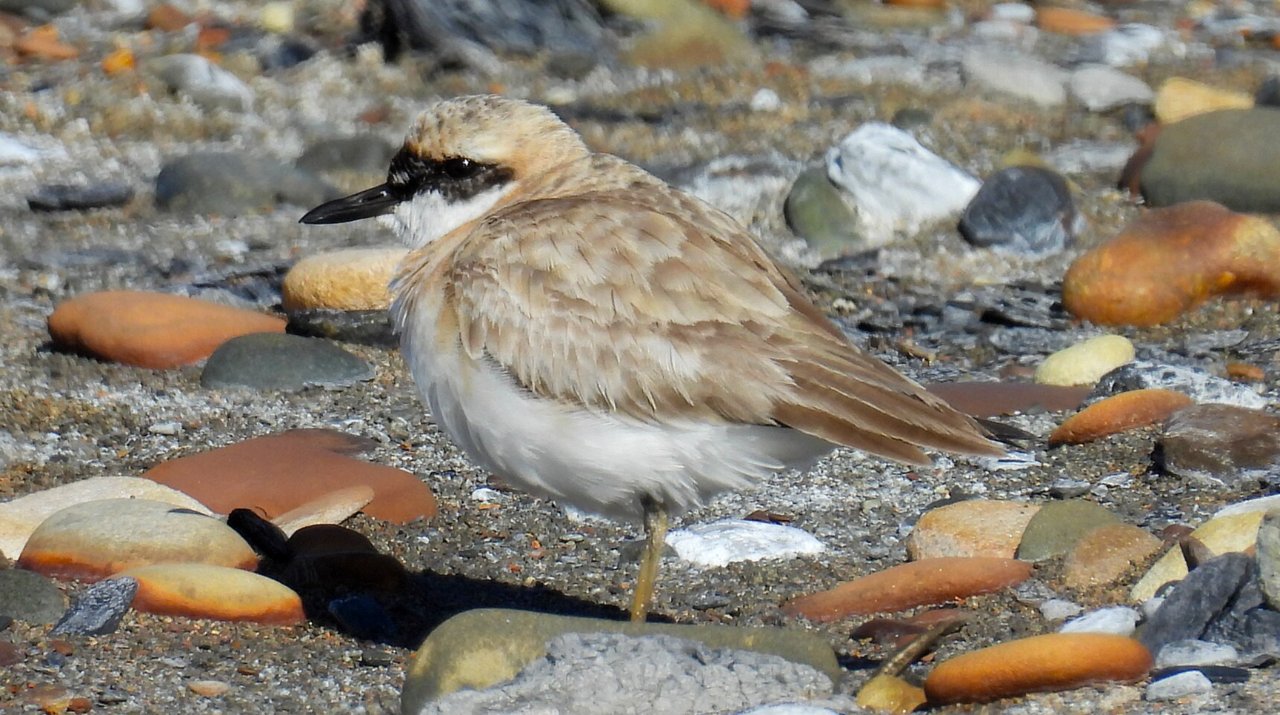
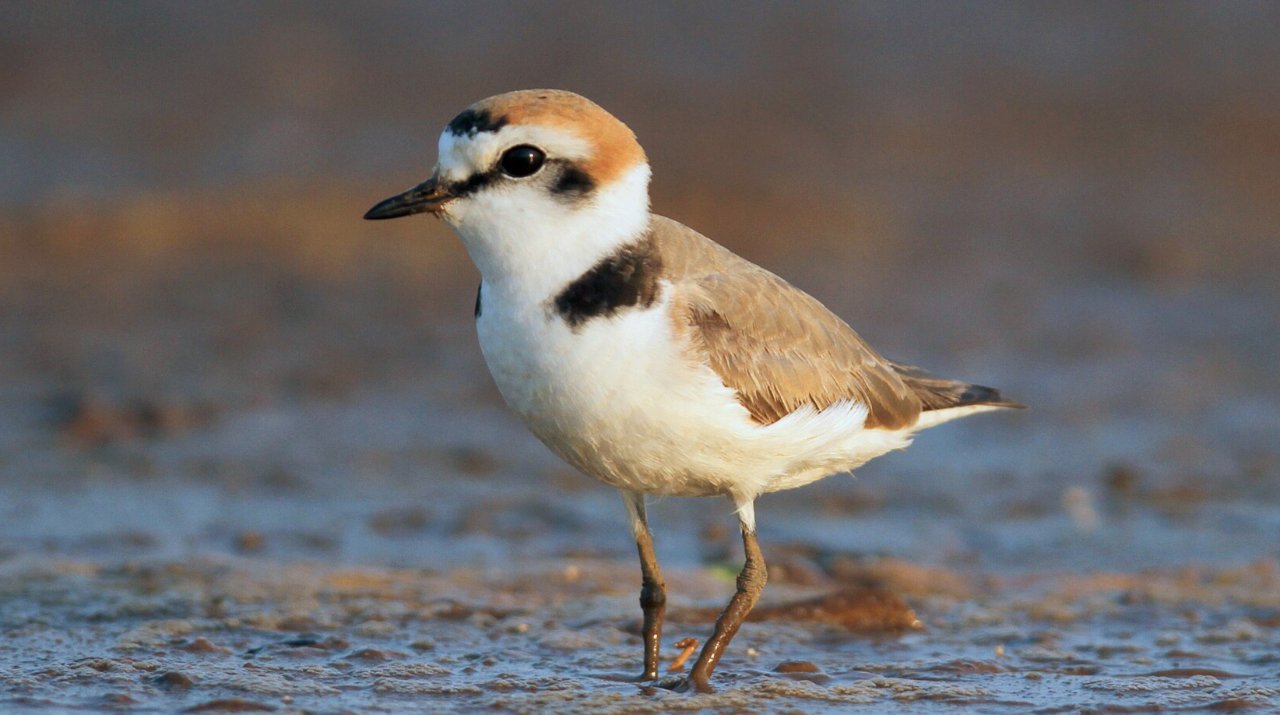
A small, slim plover with pale sandy-brown upperparts and clean white underparts and forehead. The breast band is broken into dark patches at the sides, and there is a dark patch behind the eye. The bill is short, fine and black, and the legs are dark. Compared with Common Ringed Plover it is paler and slimmer, lacks a complete breast band and orange legs; compared with Little Ringed Plover it lacks the yellow eye-ring.
Family
Charadriidae
Size
Small (sparrow)
Colours
white, brown, black, orange
About the habitat
Open, flat, sparsely vegetated shores: sandy or shelly beaches, dunes, salt flats and lagoons, and saline or alkaline lakes inland.
Diet
Inland mainly insects; on coasts small crustaceans, molluscs and worms, picked from wet sand and mud.
Behaviour
A run-stop-peck forager on open ground. It nests in a shallow scrape on sand or shingle lined with bits of shell, pebbles and plant material; both adults incubate, and the downy chicks leave the nest soon after hatching. Mates may split up after the first brood, with one parent staying with the chicks.
Sources
Photo: Original: Davidvraju, edit: MPF, CC BY-SA 4.0 https://commons.wikimedia.org/wiki/File:Kentish Plover Charadrius alexandrinus, India.jpg
Sound: Joost van Bruggen, CC BY-SA 4.0 https://commons.wikimedia.org/wiki/File:Charadrius_alexandrinus_-_Kentish_Plover_XC432232.mp3
Text: Wikipedia (English) + GBIF regional observations + Wikipedia (Finnish), CC BY-SA 4.0; GBIF occurrence data; Wikipedia: CC BY-SA 4.0 https://en.wikipedia.org/wiki/Kentish_plover