
 Suomi
 Svenska
 Polski
 Čeština
 Slovenčina
 Norsk
 Dansk
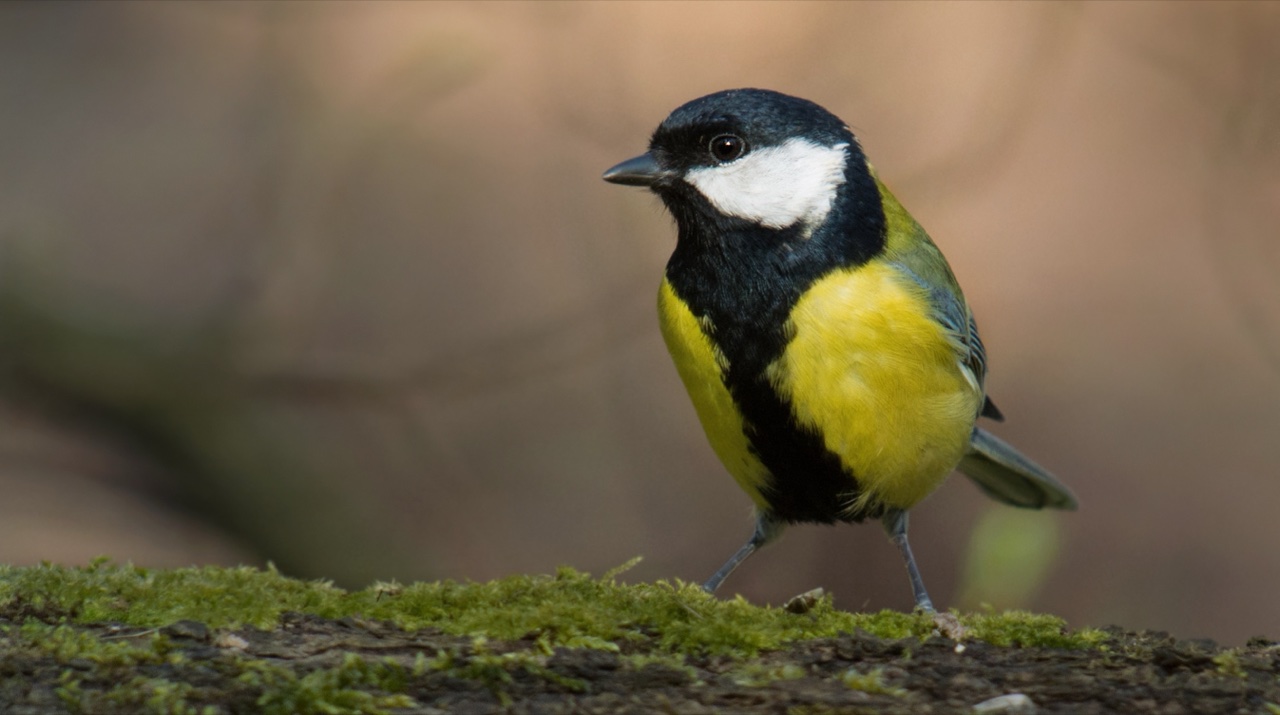
Great Tit
Parus major
Identify the Great Tit by sound or photo and log your sightings with Birdpass.


The Great Tit is a familiar songbird of woods, parks and gardens across Europe, the Middle East and Central Asia. It has a black head with bold white cheeks, an olive back and yellow underparts split by a black stripe. Highly adaptable and a regular at feeders, it is one of the most intensively studied birds in the world. Most birds are resident, although northern populations make irruptive movements.
Did you know?
- Great Tits famously learned to peck open foil milk bottle tops to reach the cream.
- In winter it has been known to kill small hibernating bats.
Voice
About the species
Identification
Yellow underparts split by a black central stripe, a greenish back and blue-grey wings with a white wing bar; the tail has white edges. The head is glossy black with a large white cheek patch. The male's breast stripe is broader, and its yellow usually brighter, while young birds are duller with yellowish cheeks. It is larger than Blue Tit and Coal Tit.
Family
Paridae
Size
Small (sparrow)
Colours
yellow, black, white, green, grey
About the habitat
Almost any woodland and wooded edge, as well as scrub, parks, gardens and farmland with hedges; it thrives in both rural and urban areas.
Diet
Mainly insects and other small invertebrates in the breeding season, especially caterpillars for the young; in autumn and winter seeds, nuts, buds and berries, and it readily visits feeders. It has even been recorded killing hibernating bats.
Behaviour
Active and acrobatic, gleaning insects from leaves and bark and often hanging upside down. It is territorial in the breeding season and has a varied song, typically a ringing “teacher-teacher”. It nests in tree holes or nest boxes; the female incubates a large clutch of up to a dozen eggs, and both parents feed the young. In winter it joins mixed-species flocks and can be dominant at feeders.
Sources
Photo: Frank Vassen from Brussels, Belgium, CC BY 2.0 https://commons.wikimedia.org/wiki/File:Great tit (Parus major), Parc de Woluwé, Brussels (13042792905).jpg
Sound: Gavin Vella, XC129635, CC BY-SA 3.0 https://xeno-canto.org/129635
Sound: Marie-Lan Taÿ Pamart, XC516950, CC BY-SA 4.0 https://xeno-canto.org/516950
Sound: Benoît Van Hecke, XC701659, CC BY-SA 4.0 https://xeno-canto.org/701659
Text: Wikipedia (English) + FinBIF species descriptions, CC BY-SA 4.0; FinBIF: CC BY 4.0 https://en.wikipedia.org/wiki/Great_tit
, Parc de Woluwé, Brussels (13042792905).jpg)