Suomi
 Svenska
 Polski
 Čeština
 Slovenčina
 Norsk
 Dansk
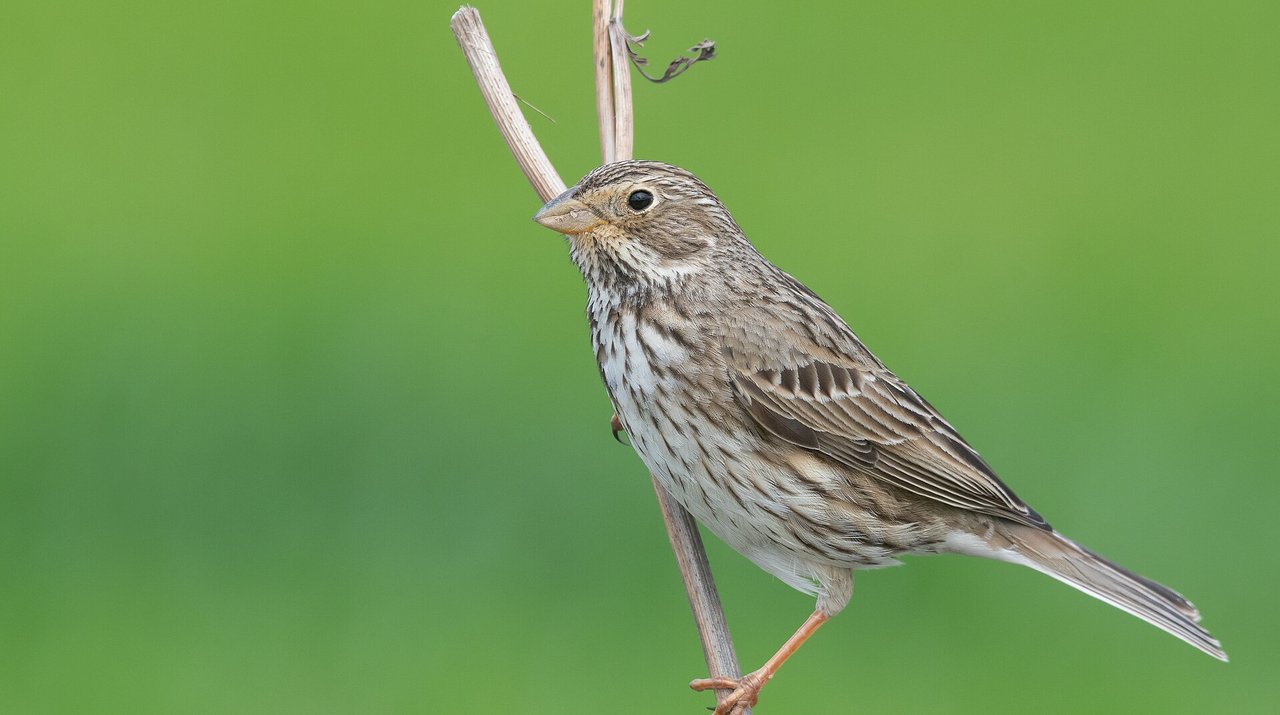
Corn Bunting
Emberiza calandra
Identify the Corn Bunting by sound or photo and log your sightings with Birdpass.


The Corn Bunting is a large, chunky bunting with heavily streaked buff-brown plumage and a heavy, conical bill; the sexes look alike, though males are a bit bigger. It ranges from western Europe and North Africa to north-western China, living in open farmland and rough, weedy ground. Males are famous for a metallic, “jangling keys” song delivered from posts and wires. The species has declined in parts of north-west Europe because of intensive agriculture and has vanished from some areas altogether.
Did you know?
- The male's song is often compared to a bunch of jangling keys, usually delivered from a fence post, bush or wire.
- Males can be polygynous, sometimes pairing with up to three females, yet some still stay unmated in a season.
Voice
About the species
Identification
A lark-sized, sturdy bunting with a thick bill. It resembles a young Yellowhammer but is larger and heavier, with no rufous in the wings or rump and no white in the tail. The face is plain, lacking the bold head pattern of many buntings. It often sits upright on posts and other lookouts. The sexes look alike.
Family
Emberizidae
Size
Small (sparrow)
Colours
brown, white, grey
About the habitat
Open farmland with few trees – cereal fields, fallows, weedy margins and rough grassland – and steppe-like country. Largely resident, though birds from colder parts of central Europe and Asia move south in winter.
Diet
Mainly seeds of cereals and wild grasses and weeds; in spring and summer also insects such as crickets and other invertebrates, especially to feed the chicks.
Behaviour
Often perches conspicuously on wires or posts to sing and forages mostly on the ground. Males defend territories and may hold harems of up to three females, yet give little parental care, only helping to feed chicks once they are well grown. It nests on or near the ground in grass-lined cups. Outside the breeding season it forms loose flocks in open farmland.
Sources
Photo: El Golli Mohamed, CC BY-SA 4.0 https://commons.wikimedia.org/wiki/File:Bruant proyer Ichkeul018.jpg
Sound: Sonothèque ADVL, XC707698, CC0 1.0 https://xeno-canto.org/707698
Sound: Sonothèque ADVL, XC730610, CC0 1.0 https://xeno-canto.org/730610
Text: Wikipedia (English) + FinBIF species descriptions, CC BY-SA 4.0; FinBIF: CC BY 4.0 https://en.wikipedia.org/wiki/Corn_bunting