Suomi
 Svenska
 Polski
 Čeština
 Slovenčina
 Norsk
 Dansk
Common Chaffinch
Fringilla coelebs
Identify the Common Chaffinch by sound or photo and log your sightings with Birdpass.


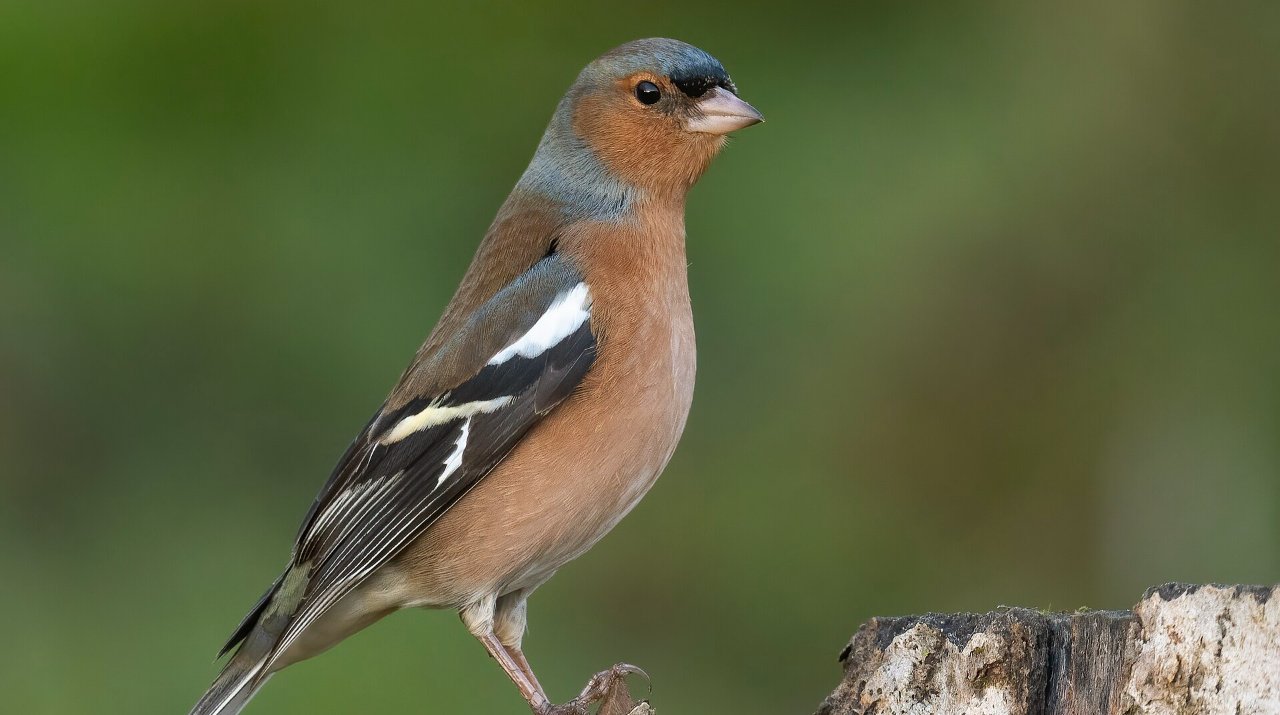
The Common Chaffinch is a small, widespread finch of Europe and the wider Palearctic, found in woods, parks and gardens. Males have a blue-grey cap and warm reddish underparts, while females are more subdued; both show bold white wing bars and white tail sides. Its ringing, cascading song from exposed perches is a hallmark of spring. Northern birds migrate south for the winter, while many in milder regions are resident.
Did you know?
- Its scientific name coelebs means “bachelor”: Linnaeus noted that in northern winters males and females were often separated because females migrate further.
- The name “chaffinch” comes from its habit of picking through chaff after threshing to find spilled grain.
Voice
About the species
Identification
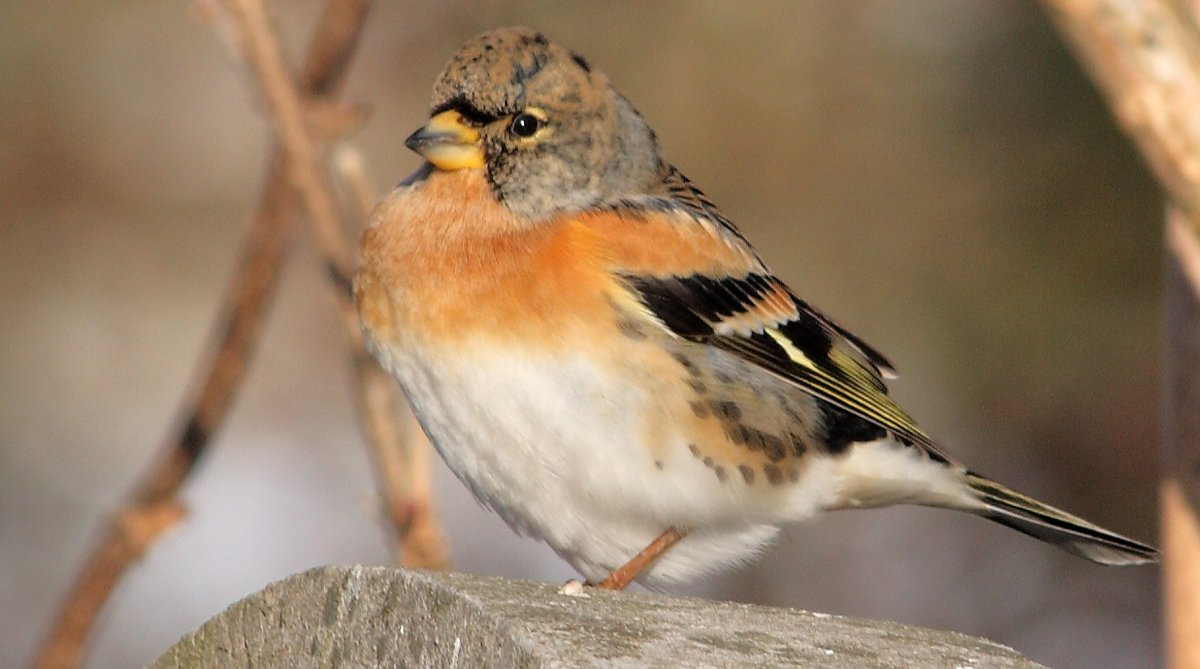
Length 16–17 cm. The male is more colourful than the female, with rufous-pink underparts and a blue-grey crown and nape; the female is grey-brown. Both sexes have two white wing bars and a greenish rump. The bill is stout, bluish in the male and dark in the female. Told from Brambling by its greenish, not white, rump and lack of orange on the shoulders and breast.
Family
Fringillidae
Size
Small (sparrow)
Colours
brown, grey, white, blue, black
About the habitat
Almost all wooded and semi-open habitats – deciduous, coniferous and mixed forest, forest edges, hedgerows, shelterbelts, parks and gardens – wherever there are trees and some open ground for foraging.
Diet
Mainly seeds of grasses, weeds and trees, mostly from the ground, as well as buds; in spring and summer invertebrates, especially caterpillars, which are the main food of the nestlings. It also visits feeders.
Behaviour
Males sing loudly from exposed perches to advertise territories, and songs are learned, forming regional dialects. The female builds a neat, lichen-camouflaged cup nest in a tree fork; clutches of four or five hatch after about 13 days, and the young fledge two weeks later. Outside the breeding season it forms flocks in open country, flying with a bounding finch flight.
Sources
Photo: caroline legg, CC BY 2.0 https://commons.wikimedia.org/wiki/File:Male Chaffinch - Fringilla coelebs.jpg
Sound: Sonothèque ADVL, XC1088506, CC0 1.0 https://xeno-canto.org/1088506
Sound: Sonothèque ADVL, XC954053, CC0 1.0 https://xeno-canto.org/954053
Sound: Sonothèque ADVL, XC953879, CC0 1.0 https://xeno-canto.org/953879
Sound: Olivier Grimm, XC560861, CC BY-SA 4.0 https://xeno-canto.org/560861
Text: Wikipedia (English) + FinBIF species descriptions, CC BY-SA 4.0; FinBIF: CC BY 4.0 https://en.wikipedia.org/wiki/Eurasian_chaffinch