Suomi
 Svenska
 Polski
 Čeština
 Slovenčina
 Norsk
 Dansk
White-winged Scoter
Melanitta deglandi
Identify the White-winged Scoter by sound or photo and log your sightings with Birdpass.


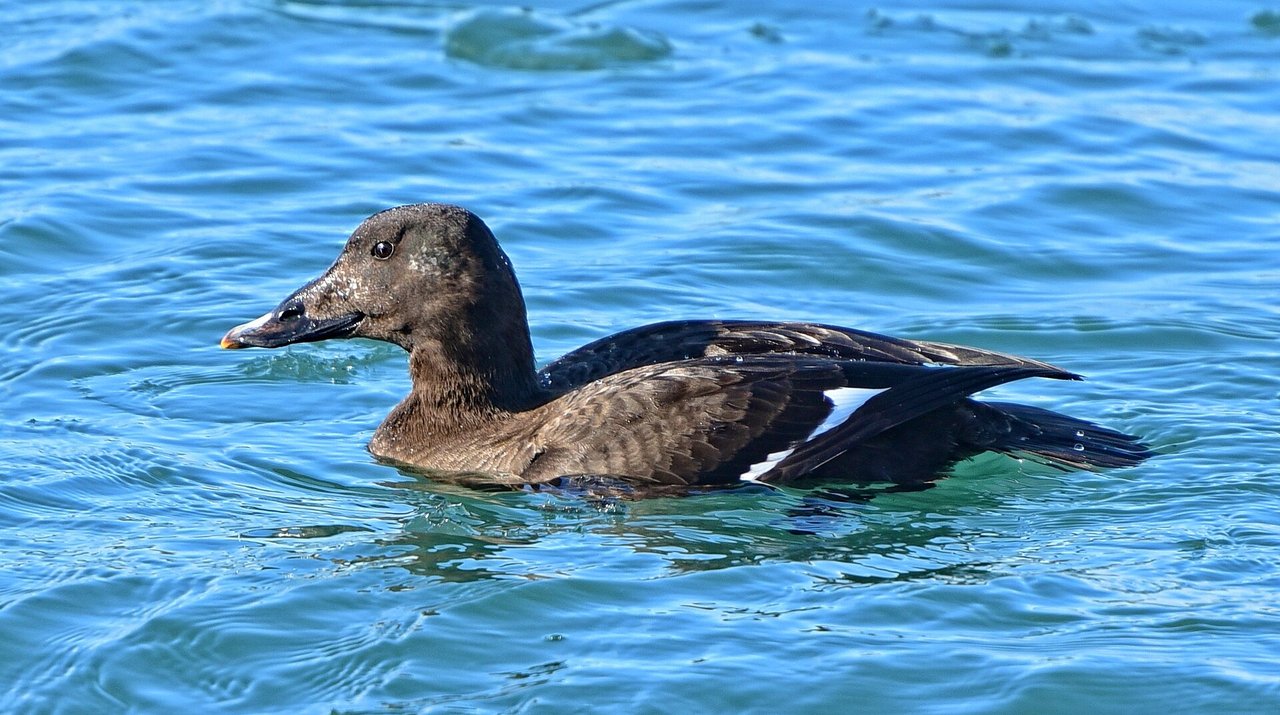
The White-winged Scoter is North America's largest scoter, a hefty sea duck named for the bold white wing patches that flash in flight. Males are mostly black with a white comma around the eye and an orange-red bill with a dark knob, while females are dark brown with pale face patches. It breeds across the boreal forest from Alaska through western Canada and winters on cold coasts and the Great Lakes. It was formerly lumped with the Velvet and Stejneger's Scoters.
Did you know?
- On crowded breeding lakes broods may merge into crèches of up to 100 ducklings.
- Its muscular gizzard can make up about 8% of its body mass.
About the species
Identification
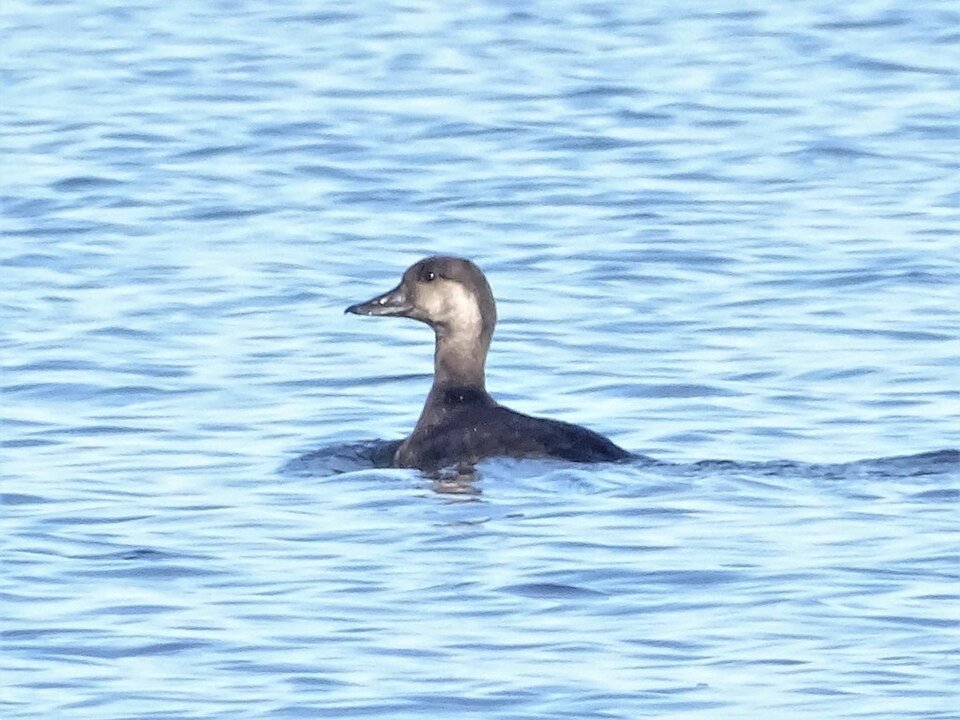
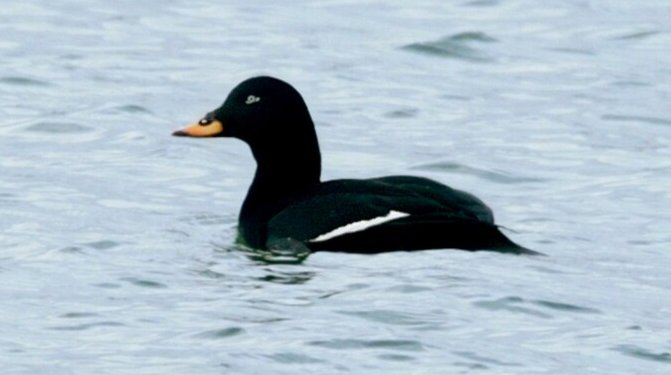
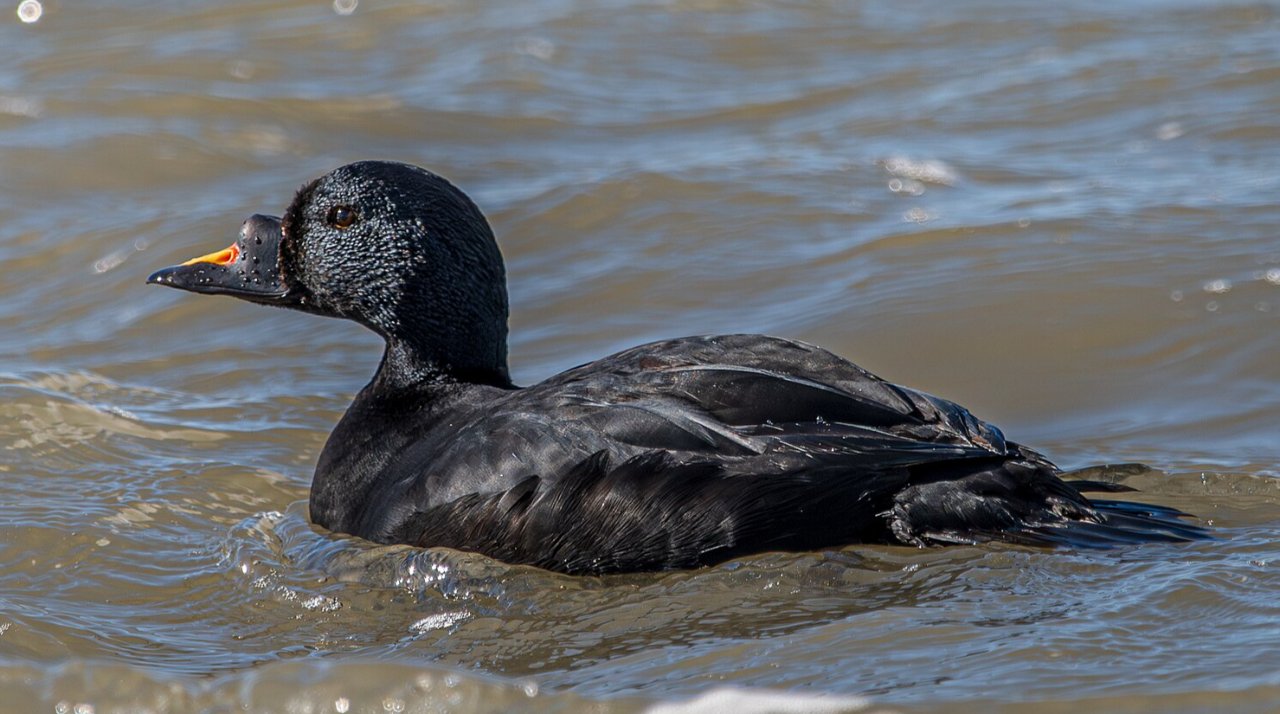
A large, dark diving duck; the male is almost all black, and the white wing patch shows clearly in flight. The female is brown-grey with pale face patches and a sturdy bill. Separation from Velvet and Stejneger's Scoters relies on the shape of the white facial mark and the bill profile: in the male the white mark is often long and curves back behind the eye, whereas in Velvet Scoter the white lies more below the eye; the male's bill knob is usually lower and slopes forward more than in Stejneger's Scoter, and the flanks are browner. In flight the species look very alike.
Family
Anatidae
Size
Very large (swan)
Colours
black, white, orange
About the habitat
Breeds on lakes, rivers and wetlands in boreal forest and tundra; winters on temperate coastal waters and large lakes.
Diet
A deep-diving bottom feeder: in fresh water mainly crustaceans and aquatic insects, at sea molluscs and crustaceans, including hard-shelled clams crushed by its powerful gizzard.
Behaviour
Usually in tight flocks that dive in sequence and often take off together. Pairs nest in a lined scrape on the ground near water. Broods often merge into large crèches, and females tend the young for a few weeks before leaving them.
Sources
Photo: Mykola Swarnyk, CC BY-SA 3.0 https://commons.wikimedia.org/wiki/File:Melanitta deglandi, female, Toronto.jpg
Text: Wikipedia (English), CC BY-SA 4.0 https://en.wikipedia.org/wiki/White-winged_scoter