Suomi
 Svenska
 Polski
 Čeština
 Slovenčina
 Norsk
 Dansk
Western Yellow Wagtail
Motacilla flava
Identify the Western Yellow Wagtail by sound or photo and log your sightings with Birdpass.


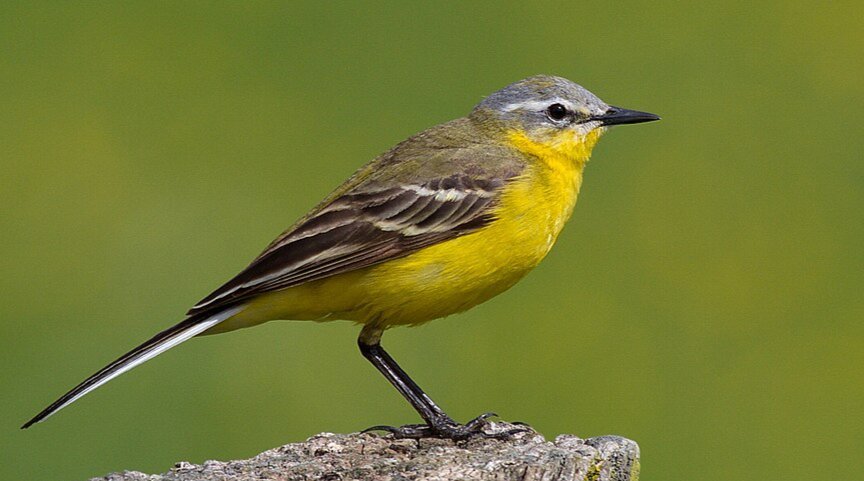
The Western Yellow Wagtail is a small, slender wagtail of open, damp country across temperate Europe and western Asia. Breeding males are olive above and bright yellow below, with head colours and patterns that vary between subspecies, from grey-headed to blue-, black- or yellow-headed. It is the shortest-tailed European wagtail. Most birds winter in tropical Africa, and it often feeds around grazing livestock.
Did you know?
- In ancient Egypt the yellow wagtail may have inspired the Bennu bird, a possible model for the phoenix.
- Its many head-colour forms make it one of the most confusing birds for taxonomists.
Voice
About the species
Identification
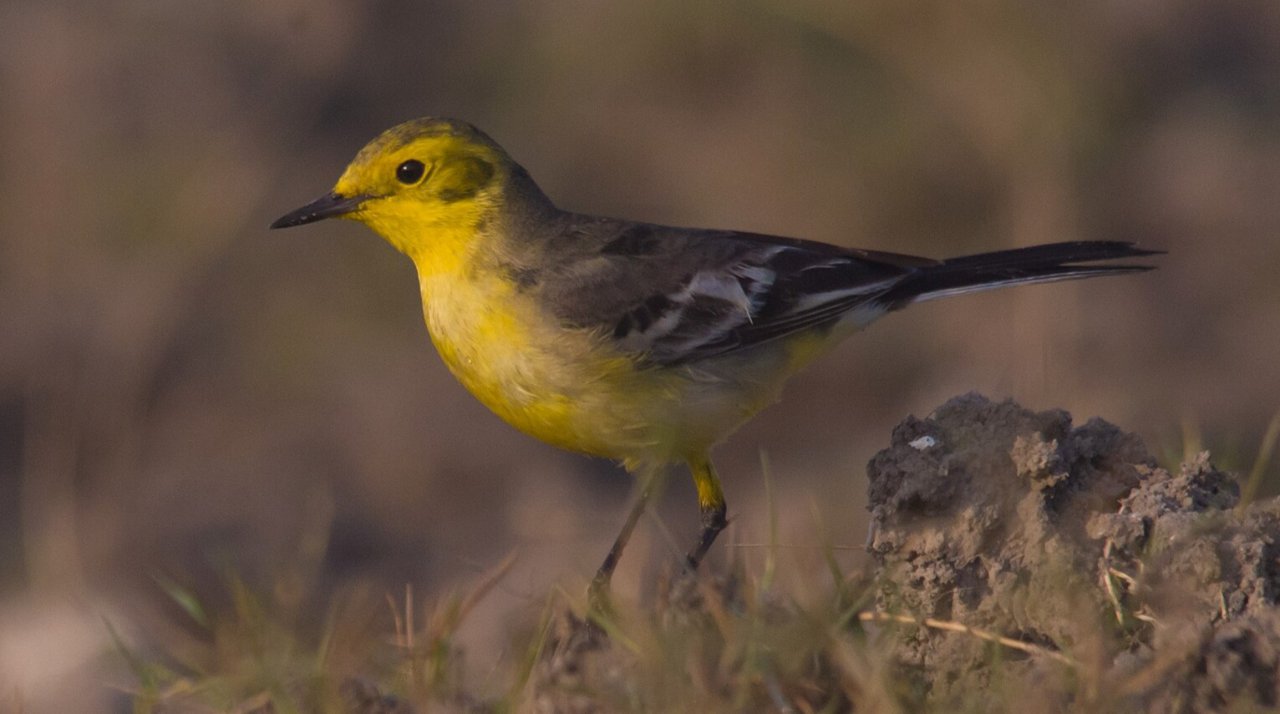
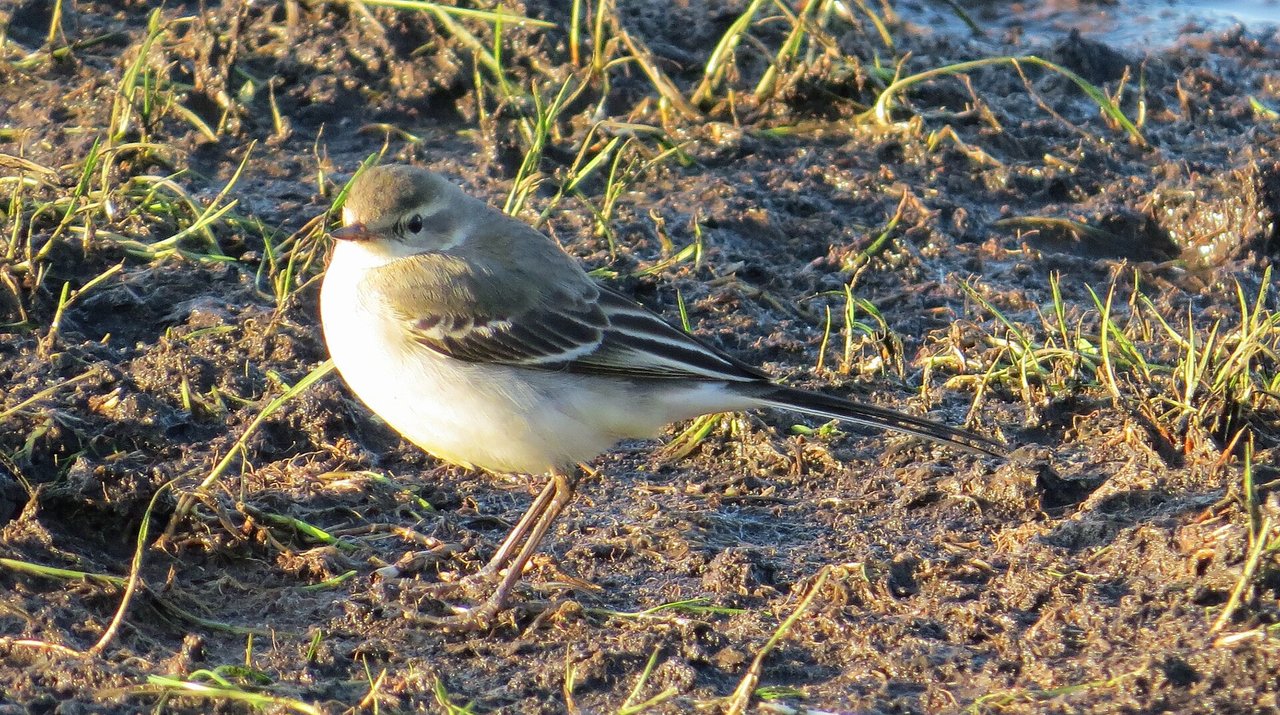
A long-tailed wagtail with white outer tail feathers. The breeding male is bright yellow below and olive-green above, with a grey or dark head depending on subspecies, often with a white supercilium; the female is paler. Young birds are pale brownish with a yellowish vent and dark spots on the upper breast. Young Western Yellow Wagtails can be confused with young Citrine Wagtails. Compared with Grey Wagtail it has a greenish back and a shorter tail.
Family
Motacillidae
Size
Small (sparrow)
Colours
yellow, green, grey, white, black
About the habitat
Open, low-vegetation habitats that are damp or near water – wet meadows, bogs, marsh and lake edges, grazed pastures, coastal meadows and arable fields.
Diet
Mainly small invertebrates – flies, midges, beetles, ants and spiders – picked from the ground and low vegetation or snatched in brief flights, often around cattle.
Behaviour
An active ground-feeder that walks and runs while wagging its tail, sallying after flying insects and following grazing animals to catch disturbed flies. It often perches on posts or stems and gives a thin, high “tsweep” call. It nests on the ground in a grassy tussock, laying 4–8 speckled eggs. On migration it gathers in loose flocks and roosts in reedbeds.
Sources
Photo: Frebeck, CC BY-SA 3.0 https://commons.wikimedia.org/wiki/File:Wiesenschafstelze.JPG
Sound: Marie-Lan Taÿ Pamart, XC488466, CC BY-SA 4.0 https://xeno-canto.org/488466
Sound: Joost van Bruggen, XC436362, CC BY-SA 4.0 https://xeno-canto.org/436362
Text: Wikipedia (English) + FinBIF species descriptions, CC BY-SA 4.0; FinBIF: CC BY 4.0 https://en.wikipedia.org/wiki/Western_yellow_wagtail