Suomi
 Svenska
 Polski
 Čeština
 Slovenčina
 Norsk
 Dansk
Eastern Yellow Wagtail
Motacilla tschutschensis
Identify the Eastern Yellow Wagtail by sound or photo and log your sightings with Birdpass.


The Eastern Yellow Wagtail is a small, slender wagtail of the eastern Palearctic and Alaska, formerly lumped with the Western Yellow Wagtail but now treated as a separate species on genetic evidence. Breeding males are olive above and bright yellow below, and it constantly wags its long tail. It winters in South and Southeast Asia and Australia and is a rare vagrant to Europe.
Did you know?
- A specimen from James Cook's third Pacific voyage was painted by the expedition's artist William Wade Ellis.
- It is best told from the Western Yellow Wagtail by its call.
Voice
About the species
Identification
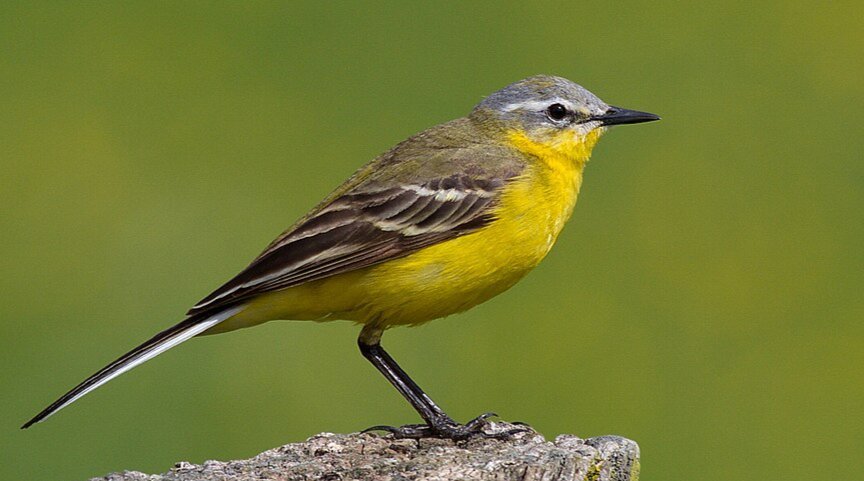
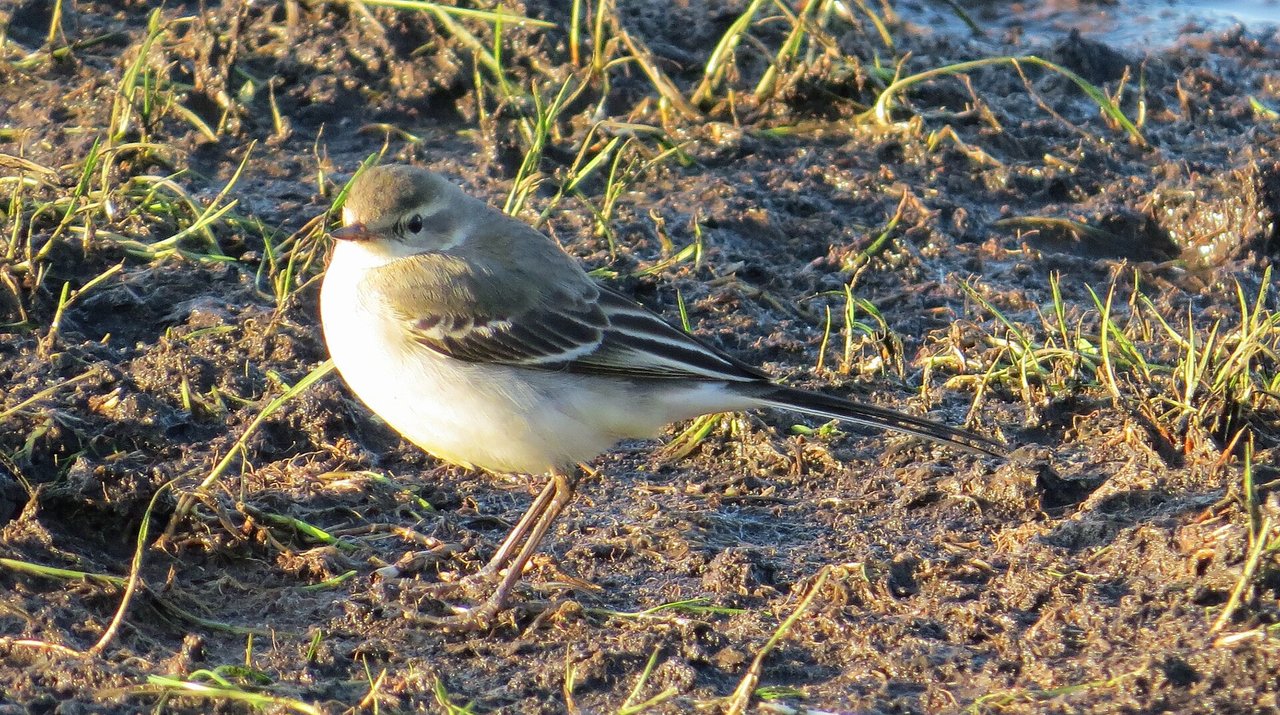
About 15–16 cm long, very slim with a long, constantly bobbing tail. The breeding male is olive-green above and bright yellow below; head colour and pattern vary between subspecies. Females and first-winter birds are paler, with the yellow muted by white, and often look greyish. The bill and legs are black. The hind claw is long and only slightly curved, which separates it from Western Yellow Wagtail, whose hind claw is shorter and more curved; the call is also sharper and harsher.
Family
Motacillidae
Size
Small (sparrow)
Colours
yellow, green, grey, white
About the habitat
Open, wet meadows, marshy grasslands and tundra; in winter paddies, grassland and wetlands.
Diet
Mainly small insects picked from the ground and low vegetation in open, damp places.
Behaviour
Active and restless, with a constantly wagging tail; it gives a sharp, rasping “tsrreep” call. It nests on the ground in tussocks, laying 4–8 speckled eggs.
Sources
Photo: MPF, CC BY-SA 4.0 https://commons.wikimedia.org/wiki/File:2019-12-16 Eastern Yellow Wagtail Motacilla tschutschensis, Prestwick Carr, Northumberland 12.jpg
Sound: Jochem Verweij, XC930654, CC BY-SA 4.0 https://xeno-canto.org/930654
Text: Wikipedia (English), CC BY-SA 4.0 https://en.wikipedia.org/wiki/Eastern_yellow_wagtail