
 Suomi
 Svenska
 Polski
 Čeština
 Slovenčina
 Norsk
 Dansk
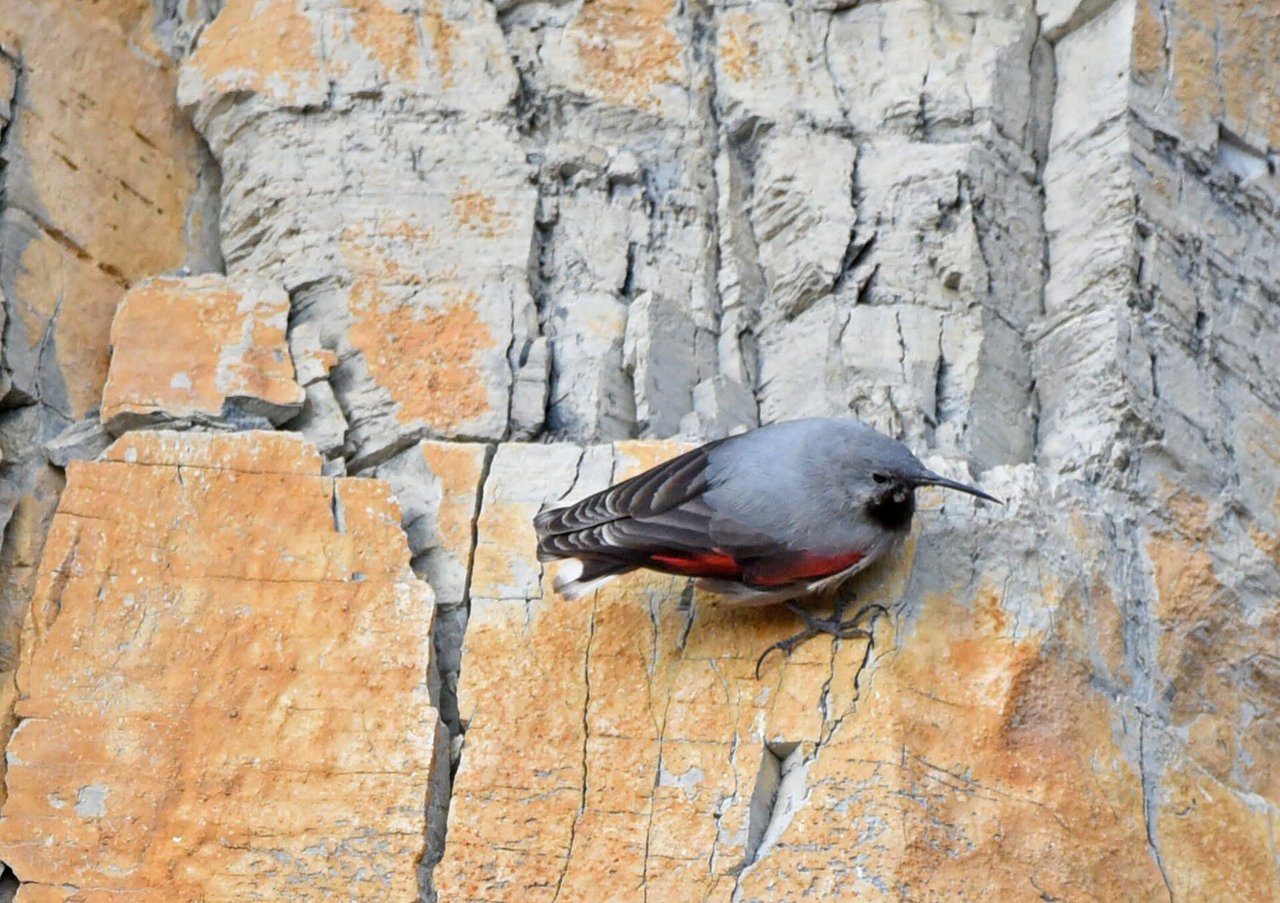
Wallcreeper
Tichodroma muraria
Identify the Wallcreeper by sound or photo and log your sightings with Birdpass.


The Wallcreeper is a distinctive cliff-dwelling songbird of the Palearctic mountains, renowned for its crimson, white-spotted wings that flash as it flutters along rock faces. It is the sole living member of both its genus and family, a close relative of nuthatches yet clearly unique. Specialised for life on sheer stone, it gleans tiny invertebrates from crevices and often moves to lower rocky sites in winter.
Did you know?
- Its scientific names mean “wall runner” (from Greek teikhos and dromos) and “of walls” (Latin muraria).
- It is the only extant member of the family Tichodromidae.
About the species
Identification
A small, slim bird with a fine, slightly downcurved bill and short tail. Overall blue‑grey body contrasts with blackish wings and tail edged with white; when the wings open they show broad crimson panels with white spots—an unmistakable, “butterfly‑like” flash. Breeding males show a black throat; females and both sexes in non‑breeding plumage have a whitish throat. Its fluttering, spreading-wing motion on vertical rock distinguishes it from nuthatches and treecreepers.
Family
Tichodromidae
Size
Small (sparrow)
Colours
grey, red, black, white
About the habitat
Steep rocky habitats in high mountains, especially cliffs, crags, gorges, and large rock walls. Nests deep in crevices or caves; outside the breeding season may descend to lower elevations, using rocky outcrops and stone structures.
Diet
Primarily insects and spiders picked from rock faces and crevices; occasionally snatches flying insects in short sallies.
Behaviour
Creeps and flutters over cliffs in short bursts, often with wings half-spread; can be surprisingly confiding yet secretive near nests. Pairs defend breeding territories, while in winter individuals hold feeding territories. Song is a high, wavering whistle; otherwise often quiet.
Sources
Photo: Pierre-Marie Epiney, CC BY-SA 2.0 https://commons.wikimedia.org/wiki/File:Tichodrome échelette Tichodroma muraria aDSC 1009 (50997238804).jpg
Text: Wikipedia (English), CC BY-SA 4.0 https://en.wikipedia.org/wiki/Wallcreeper
.jpg)