
 Suomi
 Svenska
 Polski
 Čeština
 Slovenčina
 Norsk
 Dansk
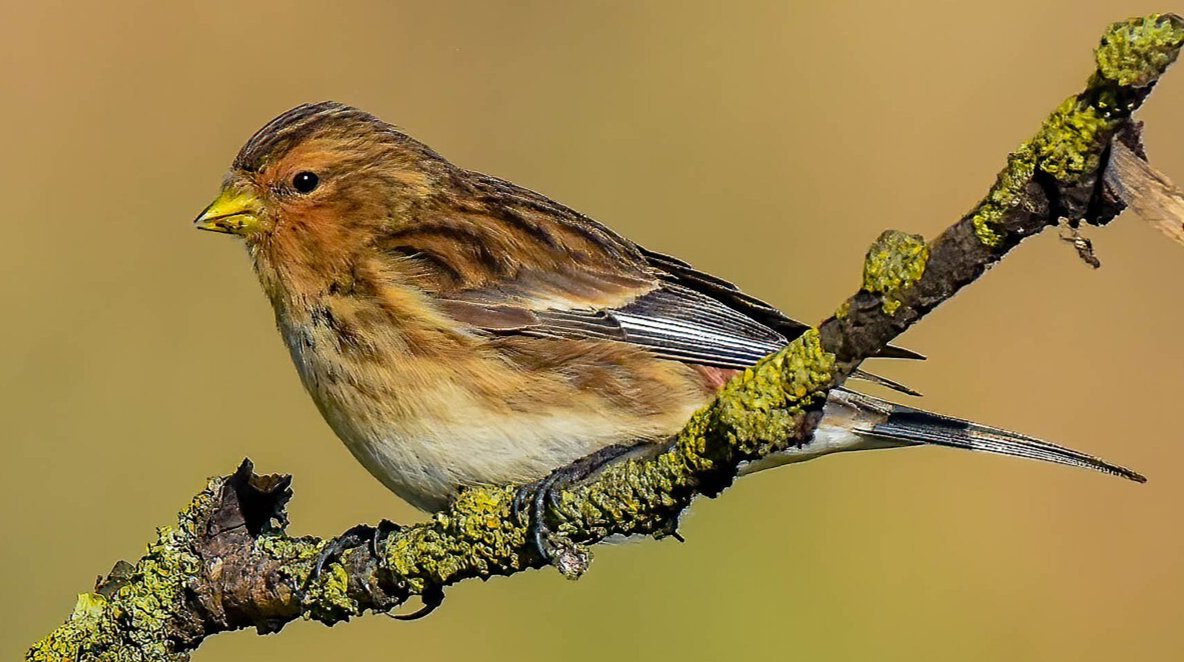
Twite
Linaria flavirostris
Identify the Twite by sound or photo and log your sightings with Birdpass.


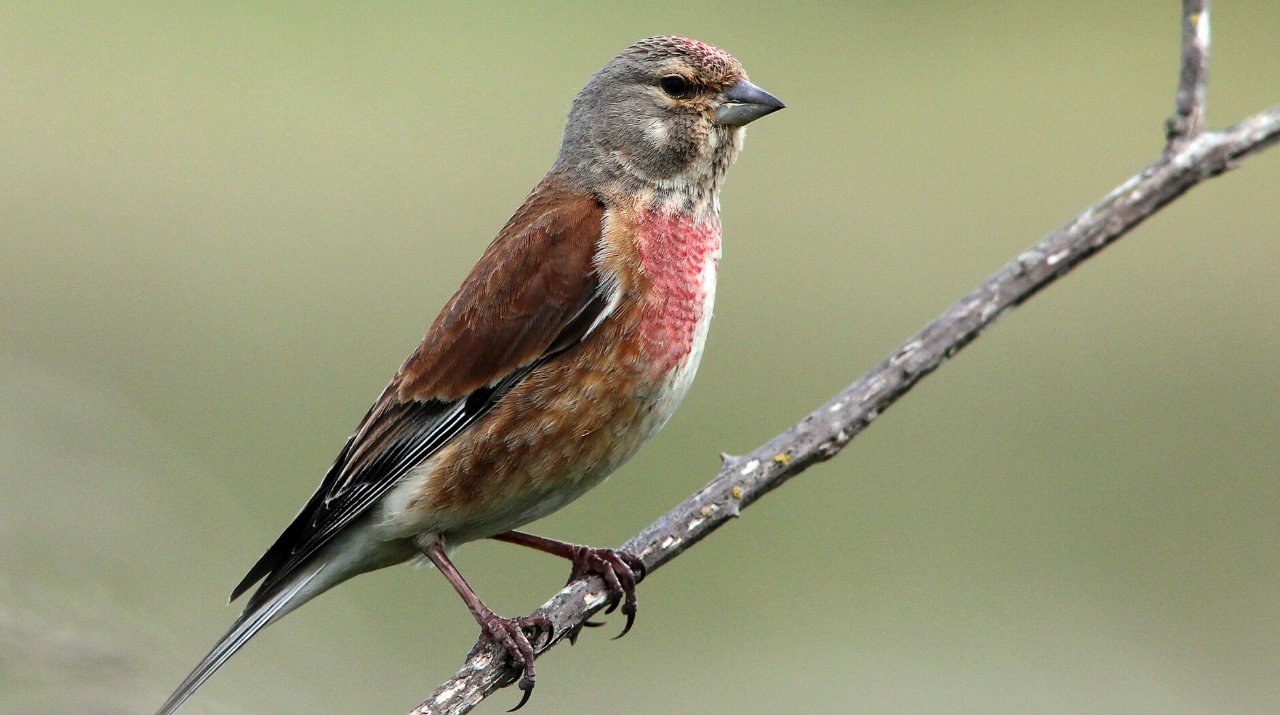
The Twite is a small, streaky brown finch of northern Europe and the mountains of Asia, with a patchy range. It resembles the Linnet but lacks the red head and breast; males have a pink rump, and the bill is yellow in winter and grey in summer. Partially migratory, it gathers in large flocks on coasts and salt marshes outside the breeding season, feeding mainly on small seeds. Its name imitates its nasal “twaa-it” call.
Did you know?
- Its name imitates its nasal “twaa-it” call.
- Its scientific name flavirostris means “yellow-billed”, after its winter bill colour.
Voice
About the species
Identification
A smallish, mostly brown, darkly streaked finch with a long, notched tail. The underparts are pale with black streaks and a buff wash on the breast; the male has a pinkish rump. In winter the bill is clearly yellow. It lacks the Linnet's red forehead and breast and the redpolls' red cap and black chin. The call is a nasal, redpoll-like “tweeit”, and the song consists of fast trills and twitters.
Family
Fringillidae
Size
Small (sparrow)
Colours
brown, yellow, white, red
About the habitat
Open, treeless country – alpine grassland, heather moors, low shrubland and stony slopes; in cool oceanic north-west Europe also coastal grasslands at sea level. In winter salt marshes, coastal dunes, weedy fields and rough ground.
Diet
Mainly small seeds of grasses and herbs; in the breeding season also insects to feed the nestlings.
Behaviour
Outside the breeding season it forms lively, twittering flocks, sometimes with other finches, feeding on the ground and flying with a bouncing finch flight. The female builds a nest on the ground or low in heather or a bush and incubates 3–6 eggs for 12–13 days; both parents feed the young, which fledge after 11–12 days. Many birds move from uplands to coasts in winter.
Sources
Photo: peterichman, CC BY-SA 2.0 https://commons.wikimedia.org/wiki/File:Twite (Linaria flavirostris), Zinc Road, Teesside (53540824279).jpg
Sound: Tim Vochten, XC798314, CC BY-SA 4.0 https://xeno-canto.org/798314
Text: Wikipedia (English) + FinBIF species descriptions + GBIF regional observations + Wikipedia (English), CC BY-SA 4.0; FinBIF: CC BY 4.0; GBIF occurrence data; Wikipedia: CC BY-SA 4.0 https://en.wikipedia.org/wiki/Twite
, Zinc Road, Teesside (53540824279).jpg)