Suomi
 Svenska
 Polski
 Čeština
 Slovenčina
 Norsk
 Dansk
Syrian Woodpecker
Dendrocopos syriacus
Identify the Syrian Woodpecker by sound or photo and log your sightings with Birdpass.


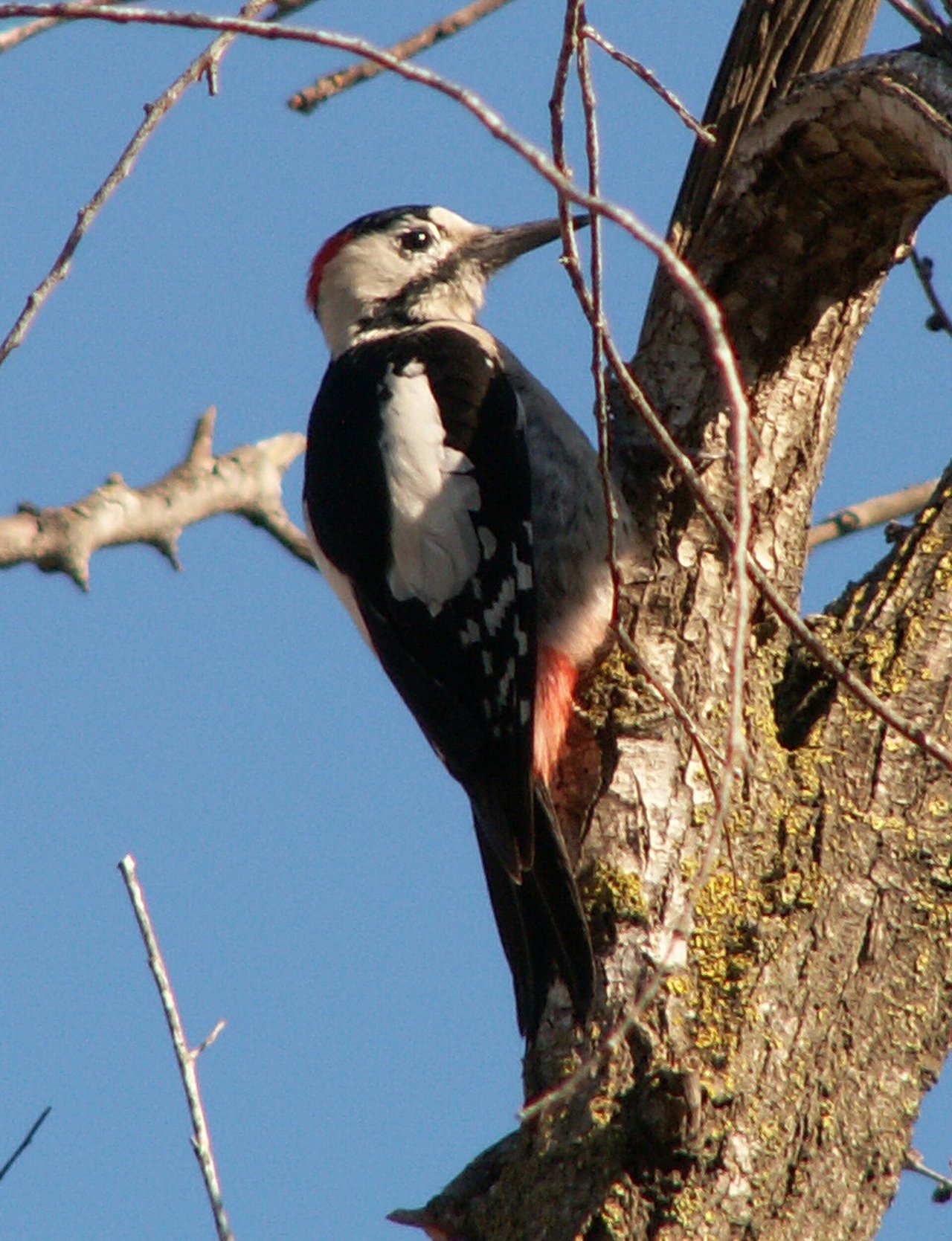
The Syrian Woodpecker is a medium-sized, black-and-white woodpecker of open woodlands and human-shaped landscapes, breeding from southeastern Europe east to Iran. It depends on older trees for foraging and nest sites, and its range has expanded northwest in recent times. Very similar to the Great Spotted Woodpecker, it can be told by subtle differences in bill shape, head pattern, and tail markings.
Did you know?
- Its drumming is typically a longer roll that tapers off in volume, a helpful clue for identification by ear.
- It has been known to peck holes in plastic irrigation pipes, though the reason is not fully understood.
About the species
Identification
A pied woodpecker with large white shoulder patches, buffy-white underparts with a reddish wash on the lower belly and undertail, and little to no white barring on the outer tail. Compared with Great Spotted Woodpecker, it shows a slightly longer bill, more white in the face and on the head, and lacks the bold white tail barring. Male has a small red patch on the nape; female lacks this, while juveniles often show a red crown.
Family
Picidae
Size
Medium (thrush)
Colours
black, white, red
About the habitat
Open woodlands, orchards and other cultivation with scattered trees and shrubs, and parks; relies on mature or old trees for feeding and nesting.
Diet
Primarily wood-boring insect larvae and other insects taken from trunks and branches; also eats seeds, nuts, and berries when insects are scarce.
Behaviour
Climbs and hops up trunks with jerky movements, probing and flaking bark, then extracting prey with a long sticky tongue. Drums with a sustained, slightly fading roll and gives a soft, sharp quit call. Excavates nest cavities in soft or decaying wood.
Sources
Photo: Ofer Faigon, CC BY 2.5 https://commons.wikimedia.org/wiki/File:Syrian-Woodpecker-20051218m023.jpg
Text: Wikipedia (English), CC BY-SA 4.0 https://en.wikipedia.org/wiki/Syrian_woodpecker