
 Suomi
 Svenska
 Polski
 Čeština
 Slovenčina
 Norsk
 Dansk
Sedge Warbler
Acrocephalus schoenobaenus
Identify the Sedge Warbler by sound or photo and log your sightings with Birdpass.


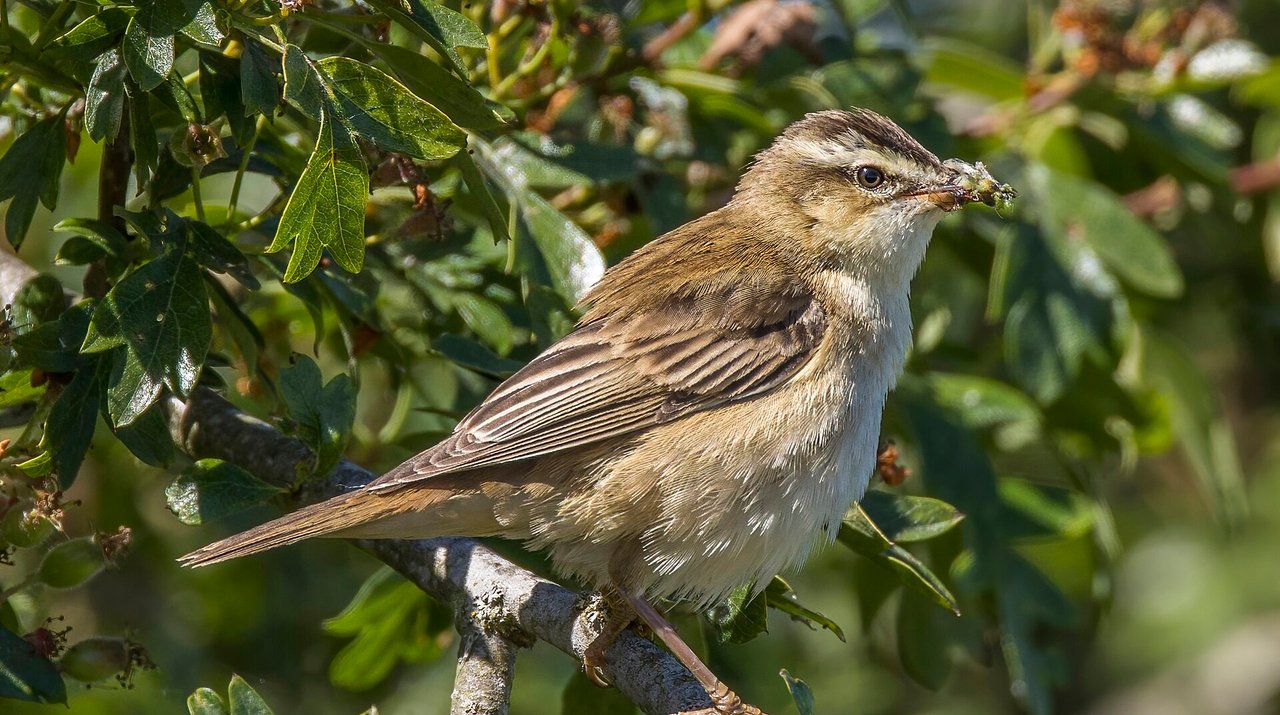
The Sedge Warbler is a lively warbler of reedbeds and damp scrub across Europe and western and central Asia, recognisable by its streaked brown back and bold pale eyebrow. It is a long-distance migrant that crosses the Sahara to winter in sub-Saharan Africa. Males are renowned for a fast, scratchy, highly varied song that often includes mimicry. Although widespread, it depends on healthy wetlands along its migration routes and in its wintering areas.
Did you know?
- A Sedge Warbler's song strings short phrases together in ever-changing order – no two performances are the same.
- Males with the largest song repertoires tend to attract the most females.
Voice
About the species
Identification
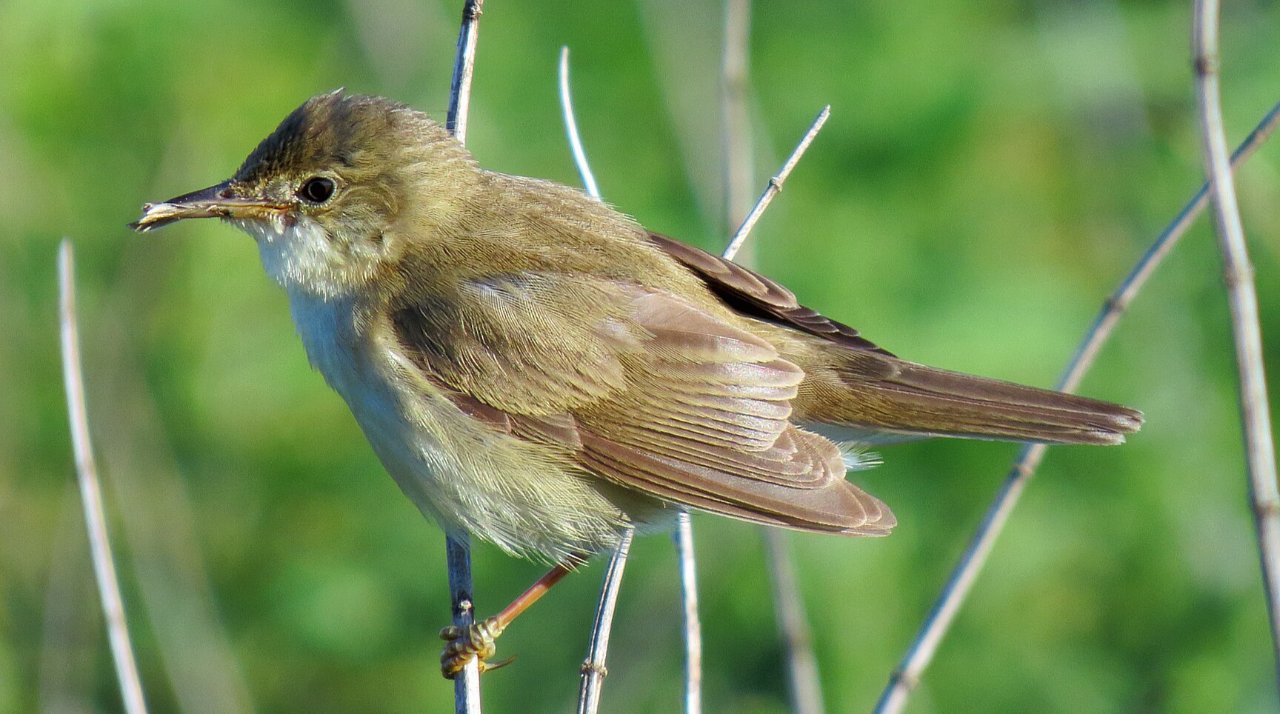
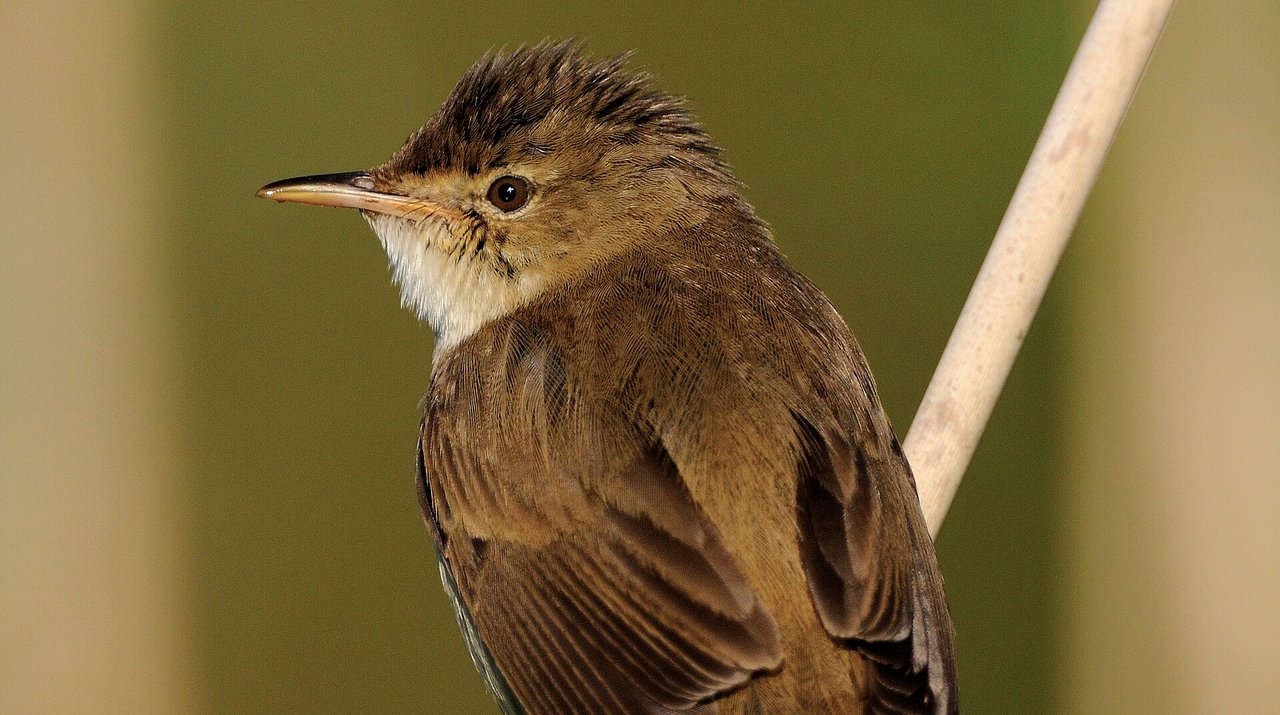
A small warbler with a clear pale supercilium, sloping forehead, boldly dark-streaked brown back and pale underparts. The sexes look alike; juveniles have fine streaking on the breast. The song is fast and chattering, mixed with whistles and mimicry; the alarm call is a hard “tchek”. Told from Reed Warbler by the strong eyebrow and streaked back, and from Aquatic Warbler by the lack of a clean pale central crown stripe.
Family
Acrocephalidae
Size
Tiny (goldcrest)
Colours
brown, white, black, yellow
About the habitat
Wetlands with dense, tall vegetation: reedbeds, sedge beds, marshy willow and alder scrub, lake and river margins, reed-fringed ditches and even crops near water. In Africa it winters in reeds, papyrus, sedges and tall grass.
Diet
Mainly insects and other small invertebrates gleaned from reeds and low scrub; before migration it switches to berries such as elder and rapidly lays down fat.
Behaviour
Keeps low in dense reeds and sedges, but males sing conspicuously from exposed perches and in song flights that end in a slow, parachuting descent. Usually socially monogamous, although males may mate with additional females. Builds a neat nest low in vegetation. A long-distance, largely nocturnal migrant; many birds return to the same wintering sites each year.
Sources
Photo: Charles J. Sharp, CC BY-SA 4.0 https://commons.wikimedia.org/wiki/File:Sedge warbler (Acrocephalus schoenobaenus) 3.jpg
Sound: Sonothèque ADVL, XC707329, CC0 1.0 https://xeno-canto.org/707329
Sound: Pascal Christe, XC1036558, CC BY-SA 4.0 https://xeno-canto.org/1036558
Sound: Sonothèque ADVL, XC1088484, CC0 1.0 https://xeno-canto.org/1088484
Text: Wikipedia (English) + FinBIF species descriptions, CC BY-SA 4.0; FinBIF: CC BY 4.0 https://en.wikipedia.org/wiki/Sedge_warbler
 3.jpg)