Suomi
 Svenska
 Polski
 Čeština
 Slovenčina
 Norsk
 Dansk
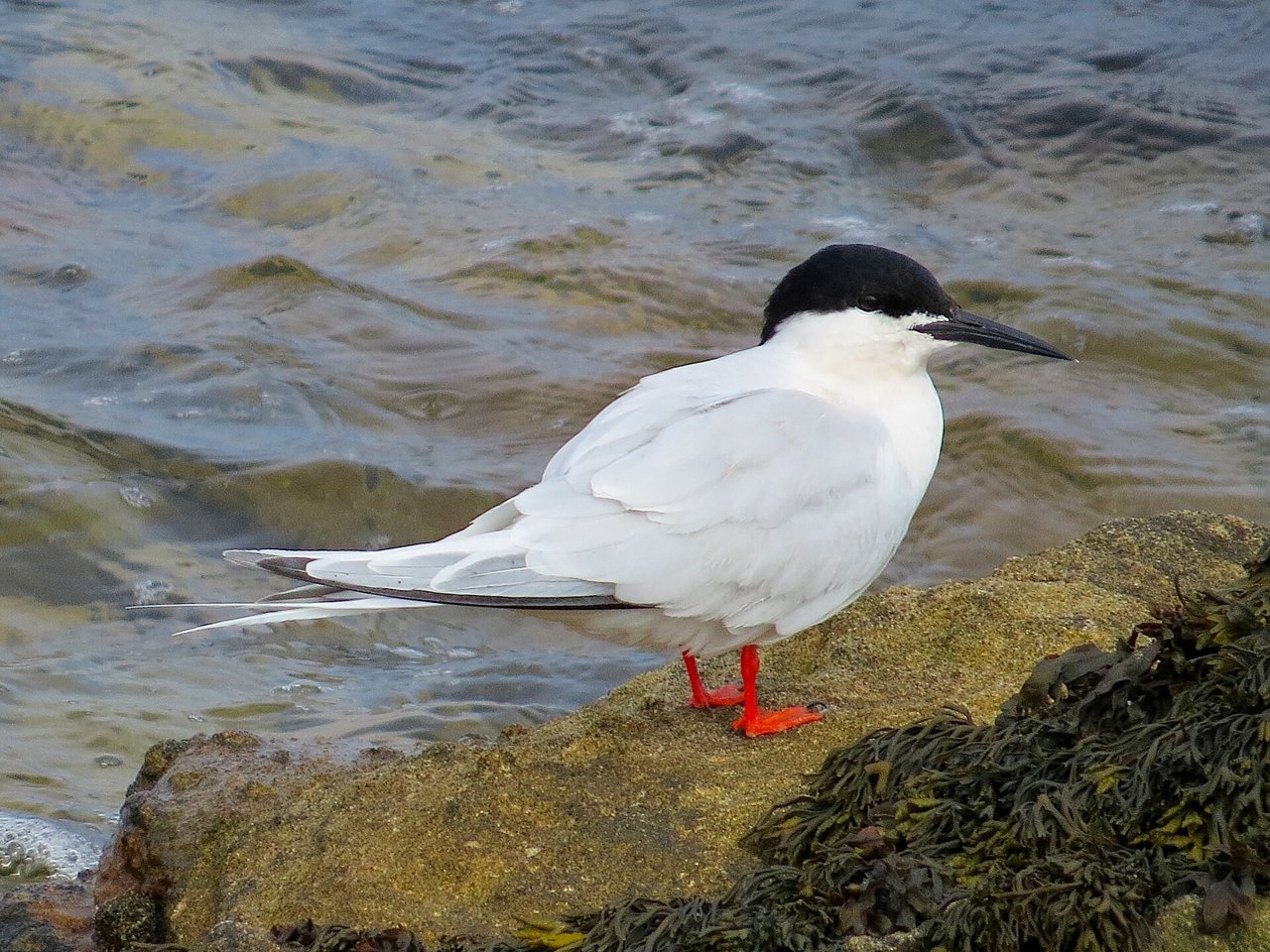
Roseate Tern
Sterna dougallii
Identify the Roseate Tern by sound or photo and log your sightings with Birdpass.


The Roseate Tern is a slim, very pale tern named for the delicate pink flush on its underparts in summer. It breeds in colonies on coastal islands in the North Atlantic and warmer parts of the Indian and western Pacific Oceans and plunge-dives for small fish. After historic declines from plume hunting and more recent pressure from large gulls, conservation work – especially nest boxes – has helped some colonies recover.
Did you know?
- It sometimes steals fish from other seabirds such as puffins.
- “Roseate” refers to the pink flush on its breast.
About the species
Identification
A slim, very pale tern with long tail streamers that project well beyond the wingtips at rest. The bill is mostly black with a red base in summer, and the breast has a pink flush. It is paler above than Common and Arctic Terns, with a whiter wing.
Family
Sternidae
Size
Medium (thrush)
Colours
white, grey, black, red
About the habitat
Coastal islands and islets with sparse or partly sheltered vegetation for nesting; it forages over inshore seas.
Diet
Mainly small fish such as sand eels, caught by plunge-diving in inshore waters; it rarely uses fresh water and sometimes steals fish from other seabirds.
Behaviour
A colonial nester that makes a shallow scrape on the ground, often hidden under vegetation or in nest boxes. It is less aggressive at the nest than many terns and benefits from the defence of neighbouring Common and Arctic Terns. Males offer fish to females in courtship. Its call is a distinctive “chu-vik”.
Sources
Photo: MPF, CC BY-SA 4.0 https://commons.wikimedia.org/wiki/File:2021-07-10 Sterna dougallii, St Marys Island, Northumberland 15.jpg
Text: Wikipedia (English), CC BY-SA 4.0 https://en.wikipedia.org/wiki/Roseate_tern