
 Suomi
 Svenska
 Polski
 Čeština
 Slovenčina
 Norsk
 Dansk
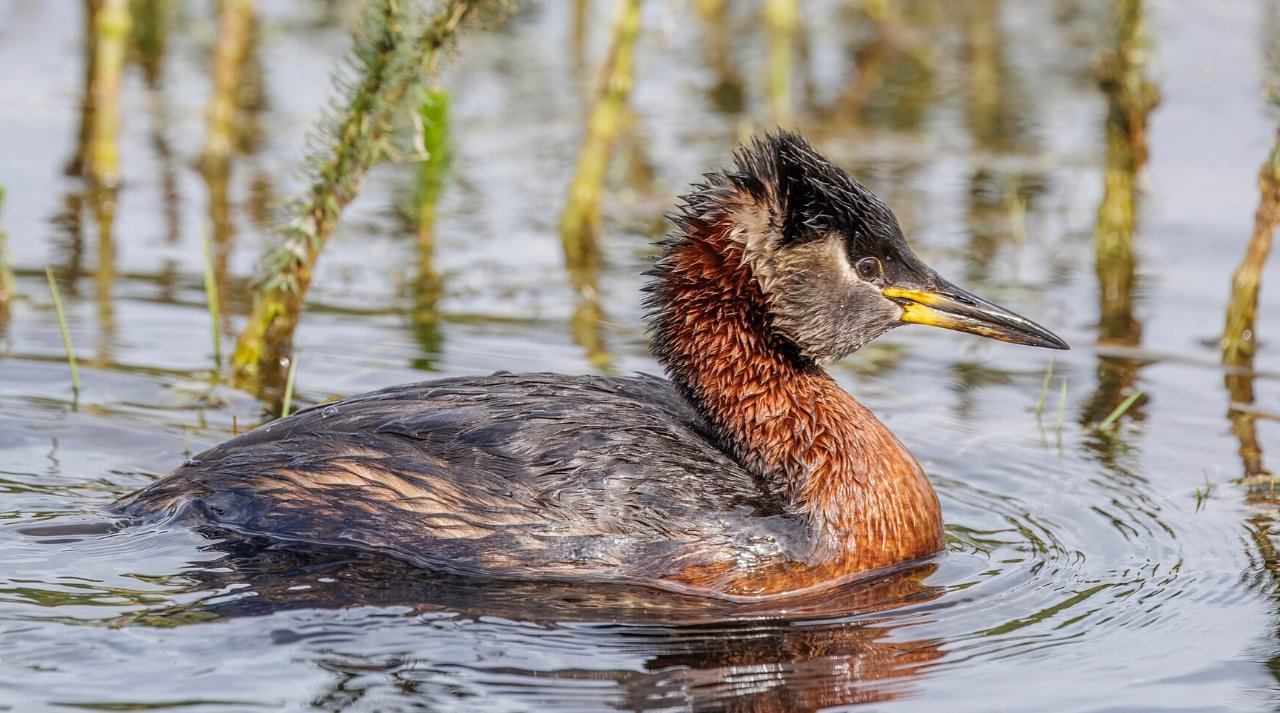
Red-necked Grebe
Podiceps grisegena
Identify the Red-necked Grebe by sound or photo and log your sightings with Birdpass.


The Red-necked Grebe is a sturdy, thick-billed grebe of the temperate Northern Hemisphere. In the breeding season it has a brick-red neck, pale grey cheeks and a black cap; in winter it is grey and white. It breeds on shallow, vegetated lakes and winters mainly on sheltered coastal waters. It is famous for its loud, wailing duets and elaborate courtship.
Did you know?
- It swallows its own feathers and feeds them to its chicks, helping trap fish bones.
- It needs a long run across the water to take off.
About the species
Identification
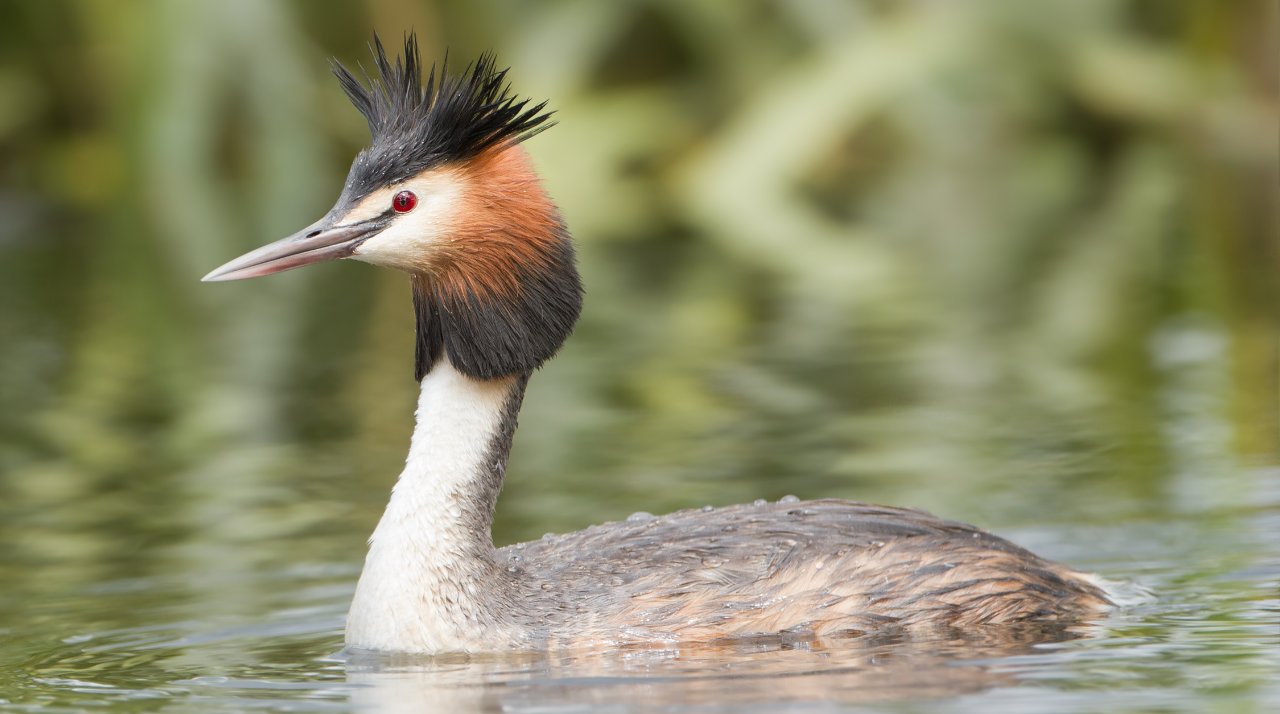
A large grebe; in breeding plumage it has a reddish-brown neck, pale grey cheeks and throat and a black cap. The head is smooth without ear tufts, which separates it from Great Crested Grebe; the bill is stout, black with a yellow base. In winter it is grey with a dusky neck and a diffuse pale cheek. In the breeding season it calls loudly with low, braying sounds.
Family
Podicipedidae
Size
Large (crow)
Colours
black, brown, grey, white, yellow
About the habitat
Breeds on shallow, vegetated lakes, ponds and sheltered bays, often near gull colonies; winters on sheltered coastal waters, estuaries and large lakes.
Diet
Mainly small fish, as well as aquatic insects, crustaceans, molluscs and amphibians, caught by diving or picked from vegetation. It swallows its own feathers and even feeds them to its chicks.
Behaviour
An excellent swimmer and quick diver that usually dives rather than flies when alarmed. Pairs are territorial and perform elaborate displays with loud, braying and wailing duets. It builds a floating nest among vegetation, and parents often carry the chicks on their backs. It cannot take off from land and needs a long run across the water.
Sources
Photo: Charles J. Sharp, CC BY-SA 4.0 https://commons.wikimedia.org/wiki/File:Red-necked grebe (Podiceps grisegena grisegena) breeding adult Gronjordssoen.jpg
Text: Wikipedia (English) + FinBIF species descriptions, CC BY-SA 4.0; FinBIF: CC BY 4.0 https://en.wikipedia.org/wiki/Red-necked_grebe
 breeding adult Gronjordssoen.jpg)