
 Suomi
 Svenska
 Polski
 Čeština
 Slovenčina
 Norsk
 Dansk
Isabelline Wheatear
Oenanthe isabellina
Identify the Isabelline Wheatear by sound or photo and log your sightings with Birdpass.


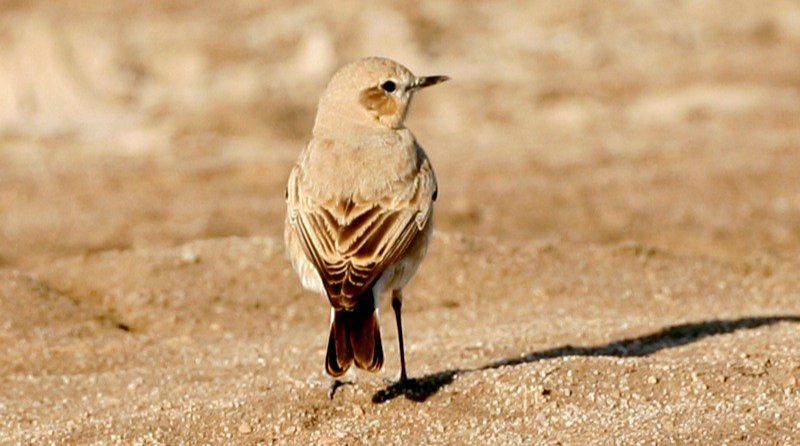
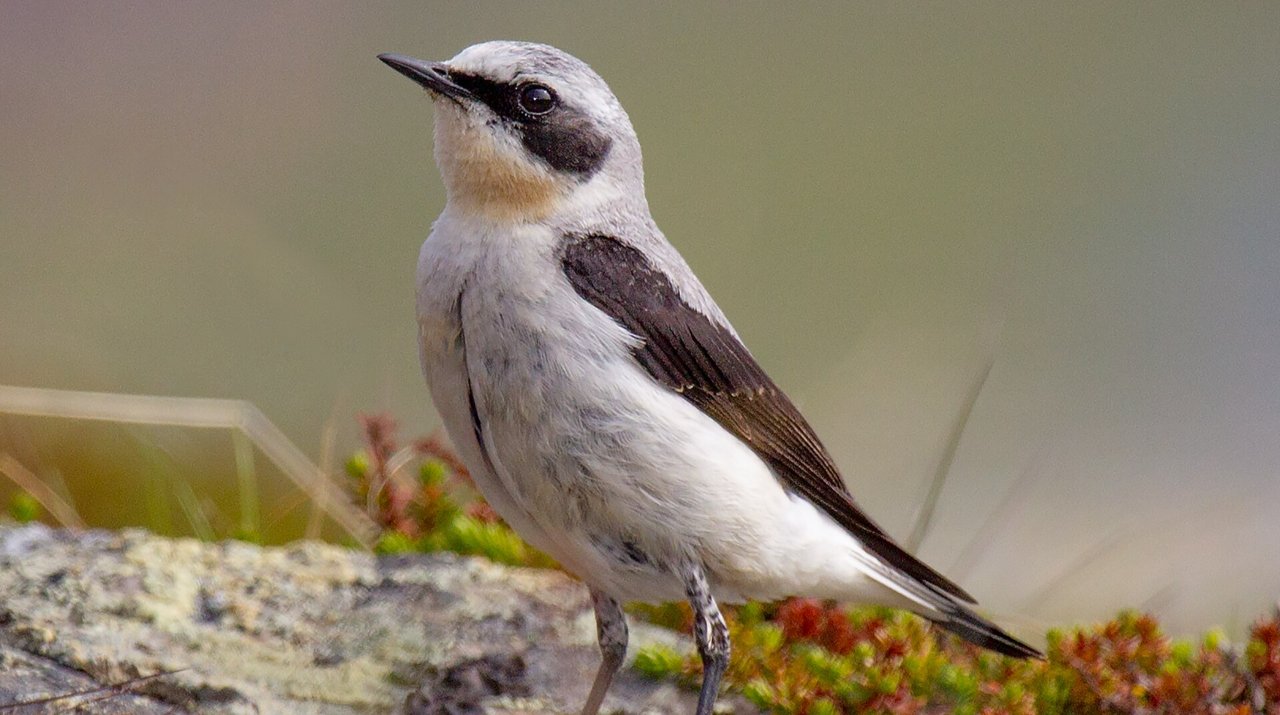
The Isabelline Wheatear is a sandy, upright wheatear of open steppe and semi-arid country. It breeds from southern Russia and Central Asia through parts of the Middle East and winters in Africa and north-west India. It resembles a female Northern Wheatear but is larger and paler, with more black in the tail and white underwing coverts; the sexes look alike.
Did you know?
- “Wheatear” comes from “white-arse”, after the white rump.
- It often nests in old burrows of ground squirrels or pikas.
About the species
Identification
Like a Northern Wheatear but paler, sandy-brown overall and more upright, a small songbird with long legs. The tail is mostly white with a broad black terminal band (a “T” with a short stem), showing more black than in Northern Wheatear. The black alula stands out on the pale wing. The sexes look alike.
Family
Turdidae
Size
Small (sparrow)
Colours
brown, white, black, grey
About the habitat
Open steppe, arid plains, high plateaus and lower hill slopes with sparse vegetation and sandy ground; in winter similar open country.
Diet
Mainly insects – ants, grasshoppers, beetles, moths, flies and larvae – and spiders; occasionally seeds.
Behaviour
Active and restless, it forages mostly on the ground with long hops, often bobbing and flicking its tail, and makes short sallies from stones or bushes. Males perform lark-like song flights with much mimicry. It often nests underground in old burrows of ground squirrels or other rodents; both parents feed the chicks.
Sources
Photo: Lip Kee Yap, CC BY-SA 2.0 https://commons.wikimedia.org/wiki/File:Isabelline wheatear (Oenanthe isabellina) male, non-breeding.jpg
Text: Wikipedia (English), CC BY-SA 4.0 https://en.wikipedia.org/wiki/Isabelline_wheatear
 male, non-breeding.jpg)