
 Suomi
 Svenska
 Polski
 Čeština
 Slovenčina
 Norsk
 Dansk
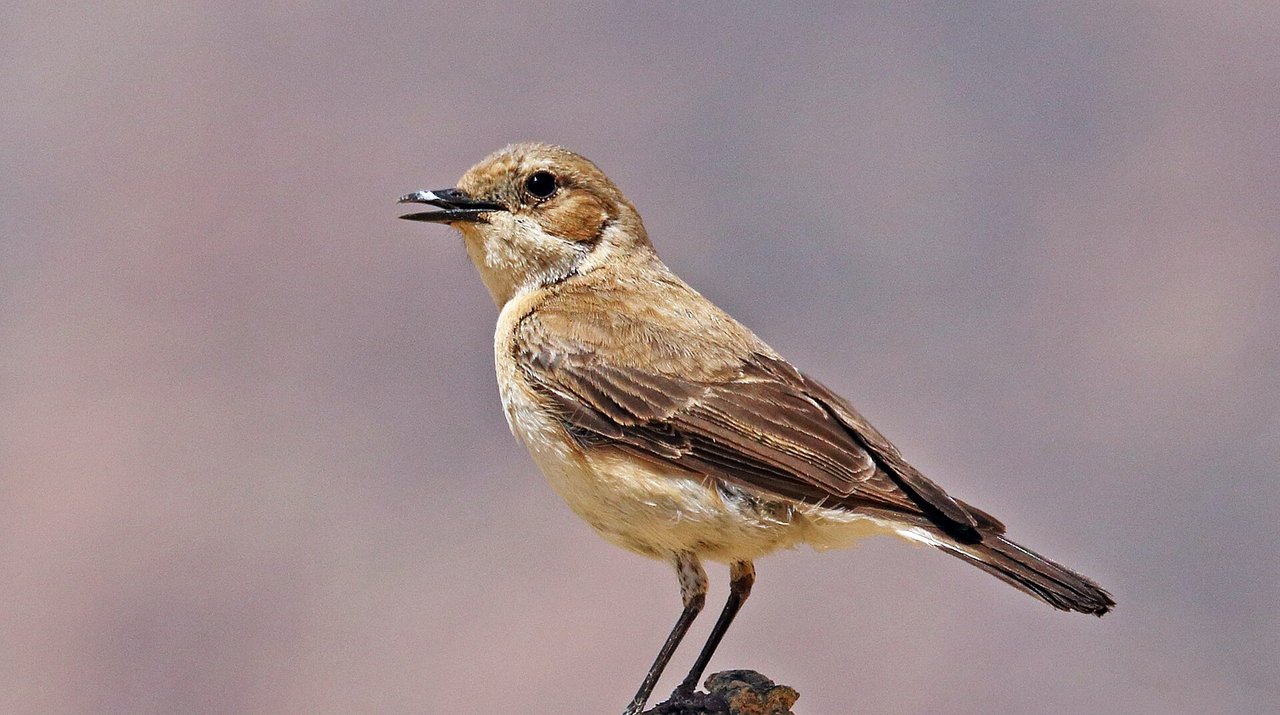
Eastern Black-eared Wheatear
Oenanthe melanoleuca
Identify the Eastern Black-eared Wheatear by sound or photo and log your sightings with Birdpass.


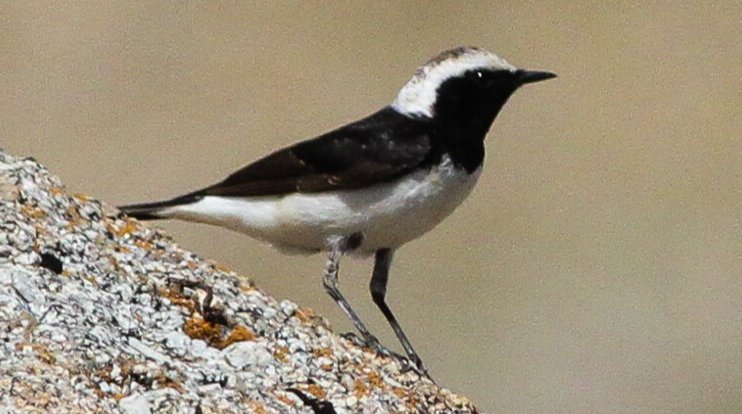
The Eastern Black-eared Wheatear is a small migratory wheatear of open, stony landscapes, breeding from the eastern Mediterranean and south-eastern Europe to the Caspian and Iran and wintering in the Sahel. Breeding males are boldly black and white, with a pale back, a dark mask and either a black or white throat; females are plainer and browner. It has been treated as the same species as the Western Black-eared Wheatear.
Did you know?
- It was once placed with the thrushes but is now an Old World flycatcher.
- Males occur in both black-throated and white-throated forms.
About the species
Identification
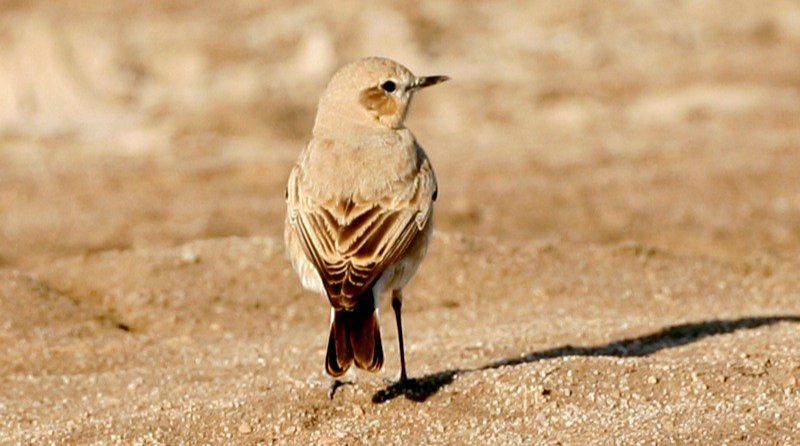
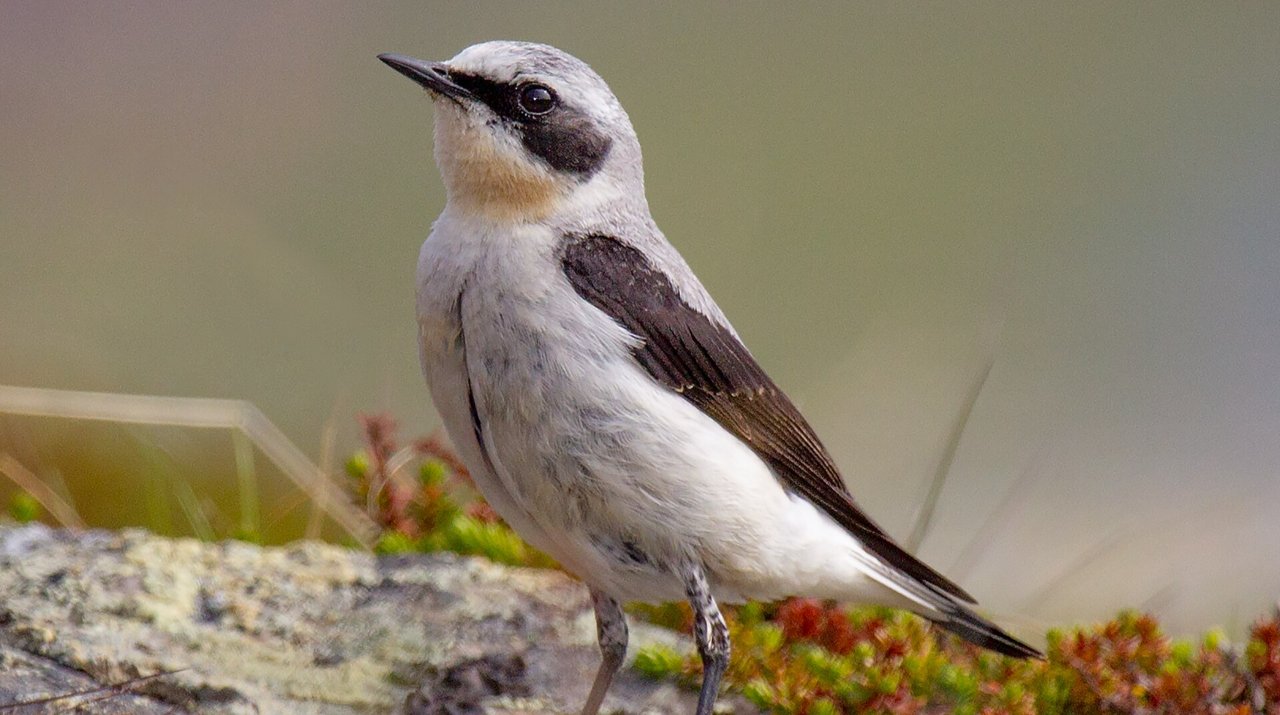
The breeding male has a white or nearly white forehead, crown and back, very dark wings and a clear black mask from the eyes to the bill; the throat can be white or black. The rump and most of the tail are white, with a dark central pair of tail feathers; the white is more extensive than in Northern Wheatear. In autumn and winter the head and back are buffy. The female is greyish-brown and less contrasting but also has a white rump. Told from Western Black-eared Wheatear by the male's whiter, less buffy upperparts; in black-throated birds the black is often more extensive and sharply cut off. Females are on average colder and duller than female Western Black-eared.
Family
Turdidae
Size
Small (sparrow)
Colours
white, black
About the habitat
Open, stony and rocky slopes with scattered bushes and trees, barren pastures and maquis; in winter savanna.
Diet
Mainly insects and other small invertebrates taken on the ground or in brief flycatching sallies.
Behaviour
An active ground-feeder that uses rocks and low perches to watch for prey and makes short flights to seize it. It is strongly migratory, with clear seasonal changes in plumage.
Sources
Photo: Charles J. Sharp, CC BY-SA 4.0 https://commons.wikimedia.org/wiki/File:Eastern Black-eared Wheatear (Oenanthe melanoleuca) female, Jordan.jpg
Text: Wikipedia (English), CC BY-SA 4.0 https://en.wikipedia.org/wiki/Eastern_black-eared_wheatear
 female, Jordan.jpg)