
 Suomi
 Svenska
 Polski
 Čeština
 Slovenčina
 Norsk
 Dansk
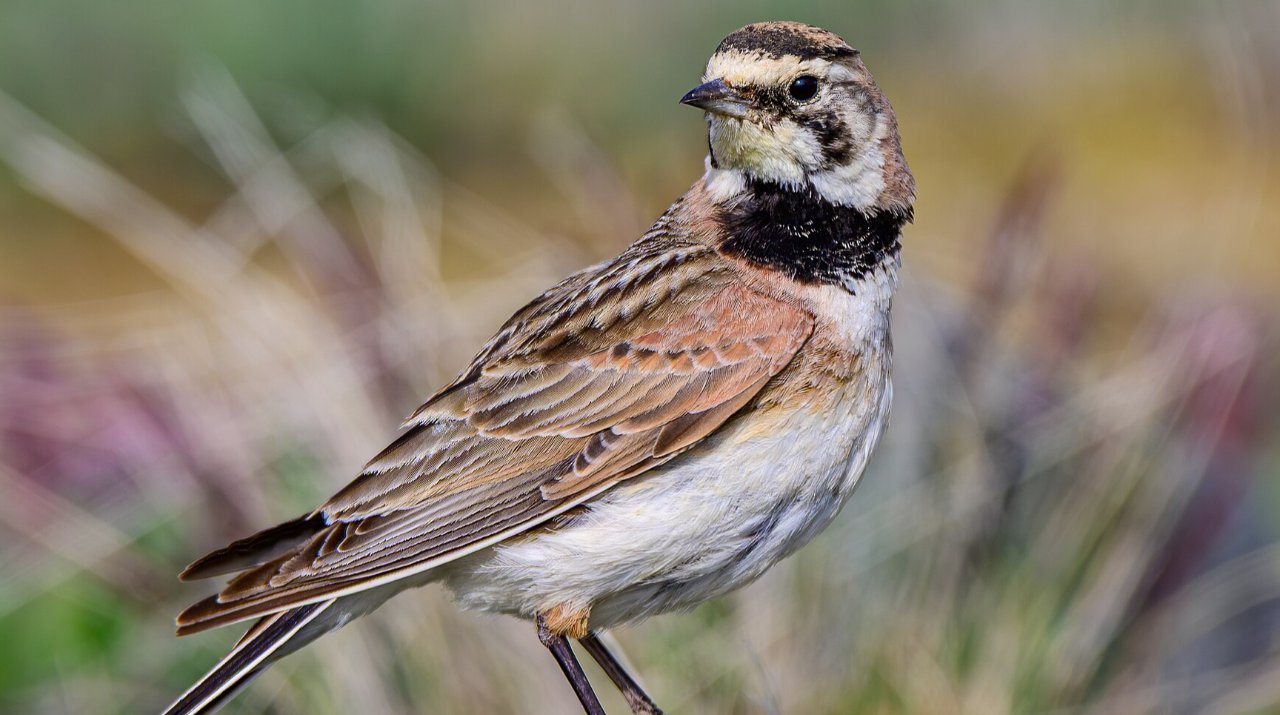
Horned Lark
Eremophila alpestris
Identify the Horned Lark by sound or photo and log your sightings with Birdpass.


The Horned Lark is a small, ground-dwelling lark of the Northern Hemisphere with a bold yellow-and-black face pattern. Males in summer sport tiny black feather “horns”, which inspired its American name; in Europe it is often called the Shore Lark for its winter visits to beaches. It breeds on open ground from arctic tundra and high mountains to fields and deserts, and northern birds migrate south for the winter.
Did you know?
- The “horns” are small feather tufts the bird raises when excited or displaying.
- A well-preserved Horned Lark was discovered in Siberian permafrost, dating back tens of thousands of years.
Voice
About the species
Identification
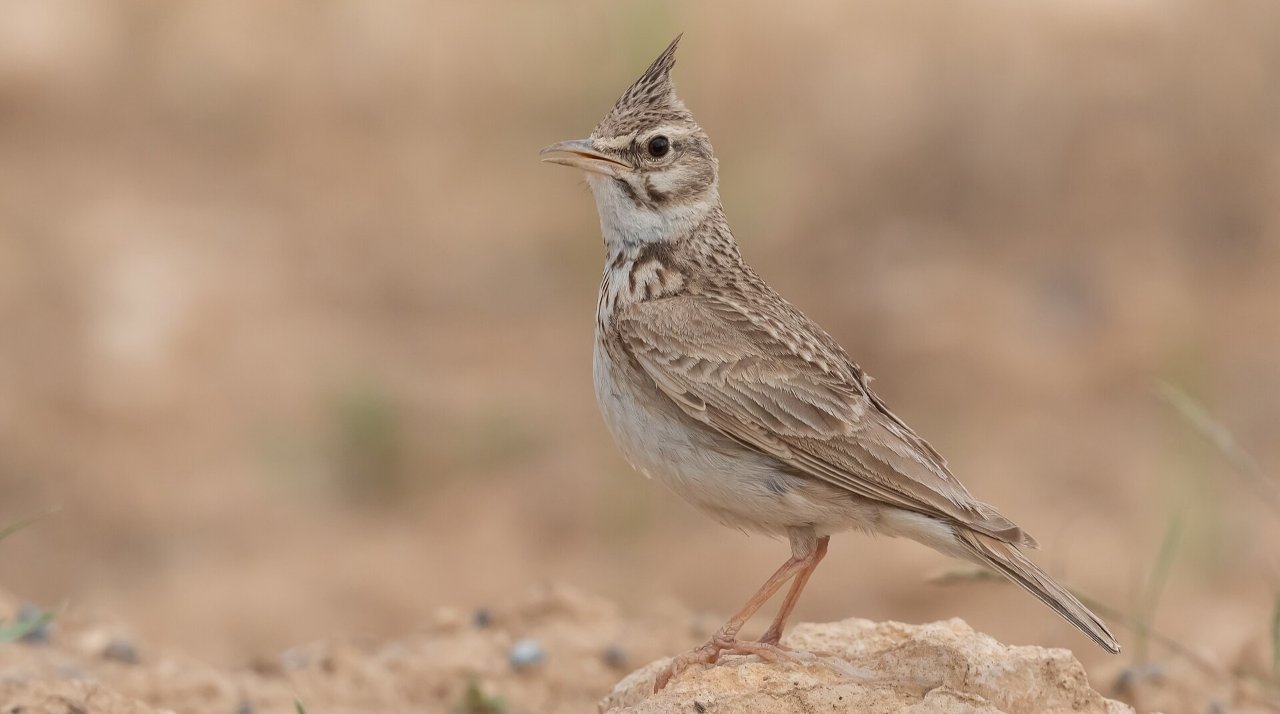
Skylark-sized, but with a striking yellow-and-black head pattern: a black mask and black breast band on a yellowish or whitish face, and in males small feather “horns” on the crown. The upperparts are earth-brown and the underparts paler and cleaner than a Skylark's. Told from Skylark, which has a crest but no yellow-and-black head pattern. In winter and in females the colours are duller, but the face pattern remains visible.
Family
Alaudidae
Size
Small (sparrow)
Colours
brown, black, white, yellow
About the habitat
Open, sparsely vegetated ground: arctic and alpine tundra above the tree line, dry fields and stubble, steppe and desert; in winter coastal dunes, beaches and windswept fields. In North America also prairies, farmland and airports.
Diet
Seeds of grasses and weeds for much of the year, supplemented by insects and other small invertebrates, especially in the breeding season.
Behaviour
Forages on the ground by running and pausing to pick up food, often in loose flocks outside the breeding season. Males defend territories with fluttering song-flights, giving high, tinkling trills. The female builds a ground nest in a shallow scrape, often lined with pebbles or plant fragments, and both parents feed and defend the young.
Sources
Photo: Stephan Sprinz, CC BY 4.0 https://commons.wikimedia.org/wiki/File:Horned lark (eremophila alpestris) 01.jpg
Sound: Mary Krieger, CC BY 4.0 https://commons.wikimedia.org/wiki/File:Eremophila_alpestris_964066.wav
Text: Wikipedia (English) + FinBIF species descriptions, CC BY-SA 4.0; FinBIF: CC BY 4.0 https://en.wikipedia.org/wiki/Horned_lark
 01.jpg)