Suomi
 Svenska
 Polski
 Čeština
 Slovenčina
 Norsk
 Dansk
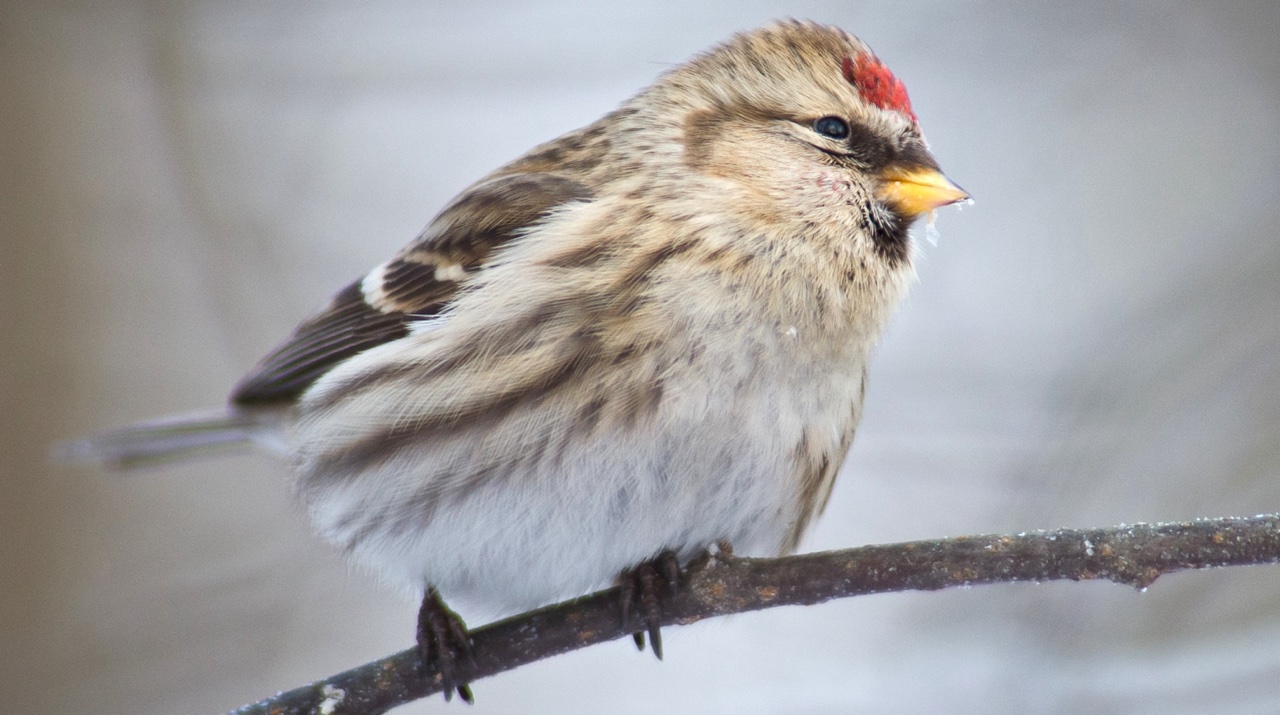
Common Redpoll
Acanthis flammea
Identify the Common Redpoll by sound or photo and log your sightings with Birdpass.


The Common Redpoll is a tiny, streaky finch of the far north, easily recognised by its bright red forehead and small black bib. It breeds across the Arctic and boreal zones of Europe, Asia and North America and moves south in winter as a partial migrant, erratically and in numbers that depend on the seed crop. Once split into several species, including the Arctic and Lesser Redpolls, it is now widely treated as one species with several subspecies.
Did you know?
- It is the only species in the genus Acanthis.
- Common Redpolls were introduced to New Zealand in the 19th century and are now widespread there.
Voice
About the species
Identification
A small finch with a distinct red forehead patch, short yellowish bill, streaked back and paler underparts. Males often have a pinkish-red breast; females and young are grey-brown and streaky, with red usually limited to the forehead or absent. The Lesser Redpoll form (cabaret) is on average smaller and browner, and the Arctic Redpoll form (hornemanni) paler, more finely marked and often smaller-billed.
Family
Fringillidae
Size
Small (sparrow)
Colours
brown, white, red, black, yellow
About the habitat
Breeds in Arctic and subarctic tundra scrub, mountain birch and willow and farther south in open boreal forest of pine, spruce and larch. In winter it frequents forest edges, weedy fields and gardens with seed-bearing trees.
Diet
Mostly minute seeds, especially of birch and alder in winter; in the breeding season it also takes insects and other small invertebrates. At feeders it readily takes crushed sunflower seeds, peanuts, millet and oats.
Behaviour
Lively and social, often forming large flocks in autumn and winter that wander widely with food supplies, so some winters are very rich in redpolls and others quiet. Forages mainly in trees, occasionally on the ground. The male gives a buzzing song, often in display flight. The female builds a well-insulated cup nest low in a tree or shrub; both parents care for the young, and pairs may raise two broods.
Sources
Photo: Jyrki Salmi from Finland, CC BY-SA 2.0 https://commons.wikimedia.org/wiki/File:Acanthis flammea, Kotka, Finland 2.jpg
Sound: Teet Sirotkin, XC1157223, CC BY-SA 4.0 https://xeno-canto.org/1157223
Sound: Jonathon Jongsma, XC115597, CC BY-SA 3.0 https://xeno-canto.org/115597
Sound: Sonothèque ADVL, XC918295, CC0 1.0 https://xeno-canto.org/918295
Text: Wikipedia (English) + GBIF regional observations + Wikipedia (English) + FinBIF species descriptions + Wikipedia (Finnish), CC BY-SA 4.0; GBIF occurrence data; Wikipedia: CC BY-SA 4.0; FinBIF: CC BY 4.0; Wikipedia: CC BY-SA 4.0 https://en.wikipedia.org/wiki/Common_redpoll