
 Suomi
 Svenska
 Polski
 Čeština
 Slovenčina
 Norsk
 Dansk
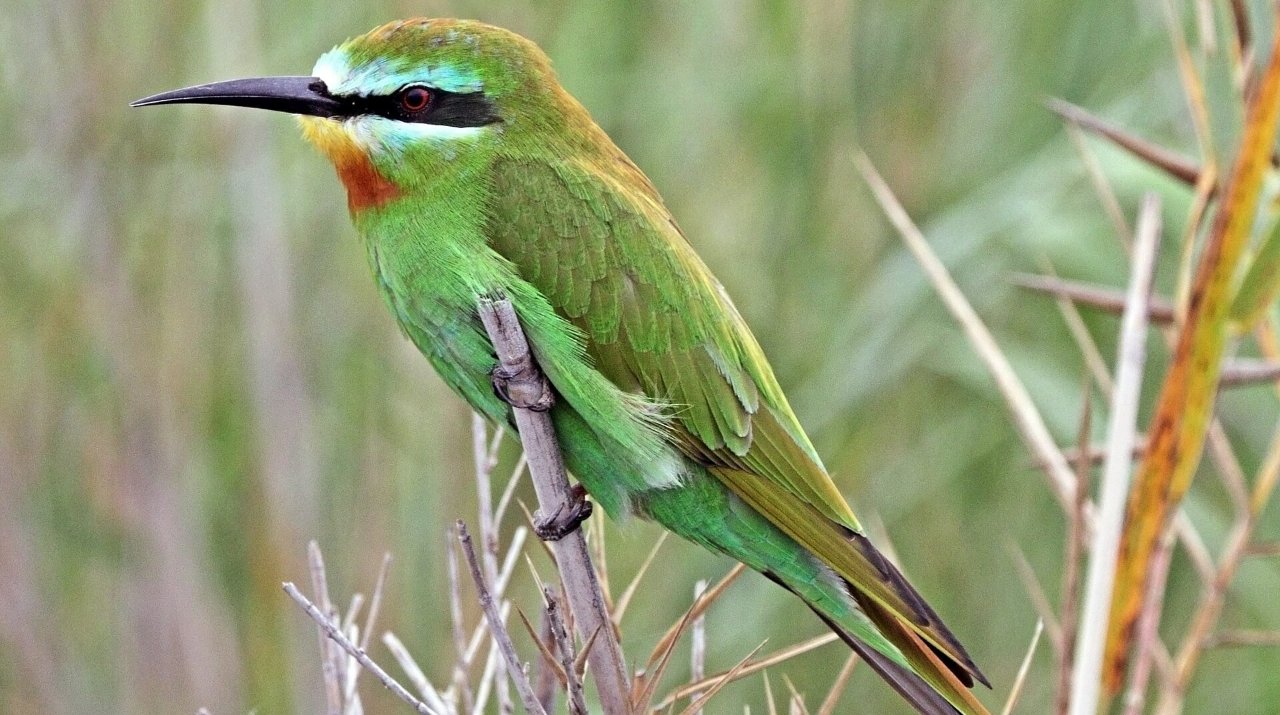
Blue-cheeked Bee-eater
Merops persicus
Identify the Blue-cheeked Bee-eater by sound or photo and log your sightings with Birdpass.


The Blue-cheeked Bee-eater is a sleek, green bee-eater with blue cheeks, a black eye stripe, a chestnut throat and long central tail streamers. It breeds from North Africa and the Middle East east to Kazakhstan and north-west India and winters in tropical Africa. Agile on the wing, it hawks insects over open, dry country and is a rare vagrant north of its range.
Did you know?
- Despite its family name, it often catches more dragonflies than bees.
- Its nest tunnels can be up to 3 metres long.
About the species
Identification
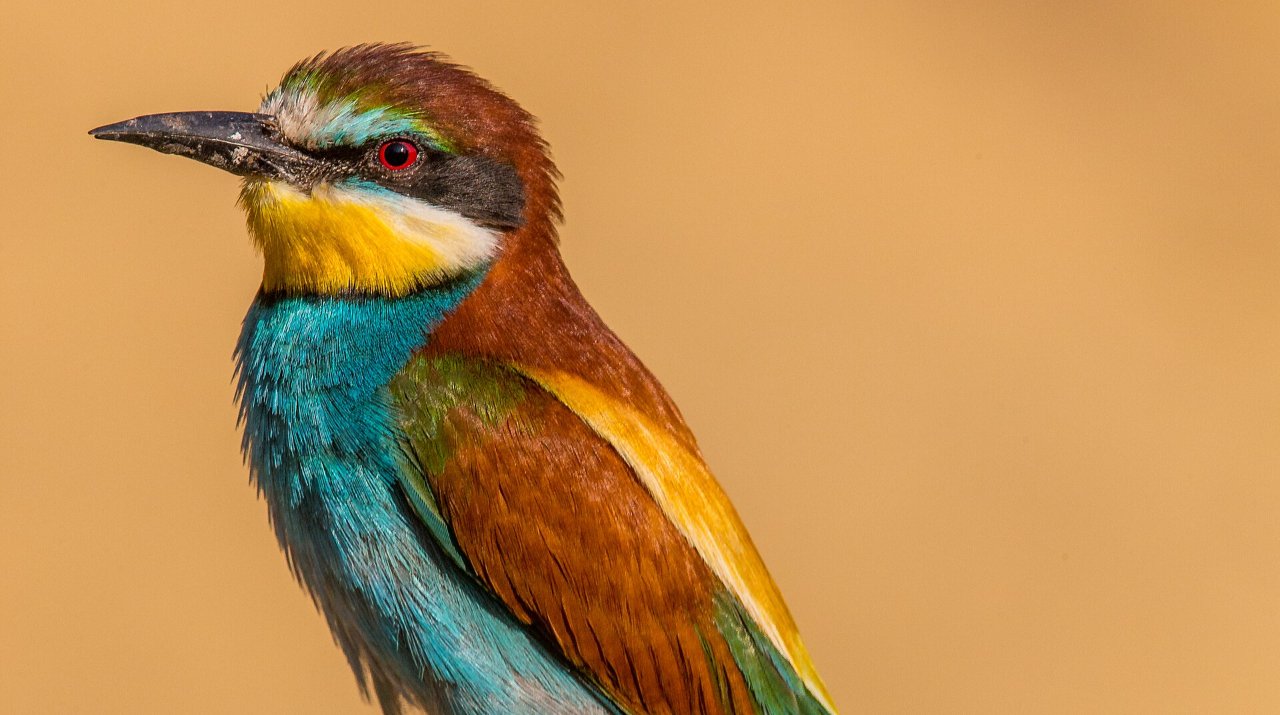
A medium-sized, mainly green bee-eater with blue cheeks, an orange-chestnut throat and a black, white-bordered eye stripe. The bill is black, and the two central tail feathers extend into long streamers. The sexes look alike; young birds are duller. It is most likely confused with European Bee-eater, which is more colourful; the Blue-cheeked's uniform green and blue cheeks separate them.
Family
Meropidae
Size
Small (sparrow)
Colours
green, yellow, blue, brown
About the habitat
Semi-desert with scattered trees such as acacias, sandy riverbanks, embankments and low cliffs; in winter open woodland and grassland in Africa.
Diet
Flying insects, often dragonflies more than bees, as well as bees, wasps, hornets and damselflies, caught from exposed perches such as wires.
Behaviour
Strongly migratory, travelling in small groups. It nests singly or in loose colonies, digging tunnels up to 3 m long in sandy banks, sometimes alongside European Bee-eaters; the female lays 4–8 eggs, and both adults incubate. Its call is flatter and less fluty than the European Bee-eater's.
Sources
Photo: Charles J. Sharp, CC BY-SA 4.0 https://commons.wikimedia.org/wiki/File:Blue-cheeked bee-eater (Merops persicus persicus) Namibia.jpg
Text: Wikipedia (English) + GBIF regional observations + Wikipedia (Finnish), CC BY-SA 4.0; GBIF occurrence data; Wikipedia: CC BY-SA 4.0 https://en.wikipedia.org/wiki/Blue-cheeked_bee-eater
 Namibia.jpg)