
 Suomi
 Svenska
 Polski
 Čeština
 Slovenčina
 Norsk
 Dansk
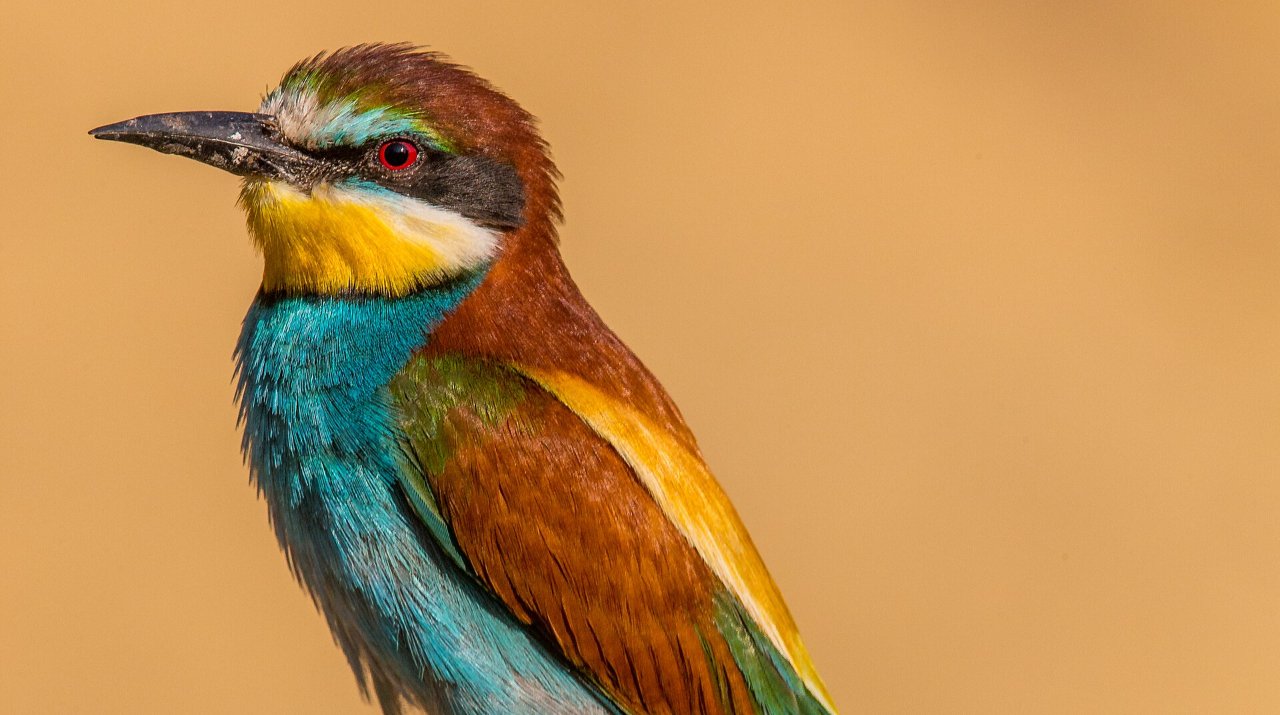
European Bee-eater
Merops apiaster
Identify the European Bee-eater by sound or photo and log your sightings with Birdpass.


The European Bee-eater is a vividly coloured, slender bird with chestnut, yellow and turquoise plumage and a fine, slightly curved black bill. It breeds across southern and central Europe, North Africa and western Asia and winters in tropical Africa. Highly social, it nests in colonies in sandy banks and hunts flying insects, especially bees and wasps, from exposed perches. It is spreading north, and spring overshoots sometimes breed beyond its usual range.
Did you know?
- A single bird can eat around 250 bees a day.
- It removes the stings of bees and wasps by beating them against a perch.
Voice
About the species
Identification
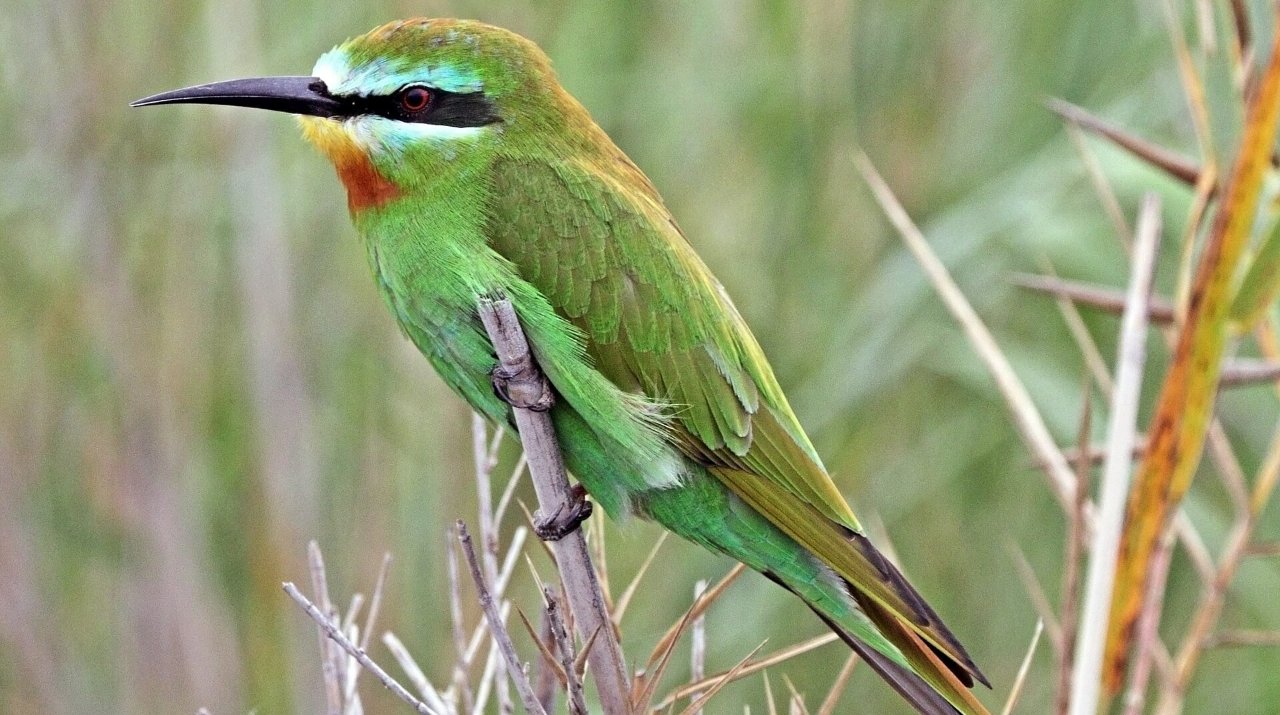
A very colourful bird: chestnut crown and back, a yellow throat bordered with black and turquoise-blue underparts; long, pointed wings and elongated central tail feathers. It can only be confused with other bee-eaters, especially Blue-cheeked Bee-eater, which is greener without chestnut. The sexes look alike; young birds have a duller, greenish back.
Family
Meropidae
Size
Medium (thrush)
Colours
brown, blue, yellow, green, orange
About the habitat
Warm, open landscapes – farmland, orchards, lightly wooded slopes and river valleys – with sandy or earthen banks, quarries or cuttings for nesting.
Diet
Flying insects, especially bees, wasps and hornets, as well as dragonflies and other large insects, caught in the air; it removes the sting before swallowing by beating the prey on a perch.
Behaviour
Gregarious and colonial: birds dig metre-long tunnels in sandy banks, and both parents incubate for about three weeks and feed the young. It hunts from exposed perches, sallying out to catch insects on the wing. Males offer food to females in courtship. The call is a mellow, rolling “prruip”, often heard from high-flying flocks.
Sources
Photo: Andy Morffew from Itchen Abbas, Hampshire, UK, CC BY 2.0 https://commons.wikimedia.org/wiki/File:Bee-eater (19270331108).jpg
Sound: Pascal Christe, XC1157531, CC BY-SA 4.0 https://xeno-canto.org/1157531
Text: Wikipedia (English) + FinBIF species descriptions + Wikipedia (Finnish), CC BY-SA 4.0; FinBIF: CC BY 4.0; Wikipedia: CC BY-SA 4.0 https://en.wikipedia.org/wiki/European_bee-eater
.jpg)