
 Suomi
 Svenska
 Polski
 Čeština
 Slovenčina
 Norsk
 Dansk
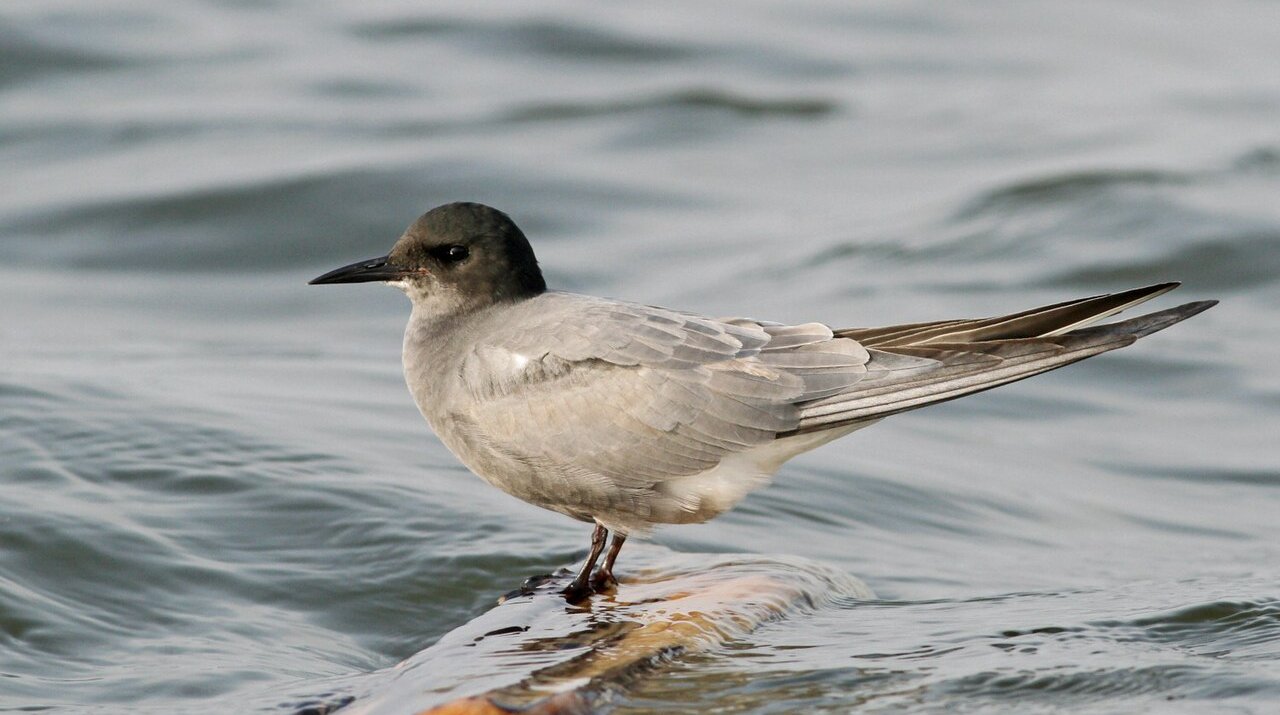
Black Tern
Chlidonias niger
Identify the Black Tern by sound or photo and log your sightings with Birdpass.


The Black Tern is a small, graceful marsh tern that breeds on freshwater wetlands across much of Europe, western Asia and North America and forages with buoyant, fluttering flight. It changes from sooty-black underparts in the breeding season to pale grey and white in winter. After breeding it migrates to coastal waters; Old World birds winter off Africa and North American birds off northern South America.
Did you know?
- Unlike many terns, it rarely plunge-dives, snatching insects from the air or surface instead.
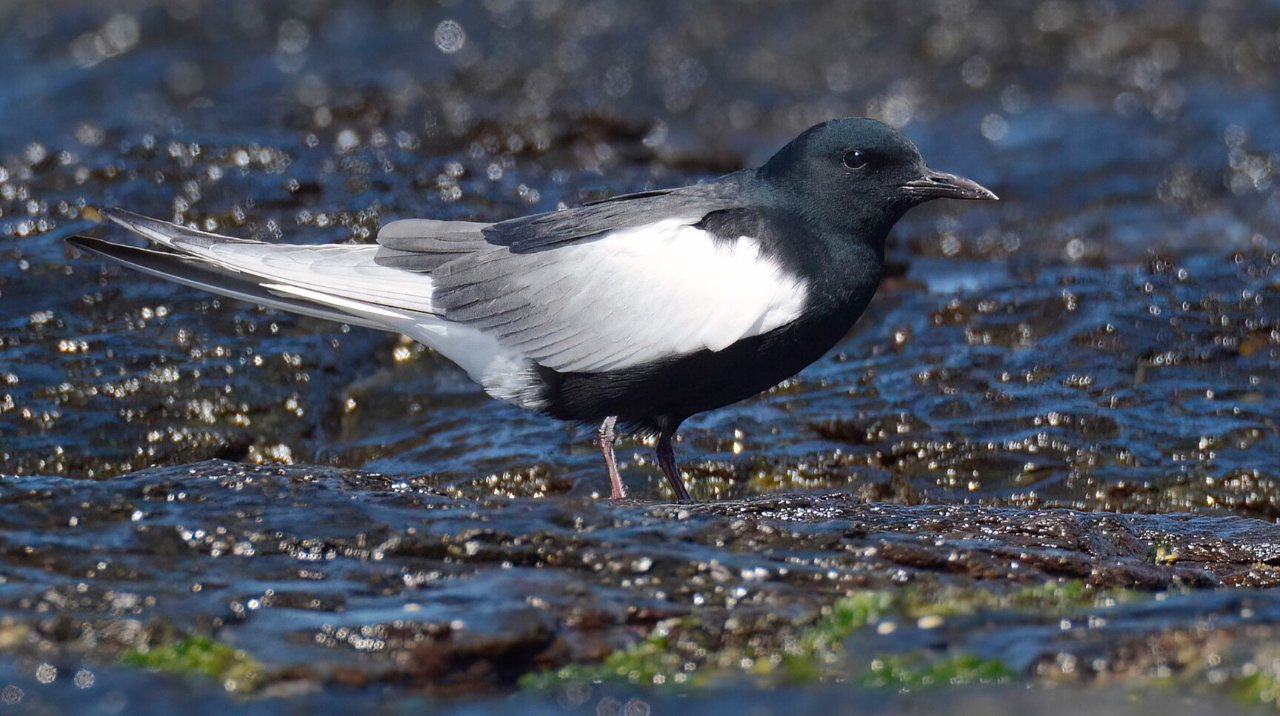
- It has been known to hybridise with the White-winged Tern in Europe.
Voice
About the species
Identification
A small, dark tern: in breeding plumage the head and neck are black and the belly dark grey. The back and upperwings are ash-grey, the tail grey and the undertail white. In non-breeding plumage it is pale grey above and white below with a dark ear patch and a dark patch at the side of the breast.
Family
Sternidae
Size
Medium (thrush)
Colours
grey, black, white
About the habitat
Freshwater marshes, fens and lake edges with emergent and floating vegetation; on migration also lakes, reservoirs, estuaries and coasts.
Diet
Mainly flying and aquatic insects such as dragonflies, caddisflies and midges, as well as small fish and occasionally amphibians, taken in flight or picked from the surface.
Behaviour
Forages low over water with agile, dipping flight, rarely plunge-diving. It breeds in loose colonies, nesting on floating vegetation mats or low marshy platforms, and gives a high, sharp “kik” call. Large flocks gather at post-breeding sites and can be very noisy.
Sources
Photo: Andrej Chudý from Slovakia, CC BY-SA 2.0 https://commons.wikimedia.org/wiki/File:Čorík čierny (Chlidonias niger) a (4644831482).jpg
Sound: Jonathon Jongsma, XC428428, CC BY-SA 4.0 https://xeno-canto.org/428428
Text: Wikipedia (English) + FinBIF species descriptions, CC BY-SA 4.0; FinBIF: CC BY 4.0 https://en.wikipedia.org/wiki/Black_tern
 a (4644831482).jpg)