Suomi
 Svenska
 Polski
 Čeština
 Slovenčina
 Norsk
 Dansk
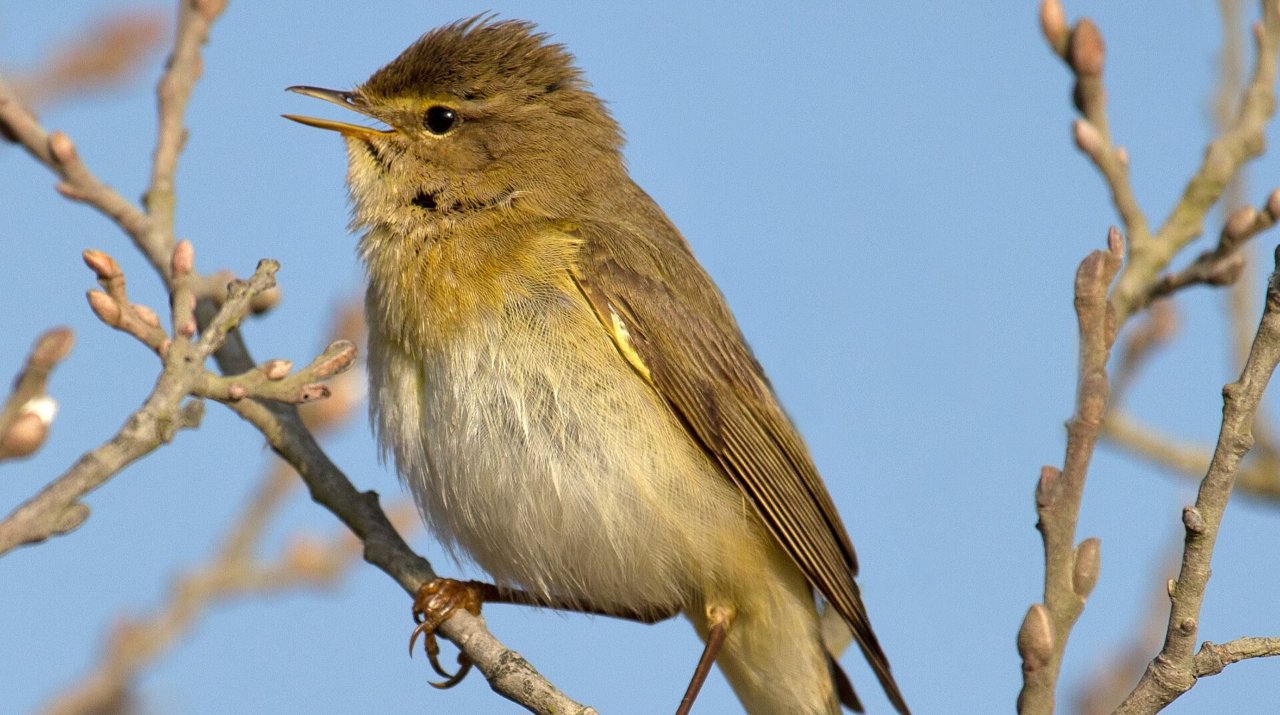
Willow Warbler
Phylloscopus trochilus
Identify the Willow Warbler by sound or photo and log your sightings with Birdpass.


The Willow Warbler is a small, slim leaf warbler that breeds across northern and temperate Europe and far into Siberia and winters in sub-Saharan Africa – an epic migration for so small a bird. It lives in open birch and willow woods and scrub and nests on the ground. It closely resembles the Chiffchaff but has paler legs, longer wings and a sweet, descending song.
Did you know?
- Despite its tiny size, it makes one of the longest migrations of any small bird.
- In spring it returns a few weeks after the Chiffchaff.
Voice
About the species
Identification
A small, slim bird with a clear pale supercilium. The upperparts are greyish-brown to greenish and the underparts yellowish-white; the legs are usually pale brownish-orange. The song is a soft, melancholy descending phrase. It is told from Chiffchaff by its usually yellower tone, longer wings and paler legs.
Family
Sylviidae
Size
Tiny (goldcrest)
Colours
brown, green, yellow, white
About the habitat
Open, young woodland and scrub, especially birch and willow, young plantations, forest edges, clearings, parks and shrubby tundra.
Diet
Mainly small insects and other invertebrates such as caterpillars, aphids and spiders, gleaned from leaves and twigs; berries in late summer.
Behaviour
An active foliage-gleaner that flits through shrubs and trees. Males sing a soft, wistful, descending cascade from treetops. It builds a domed nest on the ground, hidden in grass or low vegetation, and usually raises one brood. The contact call is a soft, two-syllabled “hoo-eet”.
Sources
Photo: Andreas Trepte, CC BY-SA 2.5 https://commons.wikimedia.org/wiki/File:Willow Warbler Phylloscopus trochilus.jpg
Sound: Sonothèque ADVL, XC730600, CC0 1.0 https://xeno-canto.org/730600
Sound: Sonothèque ADVL, XC707359, CC0 1.0 https://xeno-canto.org/707359
Sound: Hannu Varkki, XC489914, CC BY-SA 4.0 https://xeno-canto.org/489914
Text: Wikipedia (English) + FinBIF species descriptions, CC BY-SA 4.0; FinBIF: CC BY 4.0 https://en.wikipedia.org/wiki/Willow_warbler