Suomi
 Svenska
 Polski
 Čeština
 Slovenčina
 Norsk
 Dansk
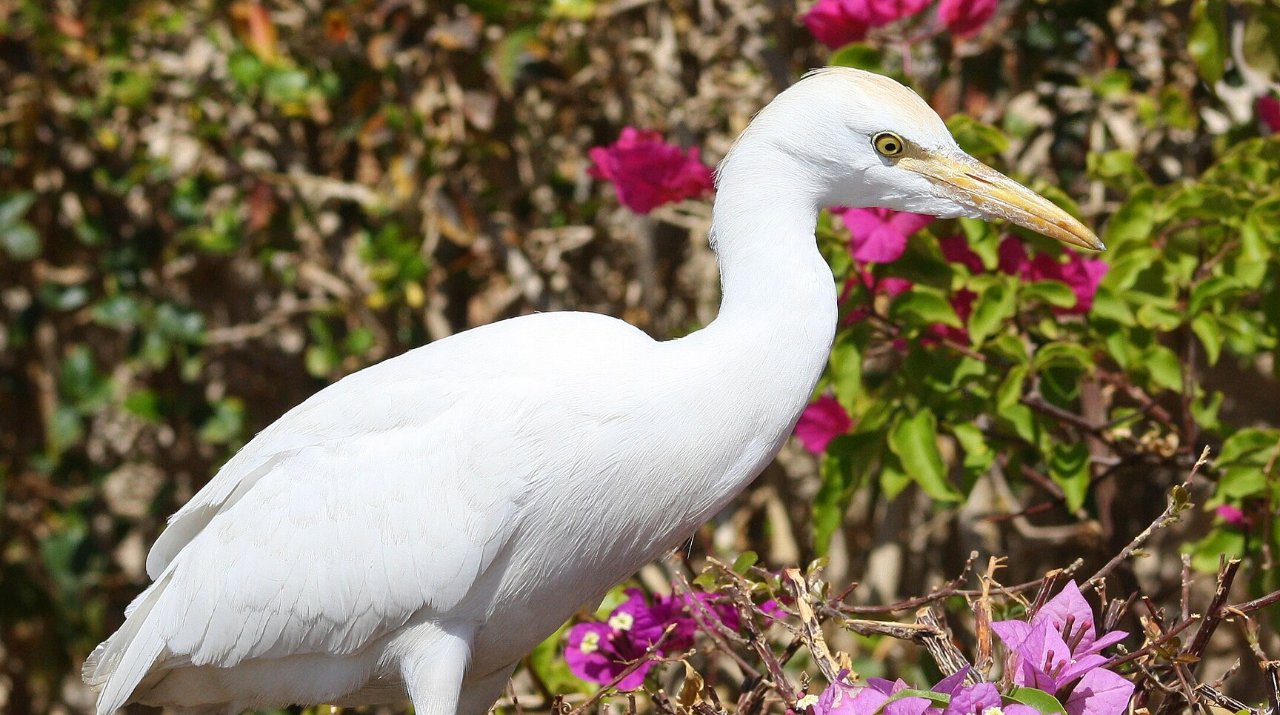
Western Cattle Egret
Ardea ibis
Identify the Western Cattle Egret by sound or photo and log your sightings with Birdpass.


The Western Cattle Egret is a small, stocky white heron best known for following grazing animals and seizing the insects they flush. Native to Africa, south-west Asia and southern Europe, it has spread astonishingly fast around the world and is less tied to wetlands than most herons. In the breeding season it gains warm orange-buff plumes. Once lumped with the Eastern Cattle Egret, it is now treated as a separate species.
Did you know?
- It has undergone one of the fastest and widest natural range expansions of any bird.
- By picking ticks and flies from cattle it can help livestock.
Voice
About the species
Identification
A small white heron; in the breeding season it has a buff-orange crown and long buff plumes on the back and breast. The legs are orange when breeding and greyish otherwise; the yellow bill is shorter than in most herons. Clearly smaller than Great and Little Egrets, with a shorter, thicker bill and a short-necked, stocky shape.
Family
Ardeidae
Size
Large (crow)
Colours
white, orange, yellow
About the habitat
Open country: pastures, meadows, farmland, rice fields and seasonally flooded grasslands; colonies near water.
Diet
Mainly insects, especially grasshoppers and flies flushed by livestock or picked from their bodies, as well as ticks, spiders, frogs, small reptiles and occasionally small birds and rodents.
Behaviour
Feeds by walking through grass near cattle and other large animals, snapping up disturbed prey, and sometimes rides on their backs. Often in small groups. Nests colonially, often with other herons, building stick platforms in trees or shrubs near water. Some populations migrate, and young birds disperse widely after breeding.
Sources
Photo: Kora27, CC BY-SA 4.0 https://commons.wikimedia.org/wiki/File:Kuhreiher am Strand in Ägypten 9528BE.jpg
Sound: Oliver Komar, CC BY-SA 4.0 https://commons.wikimedia.org/wiki/File:Bubulcus_ibis_-_Western_Cattle_Egret_XC463749.mp3
Text: Wikipedia (English) + GBIF regional observations + Wikipedia (Finnish), CC BY-SA 4.0; GBIF occurrence data; Wikipedia: CC BY-SA 4.0 https://en.wikipedia.org/wiki/Western_cattle_egret