Suomi
 Svenska
 Polski
 Čeština
 Slovenčina
 Norsk
 Dansk
Siberian Jay
Perisoreus infaustus
Identify the Siberian Jay by sound or photo and log your sightings with Birdpass.


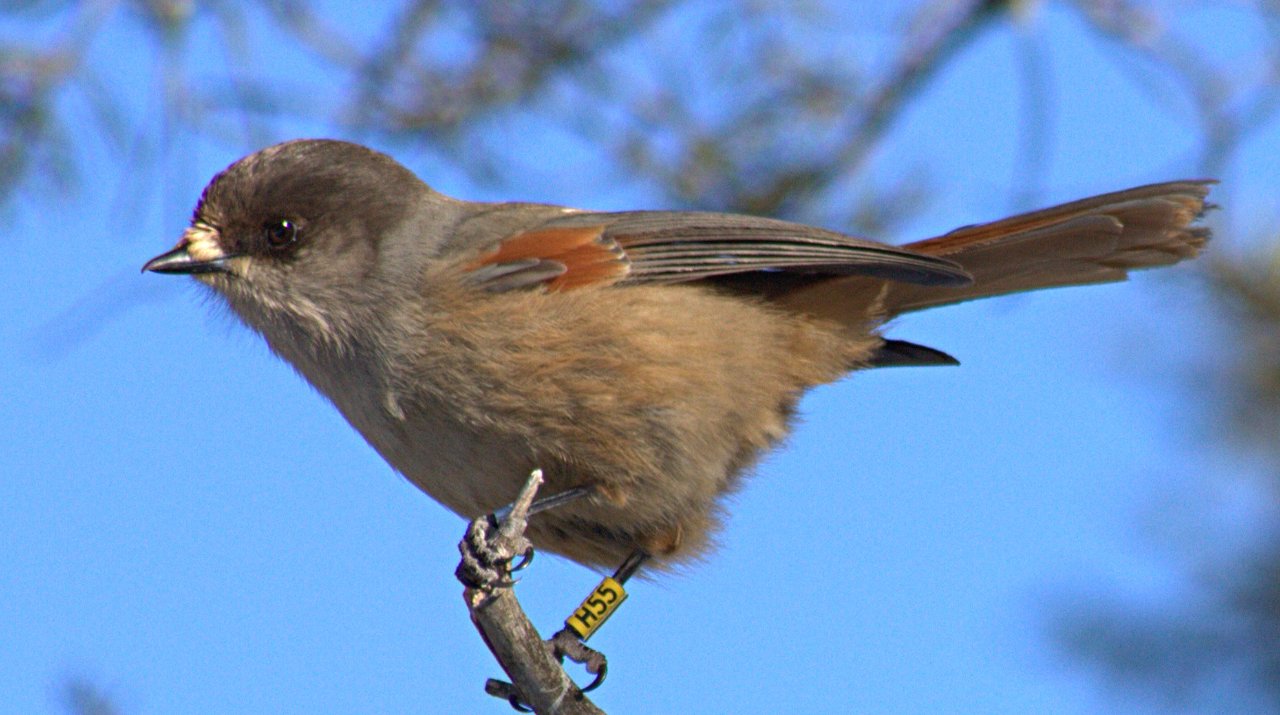
The Siberian Jay is a small, grey-brown crow of the northern boreal forests from Scandinavia across Siberia, and the smallest crow in the western Palearctic. Its muted colours are set off by rusty-orange patches on the wings and tail, and its soft, fluffy plumage helps it endure severe cold. It lives year-round in old conifer forest in small family groups and is famously tame, often appearing at campfires.
Did you know?
- Its scientific name infaustus means “unlucky”, after old beliefs that it was a bad omen.
- It has been recorded imitating 20 bird species and even red squirrels.
About the species
Identification
A small crow (about 27–30 cm), grey-brown overall; the head is darker brown, the breast warm orange-tinged, and the tail sides and wing bend clearly rusty orange. The bill and legs are black. Young birds resemble adults. It differs from other crows especially in its orange tail and soft brown look, and from Jay in lacking blue in the wing.
Family
Corvidae
Size
Medium (thrush)
Colours
grey, brown, orange, black
About the habitat
Old, dense spruce-dominated forest, especially slow-growing spruce bogs draped with beard lichens; outside the breeding season also other forest types, but it avoids large clearings.
Diet
Omnivorous: berries, seeds, fungi, insects and larvae, carrion and occasionally nestlings. It stores large amounts of food in the snow-free season for winter and readily takes scraps from people.
Behaviour
A resident, strongly site-faithful bird that keeps territories year-round and moves only short distances from where it hatched. It lives in small groups led by a breeding pair, with young often staying with their parents for up to two years; unlike some relatives, non-breeders do not help feed the chicks. Mostly quiet, it has varied calls and mimics other birds, and warns relatives in particular of danger. It flies nimbly through dense trees but avoids wide open areas.
Sources
Photo: Estormiz, Public domain https://commons.wikimedia.org/wiki/File:Siberian Jay Kittila 20100312.jpg
Text: Wikipedia (English) + GBIF regional observations + Wikipedia (Finnish), CC BY-SA 4.0; GBIF occurrence data; Wikipedia: CC BY-SA 4.0 https://en.wikipedia.org/wiki/Siberian_jay