Suomi
 Svenska
 Polski
 Čeština
 Slovenčina
 Norsk
 Dansk
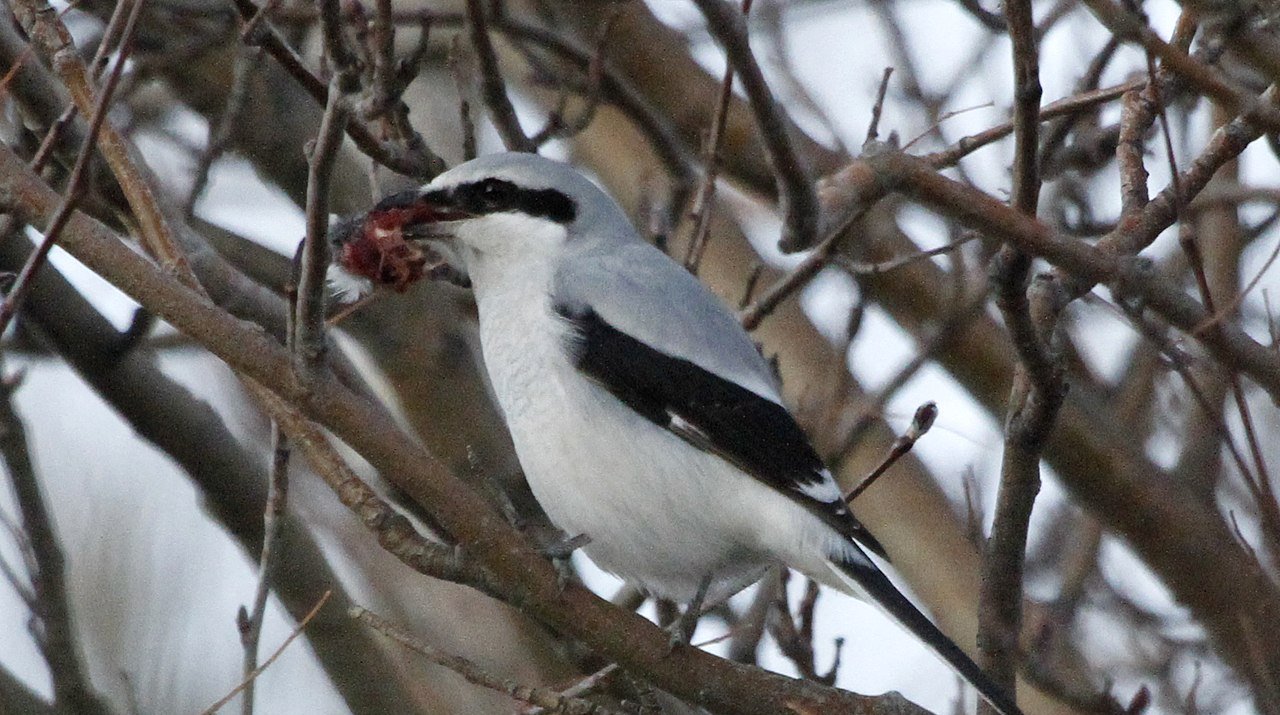
Northern Shrike
Lanius borealis
Identify the Northern Shrike by sound or photo and log your sightings with Birdpass.


The Northern Shrike is a robust, predatory songbird of the far north, breeding in the boreal taiga and tundra of North America and Siberia and moving south irregularly in winter. Known as a “butcherbird”, it uses its sharply hooked bill to take small vertebrates and large insects, sometimes impaling them on thorns. Long lumped with the Great Grey Shrike, it was recognised as a separate species in 2017.
Did you know?
- Though a songbird without talons, it impales prey on thorns, earning the name “butcherbird”.
- It can lure small birds within reach by imitating their calls.
Voice
About the species
Identification
A large, pale shrike with a black mask and a strongly hooked, fairly long bill. The underparts can show fine barring. Told from Great Grey Shrike by its paler grey overall tone, narrower mask and longer, heavier bill; the calls are similar.
Family
Laniidae
Size
Medium (thrush)
Colours
grey, white, black
About the habitat
Breeds at the edge of the taiga and in shrubby tundra, nesting in spruces, willows and alders; in winter open country with perches – forest edges, farmland, prairies and marshes.
Diet
Large insects such as beetles, grasshoppers and spiders, and small vertebrates – small birds, voles, mice and shrews; it sometimes hunts at bird feeders.
Behaviour
Hunts from high perches, scanning for prey and making swift sallies to catch it. It impales prey on thorns or spikes and can imitate the calls of small birds to lure them closer.
Sources
Photo: Paul Hurtado, CC BY-SA 2.0 https://commons.wikimedia.org/wiki/File:Northern Shrike, Arvada, Jefferson, Colorado.jpg
Sound: Pascal Christe, CC BY-SA 4.0 https://commons.wikimedia.org/wiki/File:Lanius_excubitor_-_Great_Grey_Shrike_XC595816.mp3
Text: Wikipedia (English), CC BY-SA 4.0 https://en.wikipedia.org/wiki/Northern_shrike