Suomi
 Svenska
 Polski
 Čeština
 Slovenčina
 Norsk
 Dansk
Brown Shrike
Lanius cristatus
Identify the Brown Shrike by sound or photo and log your sightings with Birdpass.


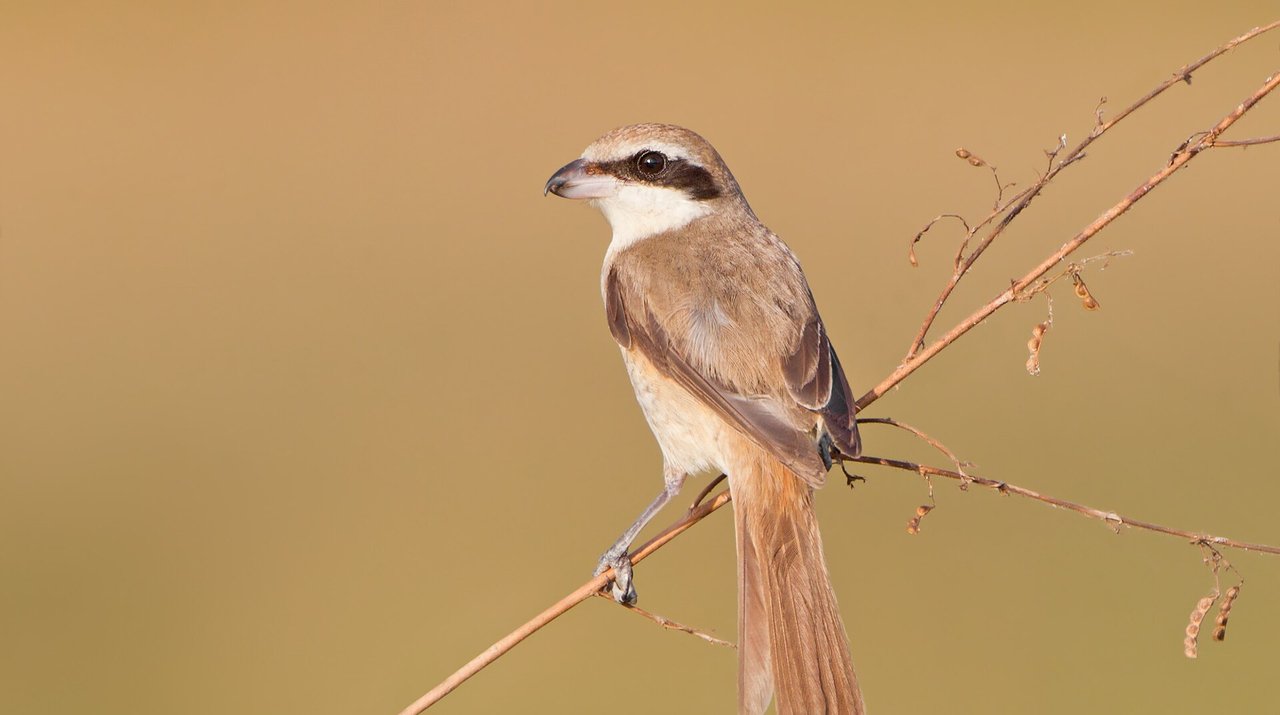
The Brown Shrike is a widespread Asian shrike with a bold black mask and warm brown upperparts. It favours open scrub, watching from the tops of bushes before dropping on prey. Several subspecies breed across temperate Asia and winter in tropical Asia, and it is a rare vagrant to Europe and North America. It is closely related to the Red-backed and Isabelline Shrikes.
Did you know?
- In winter Brown Shrikes can sing with their bill closed, weaving snatches of other birds' calls into the song.
- The genus name Lanius means “butcher” in Latin.
Voice
About the species
Identification
About 18–20 cm long. The male has a rufous-brown back, a clear black mask, a broad white supercilium and a white throat; the underparts are buff. The sexes are similar, but the male's mask is darker and the female's breast faintly barred. Told from Red-backed Shrike especially by the broad white supercilium, white throat, buff underparts and heavier bill; male Red-backed Shrike has a greyer crown and pinker underparts.
Family
Laniidae
Size
Small (sparrow)
Colours
brown, black, white, grey
About the habitat
Open scrub, thorny bushland and woodland edges, from the taiga to semi-desert in temperate Asia; in winter similar open habitats, gardens and farmland in tropical Asia.
Diet
Mainly insects, especially beetles, moths and caterpillars; occasionally small birds and lizards. Like other shrikes, it sometimes impales prey on thorns.
Behaviour
Hunts from exposed perches, flying down to seize prey on the ground. Strongly migratory, it returns faithfully to the same wintering sites, setting up territories soon after arrival and giving loud, chattering calls. It nests in trees or bushes.
Sources
Photo: JJ Harrison (https://www.jjharrison.com.au/), CC BY-SA 3.0 https://commons.wikimedia.org/wiki/File:Lanius cristatus - Surin.jpg
Sound: Jayakrishnan U, XC410420, CC BY-SA 4.0 https://xeno-canto.org/410420
Text: Wikipedia (English), CC BY-SA 4.0 https://en.wikipedia.org/wiki/Brown_shrike