
 Suomi
 Svenska
 Polski
 Čeština
 Slovenčina
 Norsk
 Dansk
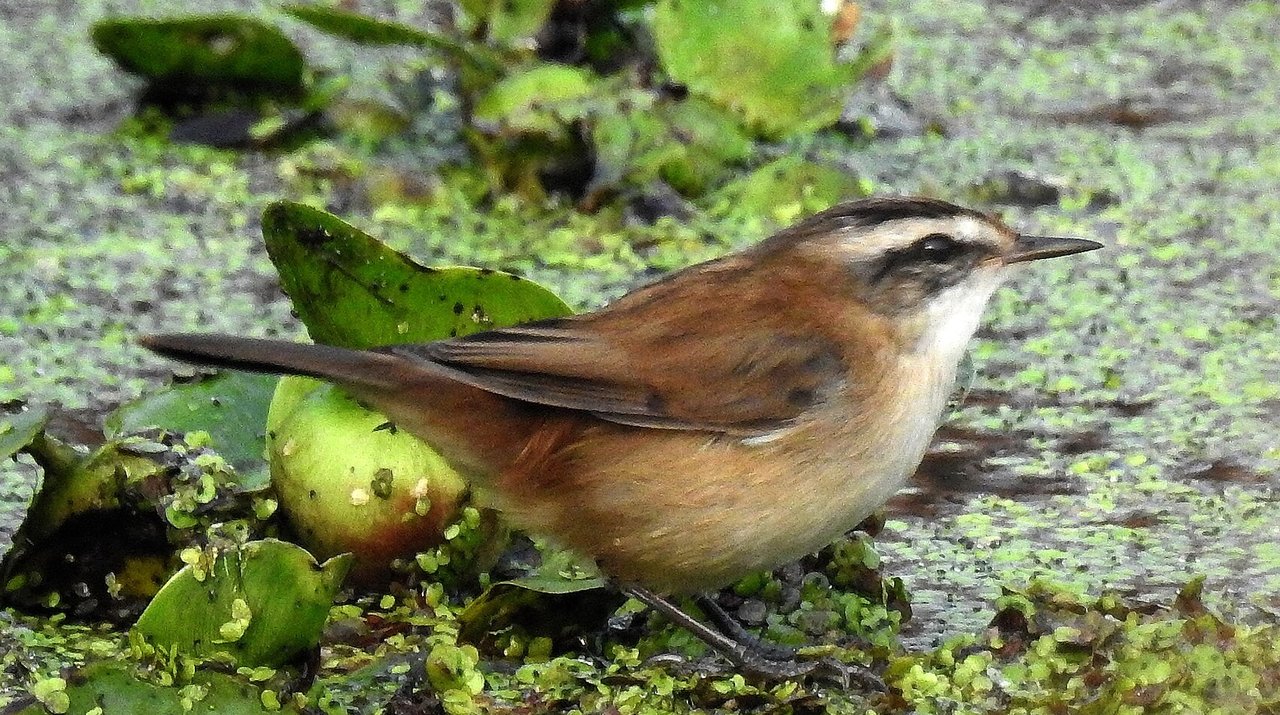
Moustached Warbler
Acrocephalus melanopogon
Identify the Moustached Warbler by sound or photo and log your sightings with Birdpass.


The Moustached Warbler is a slim reedbed warbler of the genus Acrocephalus, breeding from southern Europe across southern temperate Asia, with a small presence in northwest Africa. It is partially migratory: some populations remain year‑round while others shift to warmer regions for winter. It lives in wetlands with tall, upright vegetation and sings a soft, melodious song that includes mimicry and clear whistles.
Did you know?
- Its scientific name melanopogon combines Greek words meaning “black beard,” a nod to the species’ moustache-like facial pattern.
- Unlike the similar Sedge Warbler, the Moustached Warbler does not sing in flight.
Voice
About the species
Identification
A small Acrocephalus warbler with a finely streaked brown back and clean white underparts. Shows a flattened forehead, a long, prominent whitish supercilium, grey ear-coverts, and a strong, pointed bill; juveniles are more heavily streaked with some breast markings. Compared with Sedge Warbler, it looks cleaner white below with greyer ear-coverts and a tidier, longer supercilium; compared with Reed Warbler, it shows a stronger supercilium and more obvious fine streaking on the crown and upperparts.
Family
Acrocephalidae
Size
Tiny (goldcrest)
Colours
brown, white, black
About the habitat
Favors wetlands with tall, upright aquatic vegetation, especially reed and sedge beds along lakes, marshes, and slow-moving waters. Nests are placed over shallow water within dense reeds, rushes, or low bushes near the water’s edge.
Diet
Primarily insectivorous, taking small insects and other invertebrates from reed stems, foliage, and low vegetation around water.
Behaviour
A typically skulking reedbed bird that often clambers up stems to sing. Usually monogamous; the female builds a deep cup nest suspended over water among reeds or rushes, and both adults share incubation and feeding of the young. Partially migratory, with movements varying among populations. Its song is softer and more melodious than many relatives and includes mimicry and clear whistles.
Sources
Photo: Dr. Raju Kasambe, CC BY-SA 4.0 https://commons.wikimedia.org/wiki/File:Moustached Warbler Acrocephalus melanopogon by Dr. Raju Kasambe (3).jpg
Sound: Marco Dragonetti, CC BY-SA 3.0 https://commons.wikimedia.org/wiki/File:Acrocephalus_melanopogon_2.ogg
Text: Wikipedia (English), CC BY-SA 4.0 https://en.wikipedia.org/wiki/Moustached_warbler
.jpg)