Suomi
 Svenska
 Polski
 Čeština
 Slovenčina
 Norsk
 Dansk
Mandarin Duck
Aix galericulata
Identify the Mandarin Duck by sound or photo and log your sightings with Birdpass.


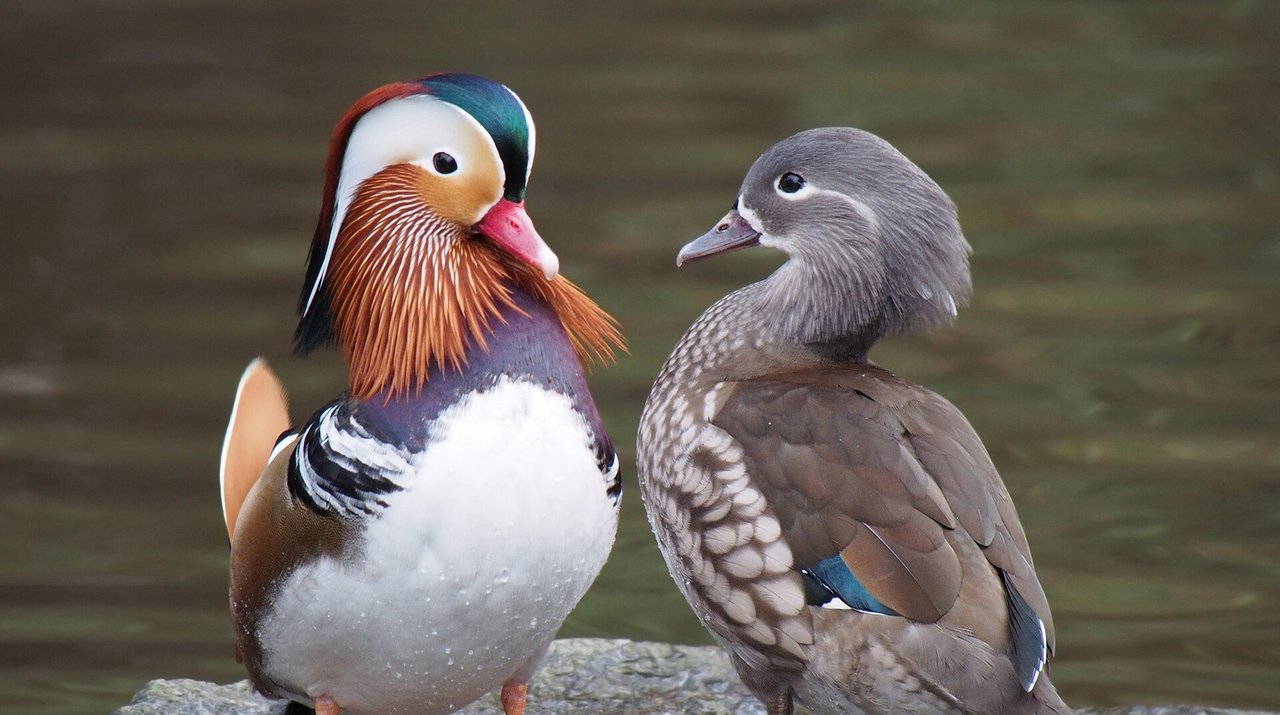
The Mandarin Duck is a small, ornate perching duck native to East Asia, renowned for the male's multicoloured plumage and upright orange “sail” feathers. It is closely related to the North American Wood Duck and nests in tree cavities near wooded lakes and rivers. Escaped birds have formed self-sustaining feral populations in parts of western Europe.
Did you know?
- Mandarin Ducks have 84 chromosomes – unusually many – which may make hybridisation with other ducks difficult.
- After hatching high in a tree cavity, the ducklings leap to the ground at their mother's call.
About the species
Identification
The male is spectacular: orange-toned plumage with black and white stripes, a broad white stripe above the eye, and two orange “sail” feathers on the back raised during courtship; the bill is red. The female is grey-brown with fine white spots on the flanks and a white eye-ring with a stripe behind it, and resembles a female Wood Duck.
Family
Anatidae
Size
Large (crow)
Colours
orange, brown, white, green, blue
About the habitat
Wooded freshwater habitats such as calm rivers, backwaters and small lakes with overhanging trees; in winter also marshes and flooded fields, and in introduced ranges park ponds.
Diet
Omnivorous: seeds, acorns and nuts, aquatic plants and grasses, together with insects, snails and other small invertebrates.
Behaviour
Generally shy and fond of cover, often resting under overhanging branches and perching in trees. Feeds by dabbling and upending and also forages on land. Pairs form strong bonds with elaborate courtship displays and soft whistles. The female nests in a tree hole and, soon after hatching, calls the ducklings to leap to the ground and follow her to water.
Sources
Photo: Francis C. Franklin, CC BY-SA 3.0 https://commons.wikimedia.org/wiki/File:Pair of mandarin ducks.jpg
Text: Wikipedia (English) + FinBIF species descriptions, CC BY-SA 4.0; FinBIF: CC BY 4.0 https://en.wikipedia.org/wiki/Mandarin_duck