
 Suomi
 Svenska
 Polski
 Čeština
 Slovenčina
 Norsk
 Dansk
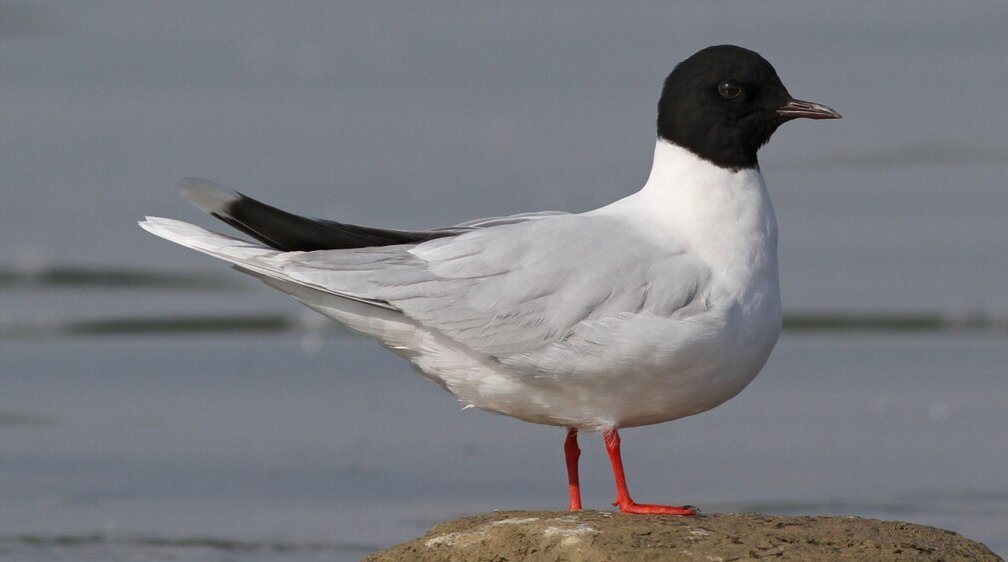
Little Gull
Hydrocoloeus minutus
Identify the Little Gull by sound or photo and log your sightings with Birdpass.


The Little Gull is the world's smallest gull, a delicate, tern-like species found mainly across the Palearctic, with a small population around North America's Great Lakes. It breeds on shallow lakes, marshes and bogs and winters at sea and on coasts. Breeding adults have a black hood and strikingly dark underwings, while young birds show a dark “W” across the upperwings.
Did you know?
- It is the smallest gull in the world.
- Its genus name Hydrocoloeus means “water jackdaw”.
About the species
Identification
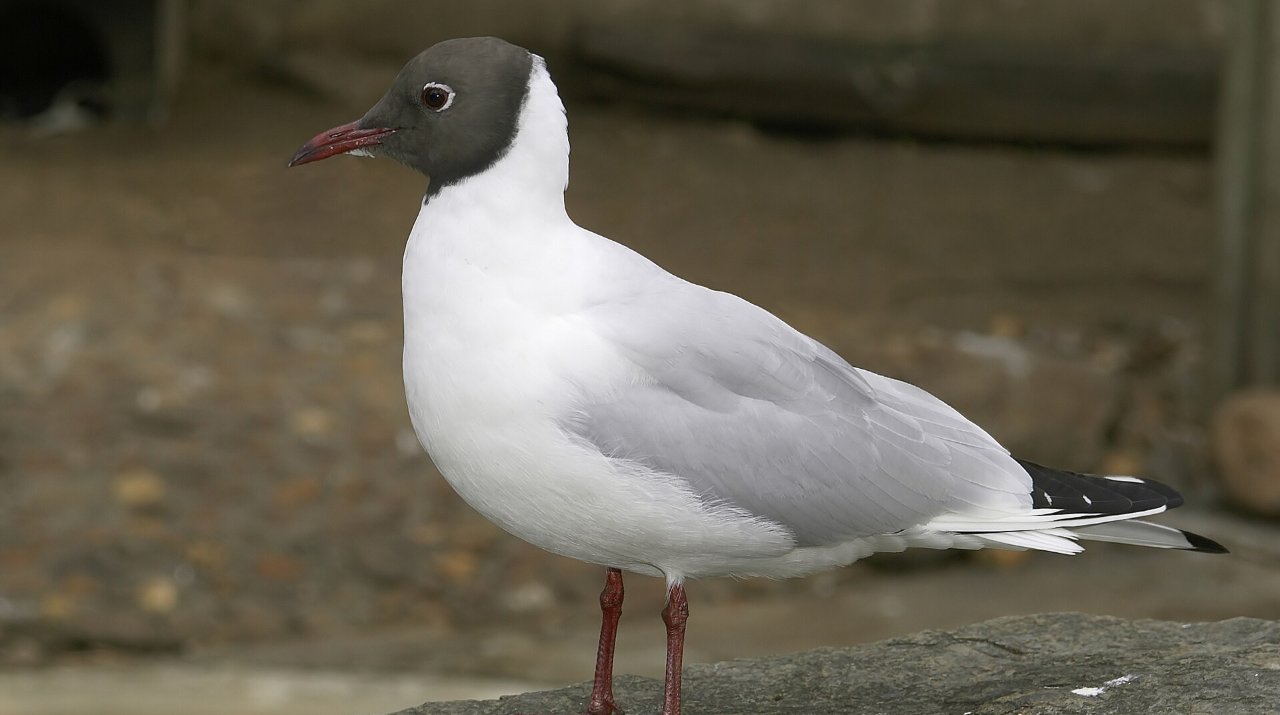
A gull smaller than Black-headed Gull, whose head in summer is jet black (brown in Black-headed Gull). The upperparts are pale grey without black wingtips, the body white and the underwings clearly dark; it has a thin bill and orange-red legs. Non-breeding adults lose the hood but keep a dark ear spot. Young birds have a bold black “W” on the upperwing and a black tail band. Its flight is tern-like, and the calls are cackling.
Family
Laridae
Size
Medium (thrush)
Colours
white, grey, black, red
About the habitat
Breeds on shallow lakes, marshes, bogs and flooded meadows with emergent vegetation; outside the breeding season large lakes, coastal lagoons, estuaries and open sea.
Diet
In the breeding season mainly flying insects, especially emerging aquatic insects, taken over water; outside it also small fish, crustaceans and marine invertebrates picked from the surface.
Behaviour
Flies buoyantly like a tern, hawking insects over water and fields and dipping to pick food from the surface. Sociable, it often breeds in loose colonies, sometimes with terns or Black-headed Gulls, nesting on the ground or floating vegetation. Outside the breeding season it gathers in flocks, sometimes very large in stormy weather.
Sources
Photo: Andrej Chudý from Slovakia, CC BY-SA 2.0 https://commons.wikimedia.org/wiki/File:Čajka malá (Larus minutus) a (4834254958).jpg
Text: Wikipedia (English) + FinBIF species descriptions, CC BY-SA 4.0; FinBIF: CC BY 4.0 https://en.wikipedia.org/wiki/Little_gull
 a (4834254958).jpg)