
 Suomi
 Svenska
 Polski
 Čeština
 Slovenčina
 Norsk
 Dansk
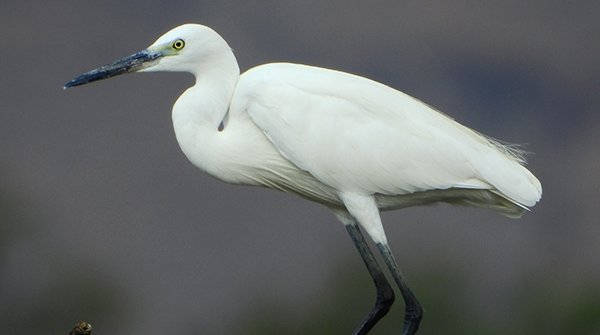
Little Egret
Egretta garzetta
Identify the Little Egret by sound or photo and log your sightings with Birdpass.


The Little Egret is a small, elegant white heron with a slender black bill and long black legs; in western populations the feet are bright yellow. It hunts in shallow water across warm temperate to tropical parts of Europe, Africa, Asia and Australia, and many northern birds migrate south for the winter. It has expanded its range in recent decades, returning to parts of western Europe and spreading into the Caribbean. In the breeding season it grows fine plumes on the nape and breast.
Did you know?
- In the 19th century it was hunted for its plumes to decorate hats and vanished from parts of western Europe before legal protection helped it recover.
- During courtship its facial skin can flush red and, in yellow-footed populations, the feet briefly turn reddish.
Voice
About the species
Identification
An all-white egret with a slender, all-dark bill, black legs and yellow feet; in the breeding season it has long, wispy plumes on the nape. Much smaller and slimmer than Great Egret, which usually has a yellow bill and dark feet; Cattle Egret is stockier with a shorter neck and a yellowish bill.
Family
Ardeidae
Size
Large (crow)
Colours
white, black, yellow
About the habitat
Shallow fresh and coastal wetlands – edges of lakes, rivers and ponds, lagoons, marshes, flooded fields and rice paddies – as well as mangroves, mudflats, beaches and reefs. It often feeds among cattle.
Diet
Mostly small fish, but also amphibians, small reptiles, mammals and birds, crustaceans, molluscs, insects, spiders and worms. It will scavenge and take prey stirred up by cormorants or grazing livestock.
Behaviour
Often seen in small flocks, though individuals may defend good feeding spots. It forages actively in shallow water – stalking, running with raised wings, shuffling its feet to flush prey or standing still in ambush – and also hunts on land. It breeds in colonies, often mixed with other waterbirds, on stick platforms in trees, bushes or reedbeds; both parents share the duties. Away from colonies it is mostly silent.
Sources
Photo: Shantanu Kuveskar, CC BY-SA 4.0 https://commons.wikimedia.org/wiki/File:Little egret (Egretta garzetta) Photograph by Shantanu Kuveskar.jpg
Sound: Joost van Bruggen, XC432219, CC BY-SA 4.0 https://xeno-canto.org/432219
Text: Wikipedia (English) + GBIF regional observations + Wikipedia (Finnish), CC BY-SA 4.0; GBIF occurrence data; Wikipedia: CC BY-SA 4.0 https://en.wikipedia.org/wiki/Little_egret
 Photograph by Shantanu Kuveskar.jpg)