Suomi
 Svenska
 Polski
 Čeština
 Slovenčina
 Norsk
 Dansk
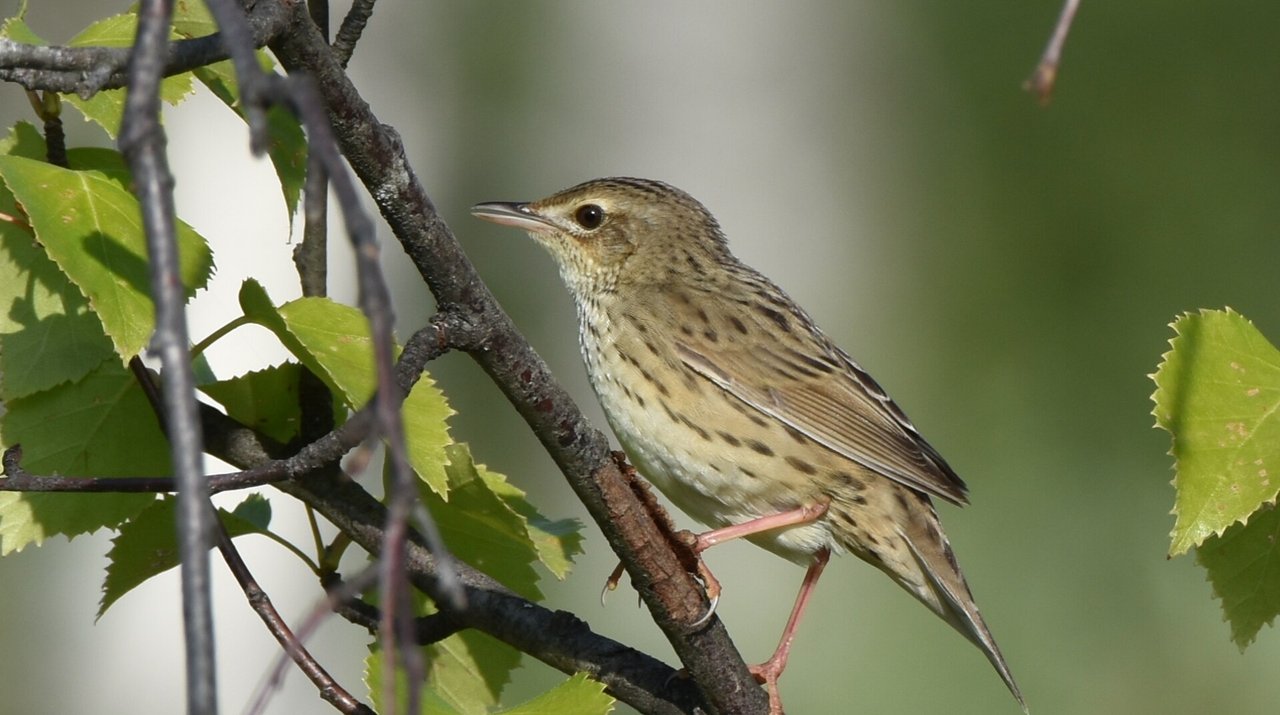
Lanceolated Warbler
Locustella lanceolata
Identify the Lanceolated Warbler by sound or photo and log your sightings with Birdpass.


The Lanceolated Warbler is a small, secretive warbler that breeds from north-eastern European Russia across Siberia to northern Japan and winters in Southeast Asia. It lives in wet grasslands with patches of scrub or trees, where its streaked brown plumage lets it vanish into cover. It often gives itself away at dusk with a steady, insect-like reeling song. In western Europe it is a rare vagrant.
Did you know?
- The genus name Locustella means “little grasshopper”.
- It is one of the most sought-after Siberian vagrants in western Europe.
About the species
Identification
Length 11.5–12.5 cm, weight about 12–13 g. It resembles Common Grasshopper Warbler, but especially in adults the dark streaks make the overall look clearly more streaked; the breast has fine, lance-shaped streaks, and young birds are less streaked. The sexes look alike. The voice and song are like Grasshopper Warbler's, and certain identification often requires close views or even examination in the hand.
Family
Locustellidae
Size
Tiny (goldcrest)
Colours
brown, white, grey
About the habitat
Wet grasslands and meadows with patches of shrubs or scattered trees, bog edges and damp clearings.
Diet
Mainly small insects and other invertebrates taken in low vegetation.
Behaviour
A skulker that creeps through grass and low foliage like a mouse and is hard to see except when singing. Its song is a monotonous, mechanical reel, often delivered at dusk. A long-distance migrant.
Sources
Photo: Александр Чегодаев, CC0 https://commons.wikimedia.org/wiki/File:Locustella lanceolata 295726934.jpg
Text: Wikipedia (English), CC BY-SA 4.0 https://en.wikipedia.org/wiki/Lanceolated_warbler