
 Suomi
 Svenska
 Polski
 Čeština
 Slovenčina
 Norsk
 Dansk
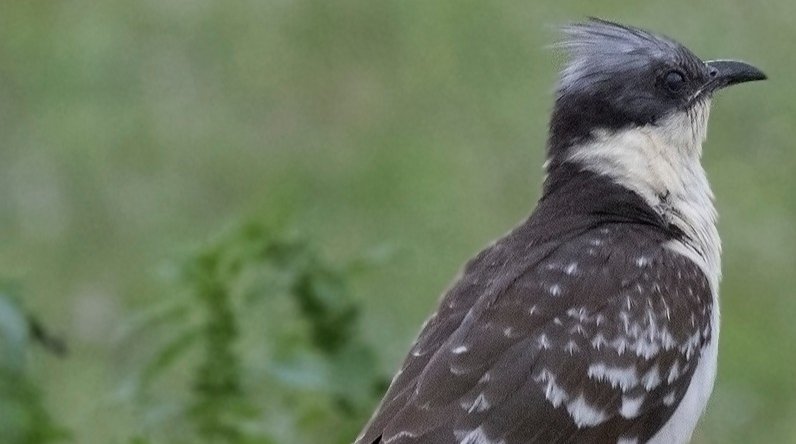
Great Spotted Cuckoo
Clamator glandarius
Identify the Great Spotted Cuckoo by sound or photo and log your sightings with Birdpass.


The Great Spotted Cuckoo is a striking, long-tailed cuckoo of warm, open country around the Mediterranean and in much of Africa. It has grey upperparts spotted with white, a grey crest, a yellowish throat and upper breast and white underparts; juveniles are darker with a black cap and chestnut in the wings. It is a brood parasite of crows and especially of Eurasian Magpies. European birds winter in Africa.
Did you know?
- Its chicks secrete a predator-repelling odour that can protect both themselves and the host nestlings.
- The genus name Clamator means “shouter” in Latin.
Voice
About the species
Identification
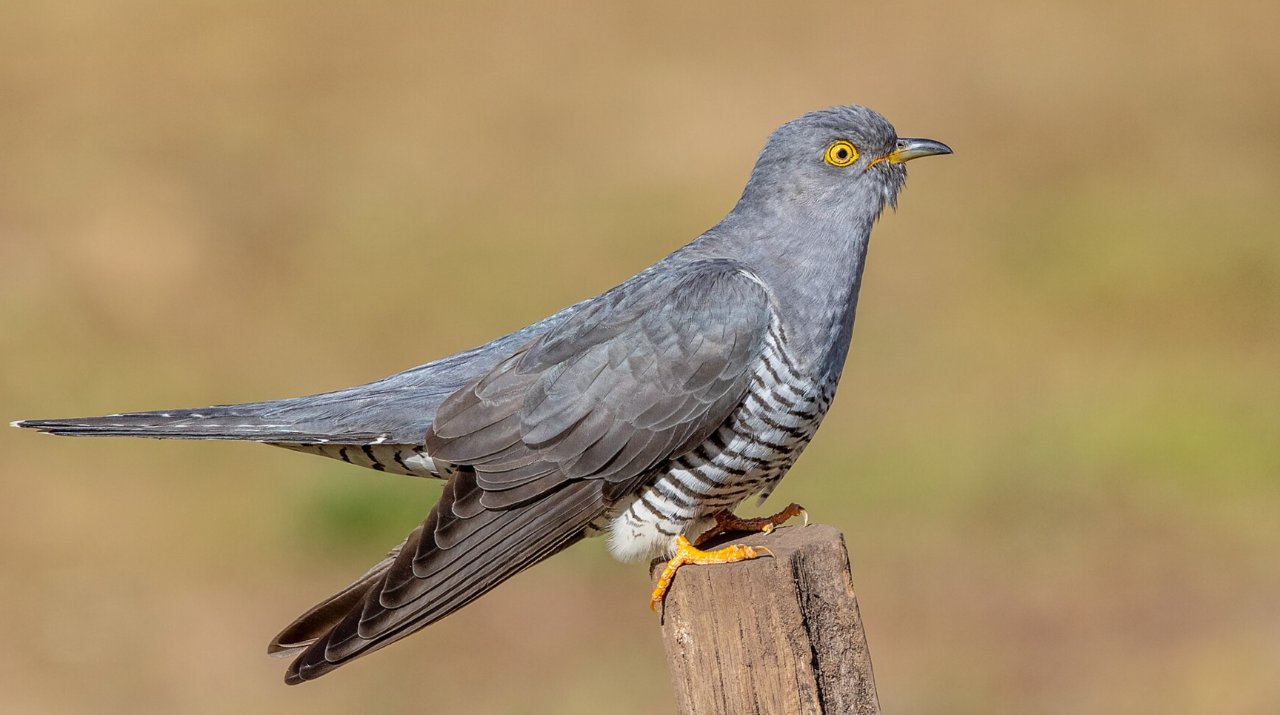
A long-tailed, magpie-like cuckoo. It is dark grey-brown above with white spots, white below with a yellowish breast; the upperwing looks black-and-white and the head bears a clear crest. The bill is dark and slightly hooked, and the wings look broad in flight. Juveniles have a smaller, dark crest, buffy spots on the upperwing and rufous primaries. Told from Common Cuckoo by its spotted wings and crest, and from magpie by its all-white belly and cuckoo shape.
Family
Cuculidae
Size
Medium (thrush)
Colours
grey, white, brown, black
About the habitat
Warm, open country with scattered trees, olive groves, open woodland and scrub where magpies nest.
Diet
Mainly insects, notably hairy caterpillars that most birds avoid, as well as other insects, spiders and small lizards.
Behaviour
Lays its eggs in the nests of crows and magpies, but neither the adult nor the chick ejects the host's eggs, so the cuckoo chick is raised alongside the host young. The chick produces a foul-smelling secretion that deters predators and can improve the survival of the whole brood. Its flight is magpie-like, and the call a loud, chattering, repeated “cher-cher-kri-kri”.
Sources
Photo: Zeynel Cebeci, CC BY-SA 4.0 https://commons.wikimedia.org/wiki/File:Clamator glandarius (cropped 2).jpg
Sound: João Tomás, CC BY 4.0 https://commons.wikimedia.org/wiki/File:Great_Spotted_Cuckoo_call_(Clamator_glandarius).ogg
Text: Wikipedia (English), CC BY-SA 4.0 https://en.wikipedia.org/wiki/Great_spotted_cuckoo
.jpg)