
 Suomi
 Svenska
 Polski
 Čeština
 Slovenčina
 Norsk
 Dansk
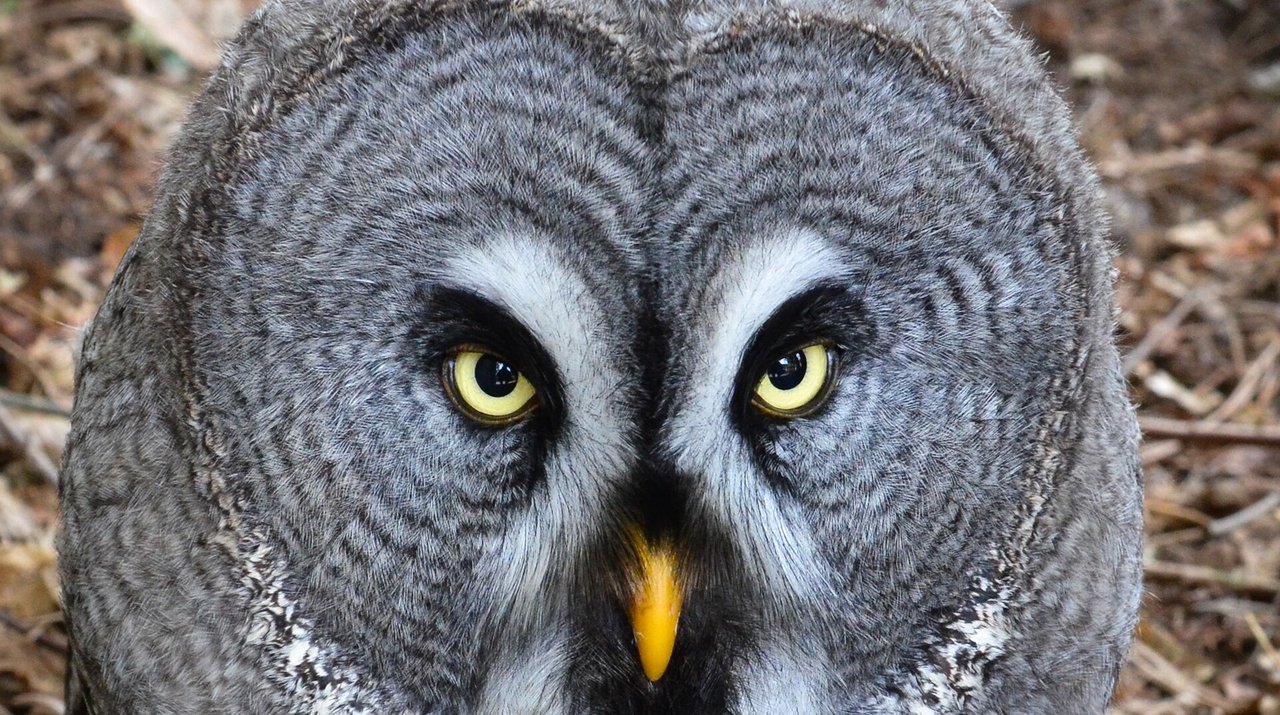
Great Grey Owl
Strix nebulosa
Identify the Great Grey Owl by sound or photo and log your sightings with Birdpass.


The Great Grey Owl is a huge, long-tailed owl of the northern boreal forests of Eurasia and North America and the world's largest owl by length, though much of its size is fluffy plumage. It has a large, round grey face with concentric dark rings, small yellow eyes and a white “bow tie” under the bill. It hunts voles by sound, even beneath deep snow.
Did you know?
- It has the largest facial disc of any raptor, funnelling sound to its ears.
- It can punch through crusted snow to catch voles it hears below.
Voice
About the species
Identification
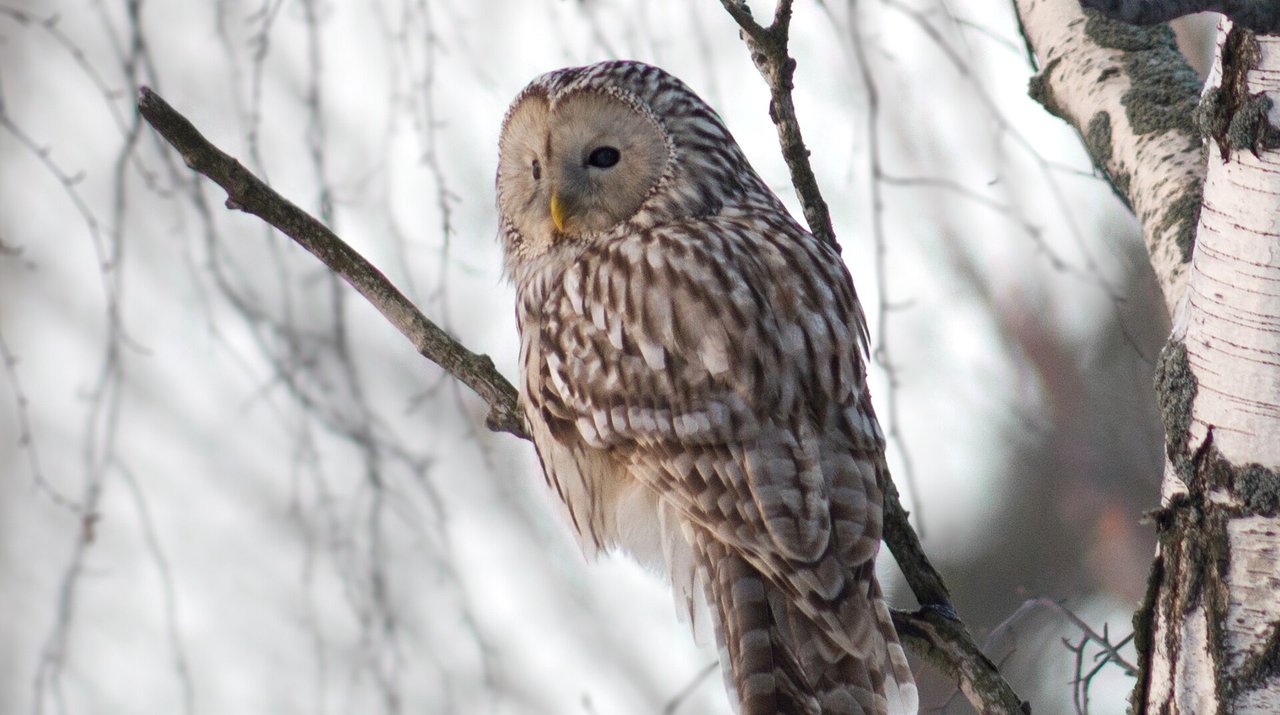
A very large owl, grey and streaked overall. Its exceptionally large facial disc with concentric rings, yellow eyes and black chin patch are striking. It differs from Ural Owl in its larger, ringed face and yellow eyes (Ural Owl has dark eyes). It has no ear tufts and a long tail.
Family
Strigidae
Size
Large (crow)
Colours
grey, white, brown, black, yellow
About the habitat
Boreal coniferous and mixed forest near bogs, meadows, clearings and forest edges for hunting.
Diet
Mainly voles and other small mammals, found by listening from a perch and pouncing, often breaking through snow to seize rodents it hears below; occasionally small birds.
Behaviour
A mostly silent, sit-and-wait hunter, active at dusk and night but also by day. It does not build its own nest but uses old raptor nests, broken-topped trees or artificial platforms. The male feeds the female and young, and the fledglings leave the nest early, climbing trees before they can fly. Breeding and movements follow vole cycles, and in poor years birds wander south.
Sources
Photo: Olaf Oliviero Riemer, CC BY-SA 3.0 https://commons.wikimedia.org/wiki/File:Bartkauz - Great Grey Owl (Strix nebulosa) - Weltvogelpark Walsrode 2012-004-cropped.jpg
Sound: Robert Petersen, XC986000, CC BY-SA 4.0 https://xeno-canto.org/986000
Text: Wikipedia (English) + FinBIF species descriptions, CC BY-SA 4.0; FinBIF: CC BY 4.0 https://en.wikipedia.org/wiki/Great_grey_owl
 - Weltvogelpark Walsrode 2012-004-cropped.jpg)