Suomi
 Svenska
 Polski
 Čeština
 Slovenčina
 Norsk
 Dansk
Common Pochard
Aythya ferina
Identify the Common Pochard by sound or photo and log your sightings with Birdpass.


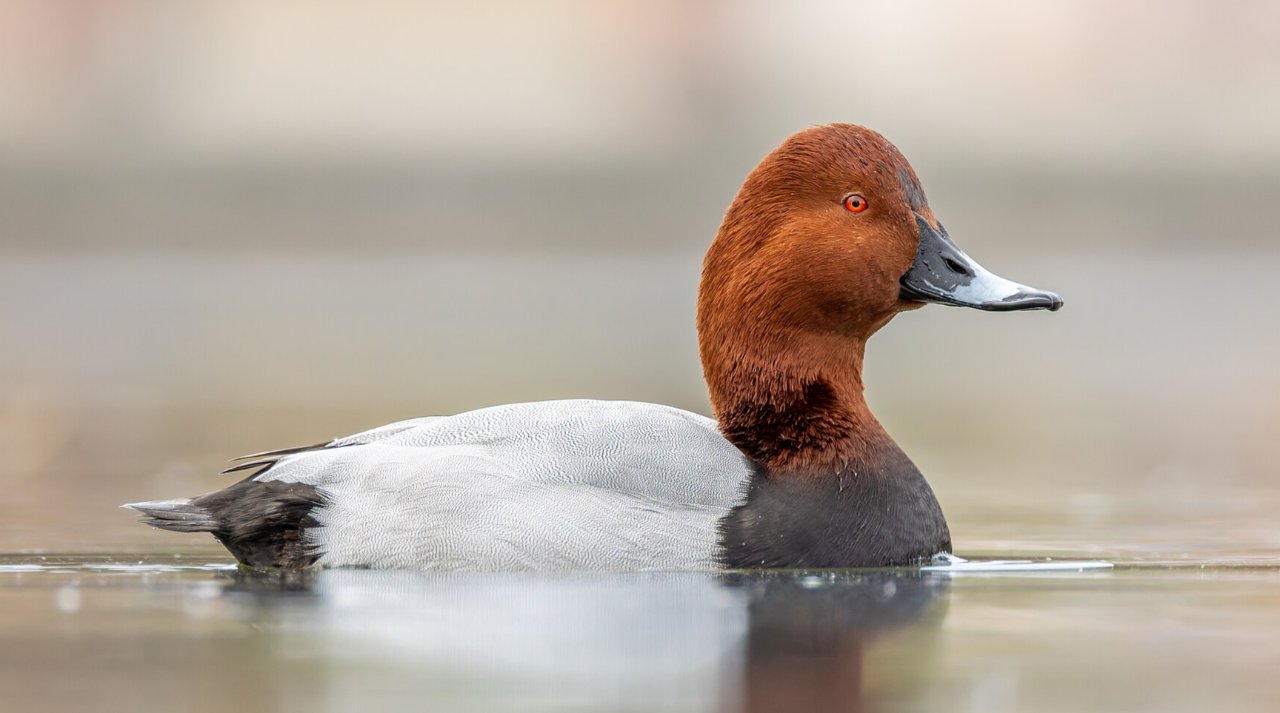
The Common Pochard is a medium-sized diving duck of lakes and sheltered coasts across the Palearctic, from western Europe to Siberia. Males have a chestnut head, black breast and tail and pale grey, finely vermiculated body, while females are brown with a paler face. Northern and eastern birds migrate south and west for the winter, gathering in large rafts with other diving ducks. The species has declined widely and is listed as Vulnerable.
Did you know?
- Pochards often feed alongside swans, gleaning food the swans churn up – which can double their intake.
- Brood parasitism is common: in some areas most nests contain eggs laid by other females.
Voice
About the species
Identification
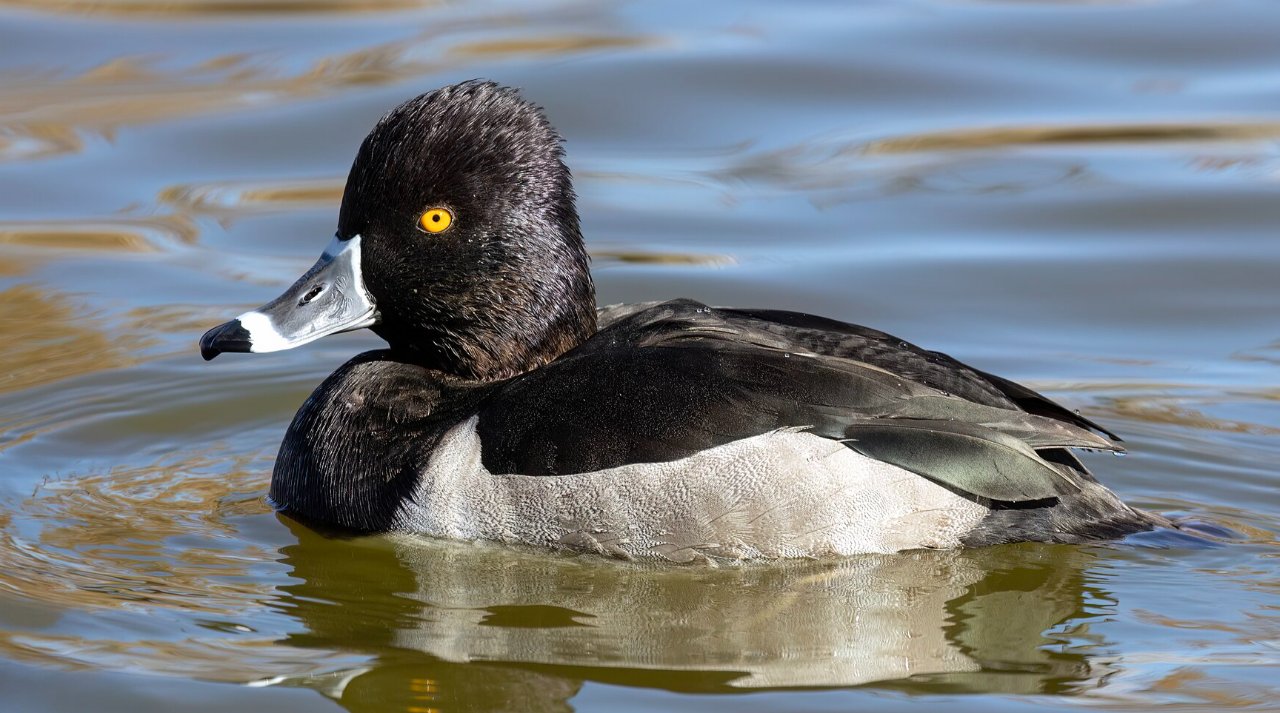
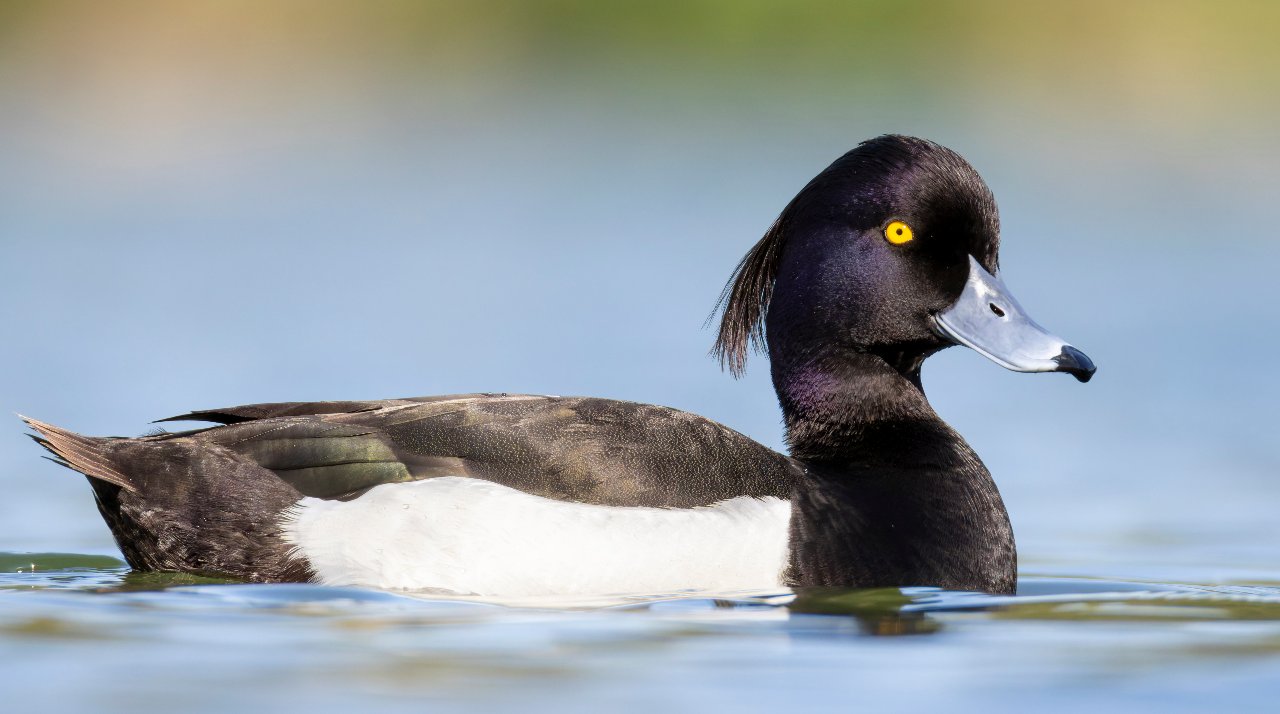
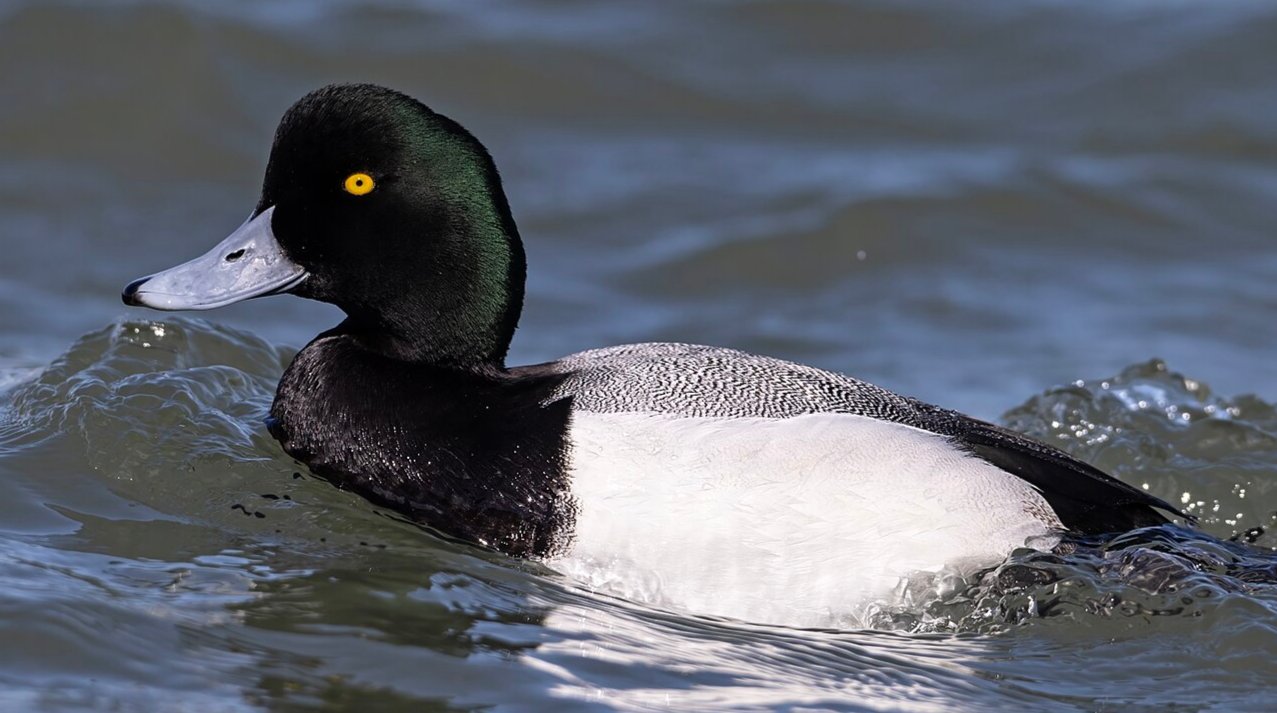
A medium-sized diving duck. The male has a chestnut-red head, red eye, black bill with a grey band and a pale grey body. The female has a pale eye-ring and often a paler face, a low forehead and a long bill; young males resemble females but lack the eye-ring. Flight is direct and fast, and the wingbar is fainter than in Tufted Duck or Greater Scaup.
Family
Anatidae
Size
Large (crow)
Colours
grey, brown, black
About the habitat
Medium to large nutrient-rich lakes with open water at least a metre deep and fringes of emergent vegetation; outside the breeding season also reservoirs, gravel pits and sheltered coastal bays.
Diet
Omnivorous: seeds, buds and shoots of submerged plants such as pondweeds and stoneworts, as well as molluscs, insect larvae and small crustaceans. It feeds mainly by diving, often at night.
Behaviour
A proficient diver that rests on open water and forms large mixed rafts outside the breeding season, often with Tufted Ducks. Strong, fast flier. Males are mostly silent, females growl when flushed. The female builds a well-hidden nest in waterside vegetation or on a floating platform, and leads the self-feeding young to open water; egg-dumping in other females' nests is common.
Sources
Photo: Alexis Lours, CC BY 4.0 https://commons.wikimedia.org/wiki/File:Common Pochard 2025 11 15 04.jpg
Sound: Sonothèque ADVL, XC918474, CC0 1.0 https://xeno-canto.org/918474
Text: Wikipedia (English) + FinBIF species descriptions, CC BY-SA 4.0; FinBIF: CC BY 4.0 https://en.wikipedia.org/wiki/Common_pochard