Suomi
 Svenska
 Polski
 Čeština
 Slovenčina
 Norsk
 Dansk
Surf Scoter
Melanitta perspicillata
Identify the Surf Scoter by sound or photo and log your sightings with Birdpass.


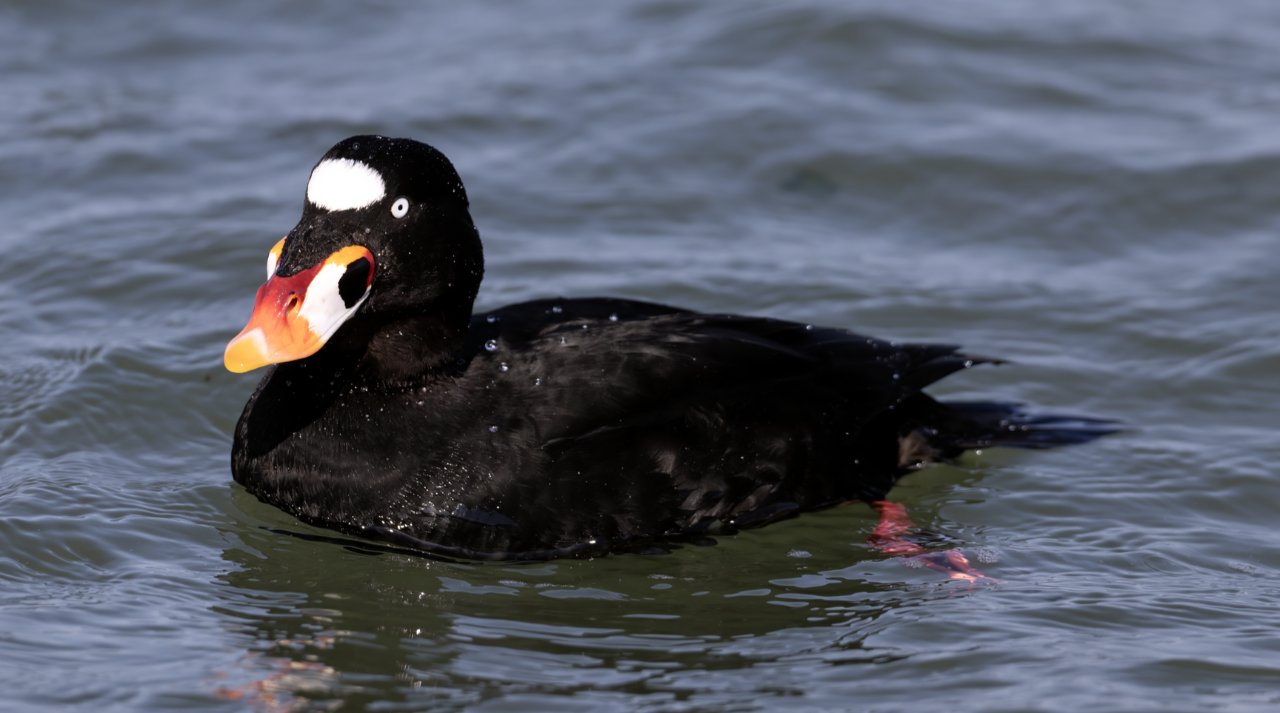
The Surf Scoter is a chunky North American sea duck best known for the male's white forehead and nape patches and swollen, multicoloured bill. It breeds on northern lakes in the boreal forest of Canada and Alaska and winters along the Pacific and Atlantic coasts, often feeding in breaking surf. It is a regular vagrant to western Europe.
Did you know?
- Its name comes from its habit of feeding in breaking surf.
- It becomes flightless for about four weeks during its summer wing moult.
About the species
Identification
A large, heavy-looking sea duck with a big, colourful bill. The male is all black but has white patches on the forehead and nape; the bill is patterned orange, white and black. The female is dark brown with two pale face patches and a bulbous bill. It lacks a white wing patch, and the male's head pattern and more massive look separate it from Common Scoter.
Family
Anatidae
Size
Large (crow)
Colours
black, white, orange, red
About the habitat
Breeds on freshwater lakes and ponds in the boreal zone; winters on cold coastal waters near surf zones, bays and estuaries with rich shellfish beds.
Diet
Mainly bottom-living invertebrates, especially mussels and clams, other molluscs and crustaceans; on breeding lakes aquatic insects.
Behaviour
A diving duck that feeds by chasing and prying prey from the bottom, often in dense offshore rafts that dive in loose synchrony. It is generally quiet; males give gurgling calls in courtship. It becomes flightless for about four weeks during the summer wing moult.
Sources
Photo: Chuck Homler, Focus On Wildlife, CC BY-SA 4.0 https://commons.wikimedia.org/wiki/File:Surf Scoter Drake LBI.png
Text: Wikipedia (English) + FinBIF species descriptions, CC BY-SA 4.0; FinBIF: CC BY 4.0 https://en.wikipedia.org/wiki/Surf_scoter