Suomi
 Svenska
 Polski
 Čeština
 Slovenčina
 Norsk
 Dansk
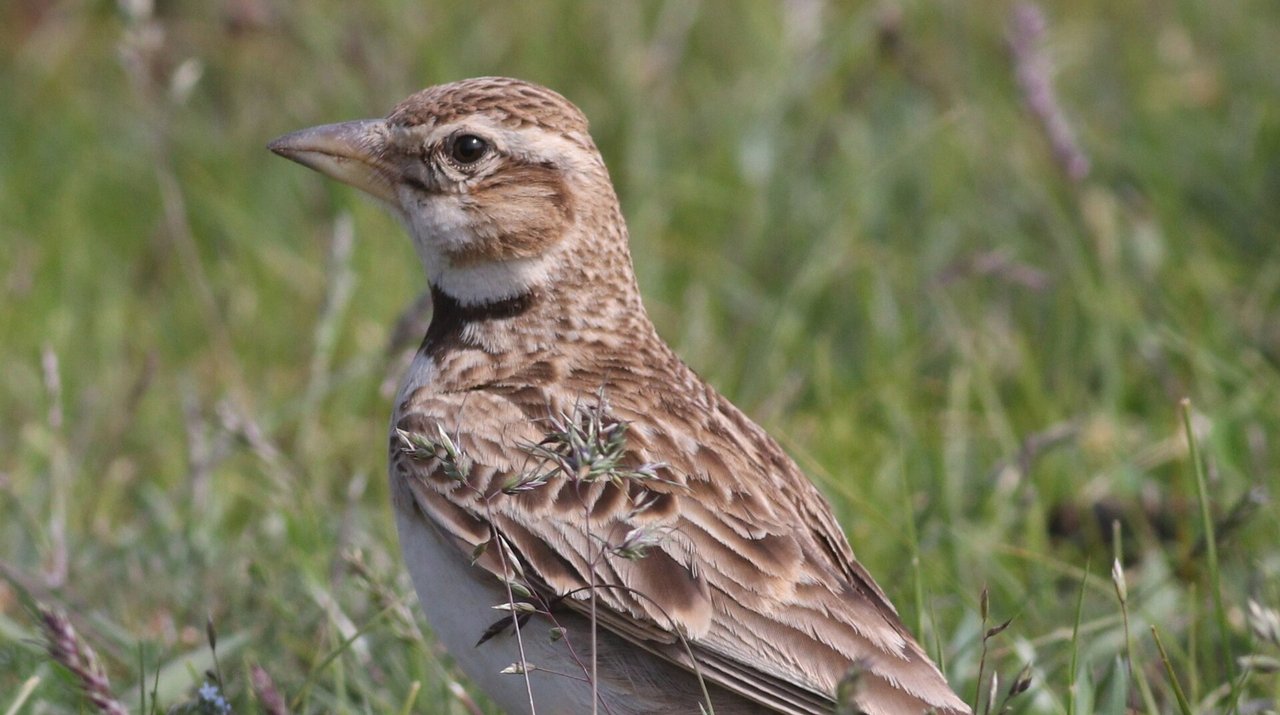
Bimaculated Lark
Melanocorypha bimaculata
Identify the Bimaculated Lark by sound or photo and log your sightings with Birdpass.


The Bimaculated Lark is a large, robust lark of dry country from Turkey east into Central Asia, the eastern counterpart of the Calandra Lark. On the ground it looks rather plain, streaked grey-brown above and white below, with a white supercilium and a black patch on each side of the breast that gives it its name. It is mainly migratory, wintering from north-east Africa and Arabia to India, and is a rare vagrant to northern Europe.
Did you know?
- “Bimaculated” means “two-spotted”, after the black patches on the breast.
- It is the eastern counterpart of the Calandra Lark.
About the species
Identification
About 16–18 cm long with a wingspan of 33–41 cm; a fairly heavy, thick-billed lark. The belly is white, and black patches on the upper breast may form a narrow band; the white supercilium and other head markings are clear, and the upperparts mottled grey-brown. In flight the white tail tip (but no white tail sides) and brownish underwing show. Told from Calandra Lark by its white tail tip and lack of a white trailing edge to the wing. The sexes look alike.
Family
Alaudidae
Size
Medium (thrush)
Colours
brown, white, black, grey
About the habitat
Open, arid country – stony semi-desert, dry hillsides and upland cultivation.
Diet
Seeds and insects, with more insects in the breeding season.
Behaviour
Mostly ground-dwelling; it nests on the ground and usually lays 3–4 eggs. It becomes gregarious in winter, and its song is a harder version of the Calandra Lark's.
Sources
Photo: Jan Ebr, CC BY 4.0 https://commons.wikimedia.org/wiki/File:Melanocorypha bimaculata 117209398.jpg
Text: Wikipedia (English), CC BY-SA 4.0 https://en.wikipedia.org/wiki/Bimaculated_lark